How to Remove Ice from Air Conditioner: Step-by-Step Guide
Step-by-step methods to thaw a frozen AC, diagnose causes, and prevent ice buildup. Learn safety, maintenance tips, and when to call a pro with guidance from Air Conditioner Service.


This guide explains how to remove ice from air conditioner safely and effectively. You'll identify common causes such as restricted airflow, dirty filters, and blocked outdoor units, then follow a safe thawing procedure and simple maintenance routine to prevent re-icing. By the end, you'll be able to restore cooling and protect the system.
Why ice forms on air conditioners and what it signals\n\nIce accumulation on the indoor evaporator coil is not just a nuisance; it signals that something is preventing normal heat transfer. According to Air Conditioner Service, ice buildup on an AC often signals restricted airflow or coil issues that require prompt attention. Common culprits include a dirty air filter, closed or blocked supply vents, a malfunctioning blower, or outdoor debris restricting the condenser. If refrigerant levels are too low due to a slow leak, the evaporator coil can frost over as the system tries to cool. Recognize the signs: frost on the indoor coil, reduced cooling performance, unusual musty smells, or buzzing from the outdoor unit. Understanding these signals helps you decide whether to thaw the unit immediately or to call a professional. In this section we’ll break down how these causes interact and how to test for each safely without risking damage to delicate components.
Safety considerations before you begin\n\nSafety comes first when you deal with a frozen AC. Always start by turning off the unit at the thermostat, then unplug the power supply if accessible. Do not strike frost with metal tools or pour boiling water on the coil; hot water and metal can damage coatings or crack plastic components. Wear protective gloves and eye protection, especially if you need to wipe around the condensate tray or touch the outdoor unit. Keep pets and kids away from the working area. If you’re unsure about electrical connections or refrigerant lines, stop and contact a licensed technician. Handling refrigerant or attempting to repair a refrigerant leak requires proper licensing in many jurisdictions. By planning for safety and wearing PPE, you reduce the risk of electric shock, burns, or refrigerant exposure.
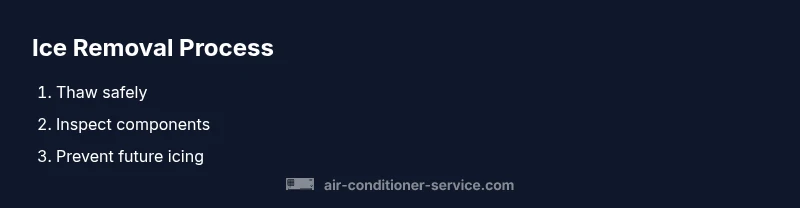
Immediate thawing steps that protect the system\n\nWhen ice forms, thaw gradually rather than forcibly prying it off. Start by turning off the thermostat and disconnecting power, then let the unit sit unplugged for at least 15-30 minutes to melt ice at a safe pace. If you must speed up the process, switch the fan mode to ON (without the compressor) to circulate air and help melt the ice, but never run the compressor while ice remains. Once most of the ice has melted, wipe away any pooled water and inspect the coil for residual frost. Avoid using sharp tools to scrape; this can damage the coil fins. If you notice persistent frost along the edges, plan a deeper inspection or contact a pro.
Inspecting indoor components and the condensate drain\n\nThe indoor portion of the system is the heart of cooling, so a careful inspection should focus on the filter, blower, and evaporator coil. Remove and inspect the air filter; if it’s dirty or clogged, replace it with a filter of the correct MERV rating. A dirty filter reduces airflow and can cause icing. Check for ice on the evaporator coil after thawing; if it returns soon after restart, airflow is likely restricted or refrigerant pressure is low. Inspect the condensate drain pan and line for blockages or standing water. A blocked drain can cause humidity buildup and frost formation. Clear obstructions with a soft brush or mild cleaning solution approved for HVAC components. If you find visible damage to ductwork or the blower motor, call a professional.
Outdoor unit and airflow clearance\n\nIce often forms when outdoor airflow is restricted. Ensure the outdoor condenser is free of leaves, snow, or debris, and that there is at least 24 inches of clearance around the unit for proper air exchange. Inspect the condenser fins gently; bent fins can restrict heat rejection and promote icing. Use a soft brush or fin comb to carefully straighten damaged fins. If there’s ice near the outdoor unit, switch the system off and allow it to thaw with the fan running to circulate air. Also verify that the outdoor thermostat and control board are functioning correctly.
Preventive maintenance to reduce future icing\n\nA regular maintenance routine dramatically lowers the chance of icing. Schedule filter changes every 1-3 months based on usage, air quality, and household pets. Clean the outdoor unit at least once per season, removing debris and checking for corrosion. Periodically inspect the condensate drain for blockages and ensure the shutoff switch is accessible. Use a programmable thermostat that avoids rapid temperature swings. When possible, keep doors and vents open to maintain consistent airflow. Finally, schedule annual professional checkups to verify refrigerant levels, electrical connections, and coil cleanliness. Air Conditioner Service recommends a proactive approach: preventing icing is cheaper than thawing after a frost.
Common mistakes and myths debunked\n\nThere are several myths about ice on AC units. Don’t assume ice is always caused by a refrigerant leak; low airflow, a dirty filter, or a blocked outdoor unit can cause frost well before a leak occurs. Don’t pour hot water or use a pressure washer on coils; thermal shock and water ingress can damage seals and electronics. Don’t ignore unequal cooling across rooms; it often indicates airflow or duct issues. Some homeowners try to run warmer mode or higher fan speeds to melt ice; this may temporarily help, but can also mask a problem and damage the compressor if used improperly.
When to call a professional and final notes\n\nIf ice recurs after thawing, or you notice hissing, unusual noises, or ice re-accumulating within 24 hours, it’s time to call a professional. Refrigerant leaks require licensed technicians, and an iced system with low refrigerant pressure can cause compressor damage. The Air Conditioner Service team suggests scheduling a full system check including refrigerant level confirmation, coil cleaning, and duct inspection. By understanding the signs and following a planned maintenance routine, you’ll minimize downtime and keep your home comfortable. Remember that proper airflow and regular cleaning are your best defense against icing.
Tools & Materials
- Safety glasses(ANSI Z87.1 or equivalent)
- Insulated gloves(To protect hands from cold surfaces)
- Soft brush or cloth(Gently remove debris from fins and coils)
- Bucket or towel(Catch and absorb thaw water)
- Vacuum with brush attachment(Optional for debris from outdoor unit)
- Replacement air filter(If the filter is dirty during inspection)
Steps
Estimated time: 45-60 minutes
- 1
Power off and unplug
Switch off the thermostat and disconnect the unit from power to ensure no electrical current can flow while you work. This reduces shock risk and prevents the compressor from starting during thaw.
Tip: Verify power is off at both the wall outlet and the disconnect near the outdoor unit. - 2
Initial thaw and air circulation
Set the thermostat to OFF and, if safe, turn the indoor fan to ON without triggering the compressor. This helps circulate warm room air over the coil and accelerates melting without stressing components.
Tip: Do not run the compressor during ice melt. - 3
Inspect and replace the air filter
Remove the indoor air filter and check its condition. If dirty or clogged, replace with a filter of the correct size and rating to restore airflow.
Tip: Note the MERV rating recommended by your system’s manufacturer. - 4
Check evaporator coil and drain
Once most ice has melted, examine the evaporator coil for frost and check the condensate drain for blockages. Clear obstructions with a soft brush and ensure water flows freely.
Tip: Keep a towel handy to catch leftover water. - 5
Inspect outdoor unit clearance
Ensure at least 24 inches of clearance around the outdoor unit and remove any debris. Bent fins or airflow restrictions can trigger icing later.
Tip: Use a fin comb gently if fins are bent. - 6
Restart and monitor
Reconnect power, set to AUTO for cooling, and monitor performance for 24–48 hours. If icing recurs, plan a professional inspection.
Tip: If icing returns quickly, avoid running the unit and call a technician.
Common Questions
What causes ice to form on an air conditioner?
Ice forms when airflow is blocked or the evaporator coil becomes too cold, often due to a dirty filter, blocked vents, or refrigerant issues. Addressing airflow first is usually the quickest fix.
Ice forms when airflow is blocked or the coil gets too cold, usually from a dirty filter or blocked vents.
Is it safe to thaw ice with a hairdryer?
Avoid using high-heat devices on the coils. Use room temperature thawing methods or the indoor fan while the unit is off. Direct heat can damage coils or seals.
Don’t use a hairdryer. Let it thaw safely with the fan or by resting the unit.
When should I call a professional?
If icing recurs after thawing, you hear hissing or suspect a refrigerant leak, or if you’re uncomfortable working around electrical components, contact a licensed HVAC technician.
Call a professional if icing keeps coming back or you suspect a refrigerant leak.
Can a dirty filter cause icing?
Yes. A dirty filter reduces airflow and can cause the evaporator coil to frost. Replace the filter and monitor performance after thawing.
A dirty filter can cause icing by restricting airflow.
How often should I service my AC to prevent icing?
Regular maintenance every 6-12 months helps prevent icing. A professional check includes refrigerant level, coil cleaning, and duct inspection.
Regular maintenance every 6 to 12 months prevents icing.
Can I use cold water to melt ice faster?
Do not spray or pour cold water on a frozen coil. It can cause thermal shock and water damage. Let it thaw naturally or with gentle air circulation.
Avoid cold water; let it thaw safely with air flow.
Watch Video
The Essentials
- Turn off power before thawing to avoid shocks.
- Check and replace dirty filters to restore airflow.
- Clean outdoor unit and ensure proper clearance.
- Inspect condensate drain to prevent frost buildup.
- Schedule regular maintenance to prevent future icing.