Why is My Air Conditioner Icing Over? A Practical Troubleshooting Guide
Discover practical steps to diagnose and fix an air conditioner icing over issue. Learn airflow, refrigerant, and drainage causes with safe, actionable fixes you can try today.


Ice on an air conditioner usually signals airflow or refrigerant problems. Start with quick safety checks: turn off the outdoor unit, inspect the air filter and supply vents for blockages, and ensure proper thermostat settings. If frost persists, suspect low refrigerant or a faulty expansion valve and call a pro.
What icing over means for your AC
When the evaporator coil gets too cold or airflow is restricted, moisture in the air can freeze on the coil and lines, creating a layer of ice. This ice acts like insulation, further reducing coil efficiency and cooling ability. Prolonged icing can lead to higher energy bills, uncomfortable rooms, and potential compressor damage if the system runs with frozen components. According to Air Conditioner Service, icing is a common symptom of a handful of intertwined issues, and addressing it promptly reduces the risk of a more expensive repair later. Understanding the difference between frost, ice, and condensation helps you troubleshoot with clarity and confidence. A practical approach combines quick checks with a methodical flow, ensuring you don’t miss the everyday culprits like dirty filters or blocked returns.
This guide is written for homeowners and renters who want practical, safe steps to diagnose and fix icing issues without unnecessary tech jargon. You’ll learn to distinguish simple causes from problems that require professional service, and you’ll know when to escalate to avoid further damage.
Common immediate causes
Ice buildup is rarely caused by a single fault. The most frequent culprits include a dirty air filter, blocked or closed supply vents, an obstructed outdoor unit, low refrigerant charge due to leaks, a faulty expansion valve, and condensate drainage problems. A clogged filter or restricted airflow is the easiest fix and the one most people can accomplish in minutes. In contrast, a refrigerant leak or a failing valve is more complex and should be handled by a licensed technician. Air Conditioner Service’s analysis highlights that many icing cases start with airflow limitations and escalate when the system keeps running, which freezes more coolant and creates a vicious cycle. In this section, we’ll break down each cause and explain how to test for it safely, plus what to do if you spot frost forming on the coils or lines.
Key takeaway: Start with the simple items you can see and touch—filter, vents, and the outdoor unit—before assuming the system needs a recharge or major repair.
Safety-first checks you can do quickly
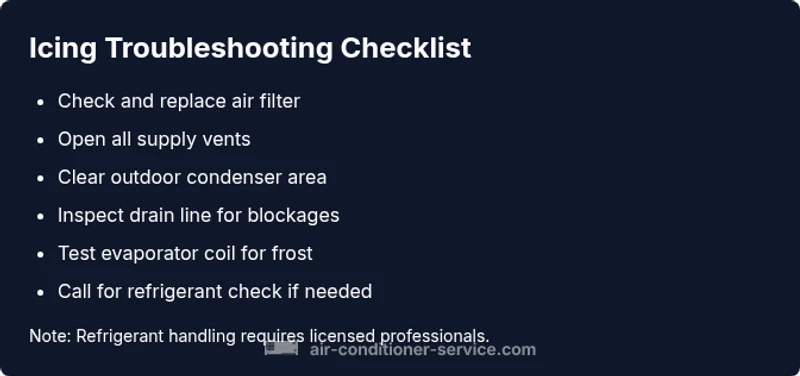
Before you touch any electrical components, turn off the system at the thermostat and outdoor disconnect. Then, inspect the air filter; if it looks dirty, replace it. Check that all supply vents are open and unblocked by furniture or drapes. Clear debris from around the outdoor condenser so air can circulate freely. If you notice visible frost on the evaporator coil or refrigerant lines, do not bang or prick the ice; this can cause damage. Instead, let the ice melt with the system off, and then recheck airflow. If frost reappears after reactivation, that’s a red flag that requires professional assessment. The goal of these checks is to rule out the easiest, most common causes and prevent unnecessary service calls.
Safety note: never operate the unit with a safety switch or panel removed. If you smell burning, hear unusual noises, or see smoke, shut off power immediately and call emergency repair services.
Diagnostic flow overview
A structured approach helps you avoid guessing. Start with symptom identification, move to quick checks, then test the airflow and refrigerant aspects. This flow guides you toward a safe, effective fix.
- Symptom: Frost or ice on the evaporator coil.
- Check: Air filter, vents, and indoor blower operation.
- Check: Outdoor unit clearance and debris.
- Check: Refrigerant charge and pressure (by a professional).
- Action: Clear airflow, replace filter, and schedule a refrigerant check if icing continues.
By following a flow, you can distinguish between ventilation problems and refrigerant issues, reducing risk and cost. Air Conditioner Service notes that most icing scenarios resolve when airflow is restored and the coil can warm up, but persistent icing can indicate a leak or mechanical fault that must be addressed by a technician.
Most common fix: clear airflow and frost prevention
The fastest path to thawing and preventing re-ice involves restoring airflow and ensuring the indoor coil can breathe. Replace clogged filters, clean the evaporator coil if accessible (carefully and with power off), and make sure supply ducts aren’t blocked. In many homes, simply improving airflow reduces frost formation within hours. If you notice continued icing after these steps, it likely points to a refrigerant issue or a failing component. Do not attempt to recharge refrigerant yourself; this requires a licensed HVAC professional and proper tooling. An effective fix plan includes verifying the filter type and change interval, cleaning accessible coils, and confirming adequate airflow from return grills.
Preventing icing in the future
Prevention is about regular maintenance and recognizing early warning signs. Schedule seasonal inspections, replace or clean filters every 1–3 months depending on usage and allergen levels, and ensure vents remain unobstructed. Keep outdoor units free of debris and ensure the surrounding area has at least 2 feet of clear space for adequate airflow. If your thermostat is set too low for extended periods, the evaporator coil can frost as it constantly removes humidity. Consider a programmable thermostat that adapts cooling needs to occupancy and humidity. Regular drain line checks prevent condensate backups, which can worsen icing conditions. Finally, stay vigilant for a sudden drop in cooling efficiency or unusual noises, which may signal an underlying issue.
Air Conditioner Service tip: A maintenance plan that includes filter replacement, coil cleaning, and pressure checks can dramatically reduce icing events and extend the life of your system.
When to call a professional
If frosting persists after you’ve completed the quick checks and airflow fixes, or if you notice a hissing sound, refrigerant smells, or ice forming on lines near the outdoor unit, it’s time to call a professional. Refrigerant issues and compressor faults require specialized training and equipment, and attempts to repair them yourself can be dangerous and illegal in some jurisdictions. The Air Conditioner Service Team recommends contacting a licensed technician if there is any doubt about the refrigerant system or electrical components. A professional can diagnose the refrigerant charge, detect leaks, and perform safe repairs while you avoid hazardous exposure and potential warranty violations.
In urgent situations, such as ice buildup that blocks airflow or frost spreading rapidly, shut the unit off and contact emergency repair services. Proactive maintenance and timely professional help keep your system running efficiently and prevent costly damage.
Steps
Estimated time: 60-90 minutes
- 1
Power down and secure the area
Turn off the thermostat and disconnect the outdoor unit at the breaker. This prevents further ice buildup and protects you from electrical hazards. Confirm the thermostat is in cooling mode if you re-energize later, and set it to a safe temperature to avoid rapid cycling.
Tip: Always verify power is off at both the thermostat and panel before inspecting components. - 2
Check and replace the air filter
Locate the return air filter, remove it, and inspect for dirt. If dirty, replace with a compatible filter of the correct MERV rating. A clean filter improves airflow and reduces coil icing risk.
Tip: Keep a spare filter on hand for quick swaps during maintenance. - 3
Inspect airflow paths
Ensure intake registers and vents aren’t blocked by furniture or drapes. Clean supply ducts if you notice excessive dust or particle buildup. Improve airflow to help the evaporator melt ice and function properly.
Tip: Check both intake and supply ducts for obstructions. - 4
Examine the outdoor unit area
Clear leaves, grass, and debris around the condenser. Ensure at least 2 feet of clearance on all sides for proper heat exchange. Restricted outdoor airflow can contribute to icing inside the home.
Tip: Keep the area around the unit free of plants and clutter. - 5
Let ice melt and test after reassembly
Once airflow is restored, wait for any visible ice to melt before turning the system back on. Check for frost reformation after startup; persistent icing indicates a deeper issue.
Tip: If ice returns quickly, do not run the system; proceed to professional evaluation. - 6
Escalate to refrigerant or component check
If icing persists after basic checks, a licensed technician should test refrigerant levels, inspect for leaks, and examine the expansion valve and evaporator coil. This protects the compressor and prevents environmental harm.
Tip: A professional will perform a precise refrigerant charge and leak repair with proper safety protocols.
Diagnosis: AC icing over
Possible Causes
- highRestricted airflow due to dirty filter or blocked vents
- mediumLow refrigerant charge or refrigerant leak
- lowFaulty expansion device or frost on evaporator coil
- mediumCondensate drainage problems causing moisture buildup
Fixes
- easyReplace or clean the air filter; ensure all vents are open and unobstructed
- hardCheck for and repair refrigerant leaks; recharge only with a professional
- mediumInspect expansion valve / metering device and replace if faulty
- easyClear and test condensate drain lines and traps; fix blockages
Common Questions
What causes a home air conditioner to ice over?
Icing typically results from restricted airflow, a refrigerant leak or low charge, and sometimes a faulty expansion valve. Each issue reduces coil temperature and encourages frost formation. A stepwise approach helps you confirm airflow problems first, then check refrigerant-related causes with professional help as needed.
Icing usually comes from airflow problems or a refrigerant issue. Start by checking filters and vents, then call a pro if icing persists.
Can a dirty air filter cause icing?
Yes. A dirty filter reduces airflow across the evaporator coil, causing the coil to drop below freezing and form ice. Replacing the filter and ensuring unobstructed returns often resolves icing caused by airflow restrictions.
A dirty filter can cause icing by limiting airflow; replace it and check vents.
Is icing dangerous for my AC system?
Ice buildup can strain the compressor and reduce cooling efficiency. Prolonged icing may lead to component damage and higher energy use. If frost persists after airflow fixes, seek professional evaluation to prevent further harm.
Ice can stress the system; if it keeps freezing, get a professional check.
Should I run the AC if there is frost on the coil?
Running the AC with frost can worsen the problem and trigger more ice. Turn the system off, allow ice to melt, and recheck airflow. If frost returns after restart, call a technician.
Don’t run it when frost is present; turn it off and call for help if it returns.
When should I call a professional for icing?
Call a professional if icing recurs after basic checks, or if you detect refrigerant smells, hissing, or visible refrigerant lines. A licensed technician can test pressures, locate leaks, and repair or replace faulty components safely.
If icing persists or you suspect a refrigerant issue, call a pro.
How can I prevent icing in the future?
Prevent icing with regular maintenance: replace filters, clean coils, keep ducts clear, and ensure the outdoor unit has ample clearance. A programmable thermostat helps maintain proper cooling without overworking the evaporator.
Regular maintenance and airflow optimization prevent icing.
Watch Video
The Essentials
- Inspect airflow before refrigerant issues.
- Replace dirty filters promptly to restore cooling.
- Keep outdoor unit clear for optimal heat exchange.
- Don’t ignore frost; persistent icing needs pro help.
- Schedule regular maintenance to prevent icing.