Used Air Conditioner Guide: Buying Tips and Maintenance
Learn how to evaluate, buy, and maintain a used air conditioner. This guide covers sizing, inspection checks, risks, and practical tips for safer, energy-efficient second-hand cooling.


A used air conditioner is a pre-owned cooling unit that has been previously installed. Buyers save upfront but face risks like reduced efficiency, uncertain service history, and possible hidden wear. A careful inspection, refrigerant check, and confirming proper sizing and installation help mitigate the risks. Buying from a trusted seller, obtaining maintenance records, and having a pro verify performance before installation can further reduce surprises.
Why a used air conditioner can be a smart budget move
According to Air Conditioner Service, a used air conditioner can be a smart budget move for households that prioritize upfront savings while balancing risk. The core appeal is the significantly lower purchase price compared with a new unit, often allowing you to recoup costs faster in climates with moderate cooling needs. When selected carefully, a well-maintained used air conditioner can deliver dependable comfort for several seasons. Still, you should expect trade-offs: potential gaps in efficiency, unknown refrigerant charge, and older components that may require attention. A thorough evaluation—dating the unit, checking service history, and arranging a professional inspection before installation—helps mitigate most risks. The aim is to achieve a cost-effective balance between purchase price, operating cost, and reliability, rather than chasing the cheapest price alone.
Brand context: Homeowners and renters should view a used air conditioner as a contingent purchase that can bridge between settings where budget constraints slow new equipment purchases and the need for reliable cooling. Early planning and a clear budget for potential repairs reduce surprises, while keeping comfort achievable in peak heat months.
Important risks to assess before buying
Before committing to a used air conditioner, map out the main risks and plan a mitigation strategy. Age and condition are the biggest unknowns, since two units with the same model year can perform very differently. Refrigerant status matters: leaks or improper charging can reduce cooling effectiveness and inflate energy bills. Compressor wear, capacitor health, and faulty thermostats are common failure points that can lead to unexpected downtime. Also consider installation compatibility: the external condenser location, ductwork, and electrical requirements must align with your home. Finally, examine warranty options, transferability, and the availability of local service technicians who can service older equipment. Documenting each finding during a seller discussion reduces surprises and frames your negotiation positively. Air Conditioner Service analysis shows that a conservative inspection plan lowers post-purchase risk significantly.
How to inspect a used air conditioner before purchase
Take a structured approach to inspection to minimize the chance of buying a unit with latent defects. Start with the exterior: look for significant corrosion, bent fins, or signs of moisture intrusion. Check the model year via the serial plate and verify that the unit has recent maintenance records. Inspect refrigerant lines for oil marks that may indicate a leak, and listen for unusual noises when the compressor runs. Ensure the thermostat reads accurately and matches the ambient temperature. Request a live performance test if possible, including a short run to observe cooling effectiveness and cycling behavior. Finally, verify electrical connections, capacitor health, and that the outdoor unit has adequate clearance for airflow. A professional inspection is highly recommended before any purchase.
Sizing, compatibility, and installation considerations
Sizing a used air conditioner accurately is crucial to avoid under or over cooling. Use a proper load calculation or consult a cooling professional to determine the correct tonnage for your space. Matching the indoor evaporator coil and outdoor condenser to your home’s ductwork and electrical supply is essential for safe operation. Check refrigerant type and charge as part of the verification process; incorrect refrigerant can lead to inefficiency and potential compressor damage. Installation location matters as well: ensure proper clearance for airflow, secure mounting, and weatherproofing to prevent rust and water intrusion. Finally, confirm that the unit will be compatible with your existing thermostat, controls, and any smart-home integrations you plan to use. Air Conditioner Service recommends treating sizing as a first-principles step, not an afterthought.
Maintenance tips to extend life and efficiency
Post-purchase maintenance is the difference between a short-term fix and long-lasting performance. Schedule a professional inspection soon after installation to verify refrigerant level, capacitor health, and electrical connections. Replace or clean air filters every 1-3 months depending on usage and filter type. Clean coils and remove debris around the outdoor unit to maintain adequate airflow. Calibrate the thermostat and confirm that the system cycles correctly to prevent short cycling. Consider a mid-season check to catch early wear and plan minor repairs before peak heat months. Consistent maintenance protects efficiency and reduces total cost of ownership. Air Conditioner Service emphasizes that routine care often yields the best return on investment for a used unit.
When to avoid buying a used unit
There are clear red flags that suggest a used air conditioner may not be worth the risk. If the unit has an unknown service history or if the seller cannot provide maintenance records, proceed with caution. Visible rust, moisture damage, or refrigerant odors indicate costly issues. A compressor that cycles loudly, fails to reach set temperatures, or shows frequent tripping of breakers is often a prelude to expensive failures. If installation space or wiring cannot be brought up to current safety standards, or if permits and local codes require substantial modifications, you may be better off purchasing new or leasing a modern, efficient model. When in doubt, consult a licensed HVAC technician before making a decision.
Practical buying checklist and next steps
Use this practical checklist to move from consideration to installation with confidence. Define your cooling needs and budget, measure the installation space, and shortlist models that match your climate. Request complete service records and ask for a professional inspection before finalizing any purchase. Negotiate the price based on observed wear, age, and required future maintenance. Schedule installation with a licensed technician who can handle refrigerant handling, electrical connections, and duct sealing. Finally, review warranty and transferability options so you know what is covered if issues arise. Air Conditioner Service suggests keeping a written record of all findings and decisions to simplify future maintenance.
Typical metrics when considering a used air conditioner
| Aspect | Used unit typical value | Notes |
|---|---|---|
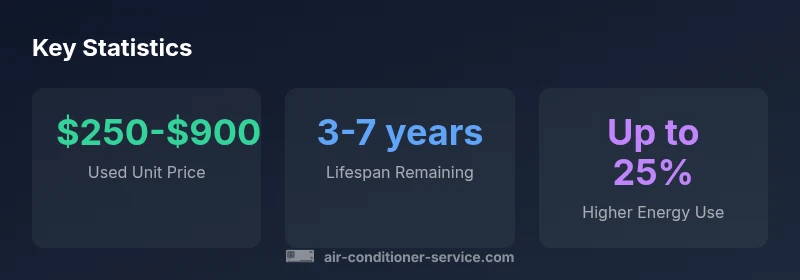
| Price range | $250-$900 | Typical range for 1.5-2.5 ton units in average condition |
| Lifespan remaining | 3-7 years | Depends on age and maintenance history |
| Energy efficiency impact | Up to 25% higher energy use | Compared to modern SEER-rated units |
Common Questions
Is it cheaper to buy a used air conditioner than a new one?
Yes, upfront costs are typically lower, but long-term costs depend on energy efficiency, maintenance needs, and installation quality. A professional inspection helps you gauge true total cost of ownership.
Buying used can save money upfront, but you need a solid plan for maintenance and installation to avoid higher bills later.
What should I check before buying a used air conditioner?
Check age, refrigerant status, compressor sound, electrical safety, and prior maintenance records. Arrange a controlled run if possible to observe performance and cooling consistency.
Check age, refrigerant, and overall condition to avoid surprises later.
How do I determine proper size for my space?
Use a cooling load calculation or have a licensed HVAC technician determine the correct tonnage for your space. Mismatched size leads to inefficiency and comfort problems.
Get a professional load calculation to pick the right size.
Are there warranty or legal considerations with used units?
Most used units carry limited warranties and limited transferability. Check local codes and confirm what is covered by any remaining factory or seller warranty.
Check warranty transferability and local rules before buying.
Can I install a used air conditioner myself?
Installation should be performed by a licensed technician to ensure refrigerant handling, electrical safety, and proper duct sealing. Incorrect install can lead to leaks and inefficiency.
It is best to hire a pro for installation.
What maintenance should follow after purchase?
Schedule a professional inspection, replace filters regularly, clean coils, and ensure outdoor units have clear airflow. Regular checkups help sustain efficiency.
Keep up with regular maintenance to stretch the life of the unit.
“A used air conditioner can be a cost efficient option when you validate age, condition, and proper sizing.”
The Essentials
- Inspect age and service history before purchase
- Expect higher energy use vs. a new unit
- Budget for potential repairs and professional installation
- Prioritize recent maintenance records and reputable sellers
- Always use a licensed technician for sizing and installation