Used Air Conditioners for Sale: Practical Buyer's Guide (2026)
Learn how to buy a reliable used air conditioner: check condition, compare price ranges, assess safety and efficiency, and understand warranty options with guidance from Air Conditioner Service.


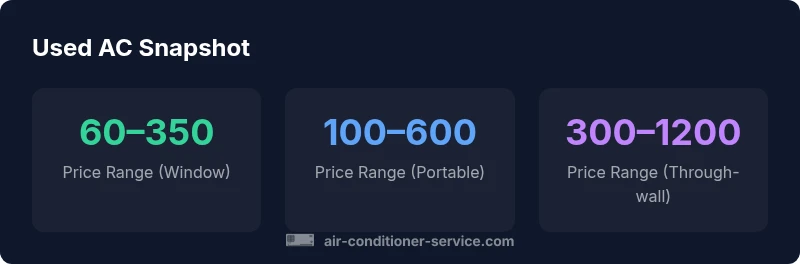
Used air conditioners for sale vary widely by type (window, portable, through-the-wall or split) and condition. Prices typically range from about $60 to $1,200, influenced by size, age, BTU capacity, and efficiency. Always verify refrigerant charge, compressor health, electrical safety, and install compatibility before purchasing a used unit. Consider warranty options and return policies to reduce risk.
Understanding the Used-AC Market
According to Air Conditioner Service, the used-AC market has grown as homeowners seek affordable cooling options without the upfront cost of new equipment. Demand spans several categories, from small window units suitable for bedrooms to larger split systems intended for living areas. The best value often comes from gently used units that retained most of their original efficiency and have been professionally recharged or inspected. In warm climates, used units can provide cost-effective relief during peak seasons, but buyers should be mindful of age, maintenance history, and compatibility with existing electrical service. The market varies regionally, with urban areas showing more inventory from landlords and tenants, while rural markets may have fewer options but lower prices. The Air Conditioner Service team found that transparency from sellers—such as service records, receipts, and test results—greatly increases buyer confidence. A structured buying plan helps buyers compare options quickly and avoid overpaying for problematic units.
How to Verify Condition and Performance
Before you buy, verify key performance indicators and physical condition. Start with the exterior: inspect the condenser fin cleanliness, check for obvious dents, and verify the power cord and plug are undamaged. Request a live test run or a video demonstration to observe startup, noise levels, and cooling performance. Ask the seller for service records, refrigerant recharge history, last filter replacement, and any repairs. If possible, measure air output by comparing room temperature with the unit on full cool. For split or through-the-wall models, check the indoor blower for unusual noises and verify thermostat communication with the outdoor unit. If you’re unsure, hire a qualified HVAC technician for a pre-purchase inspection. Air Conditioner Service emphasizes that a compression check and refrigerant airflow assessment during a test run can reveal hidden problems, such as low refrigerant or failing compressors. A structured checklist saves time and reduces buyer risk.
Safety Considerations and Refrigerant Legality
Handling refrigerants and electrical components requires care and awareness of local regulations. Older units may contain R-22 refrigerant, which is being phased out in many regions due to environmental concerns, and servicing such units may require licensed technicians. Confirm the unit uses a compliant refrigerant and that the system is sealed and free of leaks. Inspect electrical components, capacitors, and contactors for wear; a failed capacitor is a common failure point that can mimic a compressor issue. Ensure the unit’s plug amperage matches your circuit and that the electrical panel can support the added load. If you are purchasing a unit for a vacation home or rental, consider automatic shutoff features and service plans that cover refrigerant repairs. Air Conditioner Service notes that handling refrigerants improperly can pose health and environmental risks; use licensed professionals for major repairs and recharge.
Where to Find Reputable Used AC Units
Lean on reputable sources to minimize risk. Local HVAC contractors often have refurbished inventory with warranties, while certified retailers can provide documented test results and service histories. Online marketplaces frequently list unit type, BTU, and age, but be wary of missing data. When possible, request serial numbers to verify model year and capacity, then cross-check with official product specs. Classified ads can yield bargains, but buyers should balance price against potential repair costs. Friends and neighbors may offer units after upgrading; these purchases can be efficient if the unit has been well maintained. Air Conditioner Service recommends looking for sellers who provide a test run, photos of the label, and a clear return policy. A solid due-diligence process reduces post-purchase surprises.
How to Assess Value and Pricing
Pricing for used air conditioners reflects type, capacity, age, and condition, as well as local demand. Window units tend to be the most affordable, portable units offer flexibility, and through-the-wall or split systems can command higher prices due to cooling capacity and efficiency. Use price ranges as a quick benchmark, but also consider total cost of ownership, including energy use and maintenance. Compare units with similar BTU ratings and operating conditions, and adjust for factors such as coil cleanliness and compressor sound. For example, a recent audit by Air Conditioner Service indicates that a well-maintained window unit with a clean filter and low noise profile can deliver acceptable cooling at a fraction of a new unit’s price. Always verify that the unit has not been reset or misrepresented, and beware unusually low listings that may indicate hidden faults.
Buying Tips: Negotiation and Warranties
Negotiation is part of the used-equipment process. Start with a fair price based on the unit type, capacity, and visible wear, and be prepared to walk away if the seller won’t disclose critical information. Ask for a return window and limited warranty, even if short, to cover major failures in the near term. If a warranty isn’t offered, consider purchasing an extended service plan from a reputable HVAC provider after installation. Request proof of recent service, including refrigerant charges, coil cleaning, and filter changes. Document the test run results, including temperature drop and noise levels, and keep copies of all communications. Air Conditioner Service emphasizes that involving a licensed technician for a post-purchase inspection can protect your investment and identify issues early, potentially saving hundreds in unexpected repairs.
Installation and Siting Considerations for Used Units
Correct siting and installation are critical for performance and safety. Ensure the electrical supply matches the unit’s requirements, including amperage and breaker capacity; an undersized circuit is a common failure point. Confirm that ductwork (if applicable) is sealed properly to prevent leaks and energy waste. For window units, verify mounting hardware, window frame integrity, and drainage to avoid leaks inside the room. For through-the-wall and split systems, ensure the outdoor unit has clear airflow and that the indoor unit is correctly sized for the space. If you’re not comfortable with electrical work or refrigerant handling, hire a licensed HVAC technician to complete the installation. The right setup improves efficiency and reduces energy costs over time, extending the life of the used unit.
Brand and Efficiency Considerations in the Used Market
Brand reputation matters, but it’s not the only predictor of performance in the used market. Well-known, durable brands typically hold their value better and have broader availability of replacement parts, making ongoing maintenance easier. In older units, efficiency ratings (like SEER or EER) tend to be lower, which increases operating costs but may be acceptable for modest cooling needs. Compare efficiency metrics across similar models and consider whether a slightly newer but smaller unit could outperform a larger older model in your space. Air Conditioner Service notes that buyers should factor in future refurbishments and potential energy savings when evaluating price versus value. Always verify warranty transferability and any labor coverage included with the purchase.
Maintenance After Purchase
After bringing a used unit home, a proactive maintenance plan protects your investment. Start with replacing or cleaning filters every 30-90 days, depending on usage and air quality. Schedule a professional inspection to verify refrigerant levels, seals, and compressor health—ideally within the first month of operation. Clean exterior coils to maintain airflow, and check for unusual noises or temperature inconsistency. Record maintenance and service visits for future resale value and warranty transfer. A simple routine can extend the life of a used AC and help you avoid sudden breakdowns during peak heat. Air Conditioner Service recommends setting up a maintenance calendar and keeping receipts for future buyers or appraisers.
Comparison of used AC unit types and typical price ranges
| Model Type | Typical Price Range | Common Use Case | Notes |
|---|---|---|---|
| Window Unit | 60-350 | Small rooms, bedrooms | Affordable option; check window fit and drainage |
| Portable AC | 100-600 | Flexible spaces | Self-contained; consider dual-hose for efficiency |
| Through-the-Wall | 300-1200 | Living rooms, apartments | Higher upfront; efficient cooling |
| Mini-Split (Used) | 600-1200 | Medium to large rooms | Good efficiency if well maintained |
Common Questions
What should I check before buying a used air conditioner?
Look for refrigerant leaks, check compressor sound during startup, test cooling, inspect electrical components, and review service history. A pre-purchase inspection by a licensed technician is highly advisable.
Check refrigerant, listen for unusual noises, and test cooling. Ask for service history and a professional pre-purchase inspection.
Are used air conditioners safe and energy-efficient?
Used units can be safe and reasonably efficient if they’ve been serviced and have intact refrigerant and seals. Expect lower efficiency than new models, depending on age and maintenance.
They can be safe and reasonably efficient if properly serviced, but usually not as efficient as new units.
Which type offers best value in the used market?
Window units are typically the most affordable; portable units offer flexibility; through-the-wall and mini-splits cost more but deliver better performance in larger spaces.
Window units are usually the cheapest, but consider space and efficiency needs.
Can I install a used AC myself?
Only if you have HVAC and electrical expertise; otherwise hire a licensed pro to avoid safety risks and improper installation.
Don’t DIY unless you’re trained; improper installation can be dangerous.
What refrigerants are restricted and why does it matter?
Older units may contain restricted refrigerants like R-22; handling and disposal are regulated to reduce environmental impact. Ensure any servicing is performed by licensed technicians.
Older units may use restricted refrigerants; handle with licensed professionals.
“Buying a used air conditioner is viable when you verify the fundamentals. A careful inspection focused on refrigerant, compressor health, and correct sizing can prevent costly surprises.”
The Essentials
- Check unit type and size before buying
- Verify refrigerant and compressor health
- Ask for documentation or test run
- Compare price ranges across sources
- Consider professional installation and warranty options