Rooftop RV AC Guide: Install, Troubleshoot, Maintain Safely
Learn how to choose, install, and maintain a rooftop air conditioner for your RV. This practical guide covers safety, compatibility, mounting, wiring, and common troubleshooting tips from Air Conditioner Service to keep you cool on the road.


Learn how to safely install, troubleshoot, and maintain a rooftop air conditioner for an RV. This guide covers compatibility checks, mounting basics, electrical considerations, sealing, and regular maintenance to keep your RV cool on the road. Follow the step-by-step process to ensure reliable performance and extend the unit’s life. Prepare your space, gather tools, and verify safety before starting.
Why rooftop RV AC matters
Rooftop air conditioners are a practical solution for RV owners who want full cooling without sacrificing interior space. In most setups, the unit sits on the roof and feeds cooled air into the living area through intake and supply vents. For many travelers, a rooftop air conditioner rv provides reliable comfort whether parked or in transit. According to Air Conditioner Service, rooftop units are designed to be compact and rugged for travel, but they require proper mounting and sealing to prevent leaks and heat gain. The main advantages include quick installation on the roof, reduced interior vibration, and easier replacement as units age. The trade-offs include potential roof penetrations, electrical load management, and the need for adequate roof clearance to support proper airflow. This guide explains how to choose the right unit, plan the installation, and perform routine maintenance to keep your RV comfortable in varied climates.
Safety prerequisites before you begin
Before you start any work on the roof, power down the RV completely and disconnect shore power if available. Use a non-slip ladder and wear protective gloves and safety glasses. Check that the roof surface is dry, clean, and free of debris that could compromise a seal. Identify the best mounting location with clear line-of-sight for the condenser fan and unobstructed airflow. Have a second person assist when lifting the unit into place. If you’re unsure about roof integrity or electrical work, consult a professional. Safety first prevents costly mistakes and injuries.
Choosing the right rooftop AC for your RV
Selecting the right rooftop air conditioner rv involves balancing cooling needs with weight, space, and electrical requirements. Start by checking the unit’s compatibility with your roof’s opening, electrical circuit, and mounting pattern. Consider energy efficiency, noise levels, and whether you want a ducted or non-ducted setup. A larger unit isn’t always better if your roof can’t support it, or if you don’t have adequate electrical service. Read the manufacturer’s spec sheet for mounting dimensions, airflow performance, and warranty terms. Air Conditioner Service analysis, 2026, suggests prioritizing reliability, service access, and ease of maintenance when choosing a rooftop RV AC. Plan for seasonal use, climate, and potential insulation needs for extreme conditions.
Preparation and mounting plan
Create a precise mounting plan before touching the roof. Measure the existing roof opening and confirm the pattern matches the new unit. Gather tools, sealant, and mounting hardware in advance. Mark cutouts on a protective sheet to avoid mistakes, and practice lifting the unit with a helper. A well-planned start reduces rework, speeds installation, and minimizes the risk of roof leaks. Remember to account for ventilation clearances around the outdoor unit so airflow isn’t obstructed by vents or skylights.
Step-by-step installation and setup (Overview)
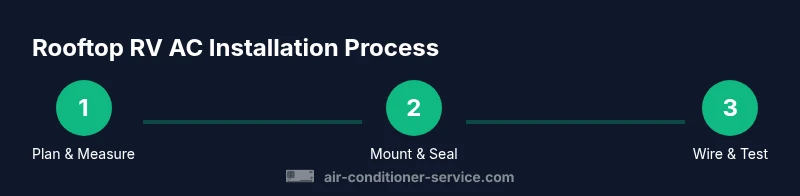
This section provides the essential steps to install a rooftop RV AC safely. It covers disassembly of any old unit, mounting bracket installation, sealing, wiring, and final testing. Always follow the manufacturer’s instructions for your specific model and use the required safety gear. The steps below assume a standard non-ducted rooftop unit compatible with common RV roof openings.
Maintenance, troubleshooting, and common issues
Regular maintenance extends the life of a rooftop RV AC and keeps it working efficiently. Change or clean filters as recommended, inspect seals for cracks or gaps, and check for unusual vibrations or noises. Leaks around the roof seam indicate seal degradation and should be addressed promptly. Common issues include inadequate cooling due to airflow restrictions, frozen coils from low refrigerant or restricted airflow, and electrical faults from loose connections. Following a routine maintenance schedule helps prevent expensive repairs and preserves comfort on travels.
Energy efficiency, winterization, and long-term care
To maximize efficiency, ensure proper insulation around ducts and vents, and seal any gaps where warm air can bypass the unit. In winter, winterize the RV and protect the outdoor unit from ice and debris. Regular inspections before peak seasons help prevent unexpected failures. Keeping a maintenance log, scheduling routine checkups, and using high-quality sealing products reduces energy waste and extends the life of the rooftop air conditioner rv.
Tools & Materials
- Ladder or rooftop access equipment(Stable contact, non-slip, rated for roof use)
- Drill with assorted bits(1/8" to 1/4" bits; soft surface for sealant screws)
- Screwdrivers (Phillips and flat-head)(Varied sizes to fit mounting screws)
- Silicone roof sealant or butyl tape(Weatherproof seal around mounting holes and seam)
- Measuring tape and marker(Accurate layout for mounting pattern)
- Roof patch or reinforcing material(Use if you find weak spots around the opening)
- Roof mounting kit (brackets, screws, gaskets)(Manufacturer-specified hardware for the unit)
- Safety gear (gloves, safety glasses)(Protective equipment during cutting and drilling)
- Electrical tester or multimeter(Verify power and voltage during connections)
Steps
Estimated time: Estimated total time: 3-6 hours
- 1
Assess roof space and plan location
Measure the roof opening and verify there is unobstructed airflow where the condenser will sit. Mark the mounting pattern on the roof and prepare the surrounding area for sealant. Document the orientation so hoses, cables, and vents align correctly with interior ducts.
Tip: Take photos from multiple angles to guide reassembly and future maintenance. - 2
Power down and prepare safety gear
Disconnect shore power and battery if present. Wear gloves and eye protection. Ensure the roof is dry, stable, and free of debris. Have a second person assist with handling the heavy unit.
Tip: Double-check that all power sources are isolated before touching electrical connections. - 3
Remove old unit and clean the opening
If replacing an old unit, carefully remove it and clean the cutout. Inspect the opening for rust or rot and repair any damaged areas before mounting the new unit.
Tip: Keep old mounting hardware organized in case you need a spare during install. - 4
Install mounting bracket and seal roof opening
Position the mounting brackets, attach them securely, and apply a continuous bead of sealant around the opening to prevent leaks. Ensure brackets are level and firmly anchored to roof structure.
Tip: Always seal from the outside in to ensure weatherproofing on the exterior surface. - 5
Mount the new unit on brackets
Lift the air conditioner into place and secure it to the brackets. Check that the unit sits flush and there is a consistent seal along the perimeter.
Tip: Have a helper support the unit to minimize the risk of dropping or misalignment. - 6
Make electrical and control connections
Connect the power supply and control wiring according to the manufacturer’s instructions. Use a multimeter to verify voltage and ensure all connections are tight and insulated.
Tip: Label wires during disassembly to simplify reassembly and future maintenance. - 7
Seal joints and test for leaks
Apply sealant to all penetrations and test the roof seal for leaks with a gentle water spray. Confirm there is no water intrusion around screws or seams.
Tip: Wait for the sealant to cure fully before running the unit to avoid moisture-related issues. - 8
Power on, test operation and adjust
Restore power and run a full test of cooling, airflow direction, and thermostat control. Listen for unusual noises and verify there is proper air distribution throughout living areas.
Tip: Check condenser clearance and clean the exterior coil after the first few hours of operation.
Common Questions
What size rooftop AC do I need for my RV?
Selection depends on your RV interior volume, climate, and insulation. Choose a unit that fits your roof opening and electrical capacity, prioritizing efficiency and airflow over sheer size.
Choosing the right size depends on your space and climate; pick a unit that matches your roof opening and power capacity.
Is it safe to install a rooftop RV AC myself?
DIY installation can be done with proper tools and safety precautions, but it involves roof work and electrical wiring. If you’re unsure, consult a professional to avoid leaks or electrical hazards.
It can be done, but only if you’re confident with roof work and wiring. If not, hire a pro.
How often should I service a rooftop RV AC?
Regular maintenance should include filter cleaning, seal inspection, and coil cleaning. A yearly check or at the start of each travel season is common advice to prevent performance loss.
Clean filters and check seals at least once a year, ideally before travel season.
Why isn’t my RV AC cooling adequately?
Causes include restricted airflow, dirty filters, leaks in seals, or electrical issues. Start with cleaning filters, inspecting seals, and confirming proper airflow before calling for service.
Check filters and seals first, then inspect for airflow blockages or electrical problems.
Can I run a rooftop RV AC on battery power?
Most rooftop RV AC units require a dedicated power source or inverter capable of supplying steady 120V AC. Battery backups are possible with a suitable inverter and sufficient capacity.
It’s possible with the right inverter and battery setup, but not with small portable batteries alone.
What maintenance tasks can I do to improve efficiency?
Keep the filters clean, seal the roof well, and contrast airflow by ensuring the exterior coil is free of debris. Regular inspections help maintain efficiency.
Clean filters, seal the roof well, and keep the exterior coil clear of debris.
Watch Video
The Essentials
- Plan the installation thoroughly before lifting the unit.
- Seal all penetrations to prevent leaks and heat gain.
- Follow manufacturer wiring diagrams to ensure safe operation.
- Perform regular maintenance to extend unit life.
- Prioritize safety and seek professional help if unsure.