Is It OK to Spray Water on Your Air Conditioner? A Practical Guide
Learn when spraying water on your air conditioner is safe, the risks to avoid, and practical cleaning tips. Air Conditioner Service provides a practical, safety-first approach for homeowners and renters.


Is it ok to spray water on your air conditioner? Generally, avoid spraying water directly on the outdoor condenser or electrical components. A light mist can be used to rinse leaves or debris from the fins, but never saturate the unit, and never spray water into the electrical compartment. For cleaning, follow manufacturer guidance or hire a professional.
Is it OK to spray water on your air conditioner? Understanding the question
Many homeowners ask is it ok to spray water on your air conditioner; the answer is nuanced. Generally, direct spraying on the outdoor condenser or electrical components is risky and can cause short circuits, corrosion, or water ingress into sensitive parts. This section lays the groundwork for safer cleaning practices, clarifying what water can and cannot do to an AC system. If you search is it ok to spray water on your air conditioner, you'll see mixed opinions, but safety and longevity should guide every decision. The goal is to protect electrical connections, keep coils clean without damaging fins, and avoid compromising warranties. By understanding where water interactions matter most, you can decide when a light external rinse is acceptable and when to skip water entirely.
How water interacts with AC hardware: the critical hard truth
The outdoor condenser and nearby components are designed to move heat away from your home. Water can help remove surface debris, but it can also disrupt protective coatings, drive moisture into electrical connections, and force debris into the fins or drain paths. The most vulnerable parts are the electrical housing, contact points on contactor relays, and the narrow coils behind the aluminum fins. Direct, high-pressure sprays can bend fins, reducing airflow and efficiency. In short, water is not your friend inside the electrical compartment; it can be your ally only on the surface of non-electrical areas when used with extreme care and the right equipment.
When water can help: safe techniques for outdoor cleaning
Water has a role in exterior maintenance if used very carefully. A light rinse from the outside of the unit can help remove pollen, leaves, and visible debris, but you must keep the spray at a significant distance, use the lowest pressure setting, and never aim at the coil directly. The best practice is to use a spray bottle on a fine mist or a garden hose with a wide spray nozzle, angled away from the fins. If the model instructions explicitly permit exterior rinsing, follow the manufacturer’s guidance to avoid unintended consequences. Always operate only when the unit is powered off and the surrounding area is dry.
Cleaning methods that do not involve spraying water: safer alternatives
There are several effective approaches that minimize risk while keeping your AC clean. Use a damp microfiber cloth to wipe down the exterior housing and any accessible panels. A soft brush or compressed air can remove surface dust from the grille without touching the fins or coils. For stubborn debris near the drain line, a dry or slightly damp brush can help dislodge particles. If you need deeper cleaning, consider hiring a qualified technician who can safely access internal components and perform professional coil cleaning. Remember: water should not be sprayed toward electrical parts or inside the cabinet.
Weather, timing, and environmental considerations
Season and weather conditions influence how safely you approach cleaning. Avoid any water-based cleaning when outdoor temperatures are extreme, such as very hot sunny days or freezing conditions. High humidity combined with spray can lead to condensation inside electrical enclosures, while cold weather makes metal fins brittle and more susceptible to bending. Plan maintenance for mild days with dry surroundings, and never perform cleaning during rainfall or near the electrical disconnect. The goal is to prevent moisture from seeping into components that power your system.
Maintenance routines that minimize the need for water-based cleaning
Developing a routine helps reduce the need to spray water. Regular outdoor inspections can catch debris before it becomes an issue. Use a soft brush to remove loose dust from the grille and surrounding area, clean or replace air filters as needed, and ensure the condensate drain path is clear. Keeping the area around the outdoor unit free of vegetation and debris minimizes the need for any exterior washing. Periodic professional checkups can diagnose coil efficiency, refrigerant levels, and electrical connections, preserving performance without risky water use.
When to call a professional: red flags and timing
If you notice reduced cooling performance, unusual noises, visible corrosion, or signs of moisture entering the electrical housing, pause all DIY cleaning and call a licensed HVAC technician. Water intrusions can cause short circuits, blown fuses, or unsafe conditions around a live electrical cabinet. A professional can perform a safe external rinse if appropriate and carry out a coil cleaning or refrigerant check that is beyond typical homeowner tasks. Timely professional intervention often prevents costly repairs later.
Safety checklist: do's and don'ts for spray water and your AC
Do:
- Power off the unit at the breaker and outdoor disconnect before any cleaning.
- Use water only on exterior surfaces away from electrical components and the cabinet openings.
- Prefer damp cloths, brushes, and low-pressure rinses from a safe distance (if permitted by manufacturer).
- Schedule regular professional maintenance to keep coils clean and airflow optimal.
Don't:
- Spray directly into the electrical housing or onto control panels.
- Use high-pressure spray or a power washer on fins or coils.
- Clean the interior cabinet or fan area with water unless instructed by a professional.
- Ignore unusual noises, frost buildup, or refrigerant smells, which require immediate attention.
Final notes: a practical stance on is it ok to spray water on your air conditioner
In most cases, direct water spraying is not recommended for residential AC units. Surface cleaning with minimal moisture and careful brushes can help without risking damage. Always refer to your unit’s manual, and when in doubt, contact a professional. This approach protects electrical safety, coil integrity, and warranty terms while keeping your home comfortable.
Tools & Materials
- Garden hose with low-pressure nozzle(Keep nozzle at least 2-3 feet away from fins; avoid directing spray at electrical parts)
- Soft-bristle brush(Use for outer surfaces and grille; avoid aggressive scrubbing on fins)
- Microfiber cloths(For wiping exterior housing and accessible panels)
- Mild dish soap or gentle cleaner(Dilute in water for surface cleaning; avoid harsh chemicals)
- Bucket(For soapy water and rinsing cloths)
- Safety gloves(Protect hands from grime and sharp edges)
- Safety glasses(Eye protection during cleaning)
- Spray bottle with adjustable nozzle(Optional for very light mist on non-electrical surfaces)
Steps
Estimated time: 30-45 minutes
- 1
Power off and isolate
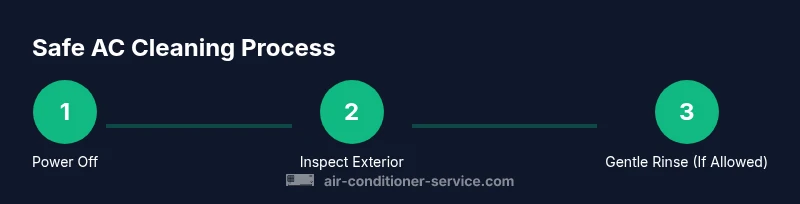
Turn off the outdoor disconnect and switch off the indoor breaker to prevent any electrical shock or short circuit while you work. Verify the unit is not receiving power with a quick test if you have a non-contact tester.
Tip: Lockout the breaker if possible to prevent accidental re-energizing. - 2
Inspect exterior for debris
Look for leaves, dirt, or mulch around the condenser grille. Remove loose debris with gloved hands or a soft brush, being careful not to bend any fins or push debris inward.
Tip: Do not pull vines or large debris into the cabinet; keep the area clean and clear. - 3
Prepare cleaning solution
Mix a mild soap solution in a bucket according to manufacturer guidance. Use a soft cloth or brush to apply the solution to exterior surfaces—never pour cleaner directly into cabinets or onto electrical components.
Tip: Test a small area first to ensure no discoloration. - 4
Wipe and brush exterior surfaces
Dip a microfiber cloth in the soapy solution and wipe the housing. Use the soft brush on the grille to lift dust, working from top to bottom to prevent dirty water from running into critical areas.
Tip: Keep movements gentle to avoid bending the grille. - 5
Rinse exterior only with low pressure
If your manufacturer allows external rinsing, use a garden hose on a wide spray at the lowest setting. Maintain distance from the fins and do not aim at electrical housing or wiring. Stop immediately if water appears to pool in unwanted areas.
Tip: Never spray directly into the coil fins; you can push debris inward. - 6
Clean the condensate drain path
Check the condensate drain line for blockages and clear them with a brush or flexible cable if you are trained to do so. Avoid using liquids that could back up into the unit.
Tip: A clogged drain can lead to standing water and mold; address promptly. - 7
Dry and recheck
Wipe surfaces dry with a clean cloth and inspect for any moisture near electrical components. Reinspect the area for remaining debris and ensure clearances around the unit.
Tip: Allow the unit to dry completely before restoring power. - 8
Reconnect power and test
Restore power at the breaker and outdoor disconnect. Listen for normal fan operation and check for vibration or unusual noises once the unit starts.
Tip: If you hear grinding or buzzing, switch off immediately and consult a professional. - 9
Document and schedule next maintenance
Note what you did and schedule routine maintenance. A yearly professional inspection keeps coils clean and efficiency high.
Tip: Set a reminder for seasonal checks and filter changes.
Common Questions
Is it dangerous to spray water on an outdoor AC unit?
Yes. Direct water on the outdoor unit can cause electrical shorts, corrosion, and moisture intrusion. Use water only on safe exterior surfaces and only if the manufacturer allows it.
Direct spraying on the outdoor unit can be dangerous because water may reach electrical parts. Use water only on safe surfaces if recommended by the manufacturer.
Can I spray water on a window AC?
Window units are often more sensitive to moisture inside, and manufacturers typically advise against spraying water directly on them. Use damp cloths and professional services for internal cleaning when needed.
Window AC units are usually not designed for external water spray; avoid direct moisture inside the unit.
What should I do if water gets into the electrical housing?
If water leaks into the electrical housing, shut off power immediately and contact a licensed HVAC technician. Do not operate the unit until it has been inspected for safety and warranty validity.
If water gets into the electrical housing, turn off power and call a technician right away.
How often should I clean the outside unit without water?
Clean the exterior once or twice a year as part of preventive maintenance. Use a soft brush and damp cloth to remove surface dirt; avoid aggressive cleaning that could damage fins.
Clean the outside unit once or twice a year using gentle brushing and wiping.
Are there safe cleaning products for ACs?
Yes. Use mild, non-abrasive cleaners and follow the manufacturer’s recommendations. Avoid harsh chemicals that could corrode coatings or affect refrigerant components.
Use mild cleaners recommended by the manufacturer and avoid harsh chemicals.
Watch Video
The Essentials
- Power off before any cleaning
- Avoid spraying water into electrical components
- Use gentle cleaning methods for exterior surfaces
- Reserve professional help for internal or stubborn issues
- Regular maintenance improves efficiency and longevity