Ice from Air Conditioner: Troubleshooting Guide
Learn how to diagnose and fix ice from air conditioner quickly with step-by-step checks, safety tips, and when to call a pro from Air Conditioner Service.


Most often, ice forms on an air conditioner due to restricted airflow, dirty filters, or blocked return vents. A second common cause is a refrigerant leak leading to low pressure. Start by turning the system off, thawing the ice, and inspecting the air filter and clear vents. If ice reform persists, contact a professional for a refrigerant check.
Why ice from air conditioner happens
When an air conditioner forms ice on the evaporator coil, it’s usually a sign that heat transfer is blocked or the cooling cycle is out of balance. According to Air Conditioner Service, ice from air conditioner is a common issue homeowners notice during hot, humid days. The evaporator coil is designed to absorb heat from your home; when moisture in the air condenses on the cold coil, it should run as a thin, nonfrosty layer. If that moisture freezes, the coil becomes coated with ice, which blocks airflow and reduces cooling.
Most often, the root cause is restricted airflow. A dirty air filter, closed or blocked supply registers, or furniture blocking vents can dramatically reduce air movement over the coil. When air can’t circulate, the coil temperature drops further, and condensation freezes into ice. A second frequent culprit is a refrigerant imbalance. If refrigerant levels are too low due to a leak, the coil can become too cold, causing ice to form. Other causes include a failing defrost/defrost control in heat pump systems, a dirty outdoor coil, or improper thermostat settings.
Profound humidity levels also play a role; in very humid environments, even normal operation can produce more frost than usual. Finally, mechanical issues—like a dirty blower fan or incorrect wiring—can confuse the system and accelerate ice buildup. Understand that ice is a symptom, not a standalone problem; addressing the underlying cause will prevent frequent reformation and water damage.
If you notice ice, don’t ignore it. A small amount of frost at startup is not unusual after a unit sits idle, but persistent ice that thickens over time indicates an ongoing issue. Immediately power down the indoor unit to thaw the ice and prevent water damage. Once the ice has melted, perform a quick inspection: check the air filter, clear any obstructions from supply vents, and ensure the outdoor unit has adequate clearance. In many cases, a simple airflow improvement is enough to stop the cycle.
Quick Checks You Can Do Right Now
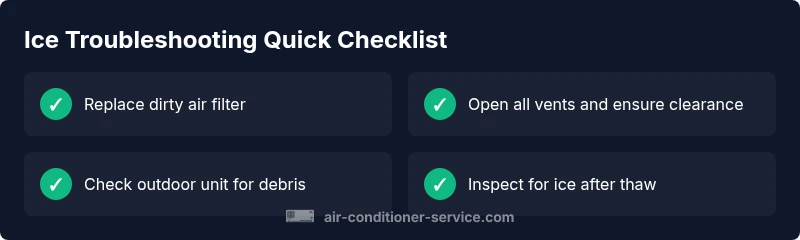
If ice is present or forming, you can perform a few safe, immediate checks before calling for service. Start by turning off the indoor unit at the thermostat or breaker to stop the cooling cycle and reduce the risk of water damage. Then thaw the ice completely—do not attempt to chip through thick ice; use towels to absorb meltwater and allow the coil to return to normal temperature. Inspect the air filter: remove and replace it if it looks dirty or clogged, and check that all supply vents are open and unobstructed. Look around the indoor cabinet and ensure there’s at least a few inches of clearance for air to circulate. Inspect the outdoor condenser for debris, plants, or grass that might be blocking airflow, and verify the condenser’s fan is spinning freely.
If the ice returns after thawing, note the conditions: humidity level, outdoor temperature, and whether anyone in the home adjusted the thermostat or changed the fan speed. These details will help a technician diagnose quickly. Do not operate the unit with ice present for long, as water can leak into walls or ceilings and create mold problems. Remember: if you suspect a refrigerant leak, refrigerant handling requires a licensed technician. Air Conditioner Service recommends documenting any visible signs of leaks or oil on the copper lines to share with the pro.
Finally, consider a short-term mitigation plan: run the fan on the highest setting with the AC off for a few hours to dry out the system and protect your home while you arrange professional service.
Diagnostic Flow: Symptom to Diagnosis
Understanding the symptom-to-diagnosis path helps you act quickly and safely. Start with the most common, easily fixable issues and work toward less obvious causes. If you notice frost on the evaporator coil after several minutes of operation, you’re likely dealing with airflow or moisture management problems. A valid diagnosis often begins with a clogged air filter or blocked air vents, leading to reduced airflow and coil freezing. If airflow checks out, the next likely cause is low refrigerant due to a leak, which lowers pressure and causes the coil to freeze as the system attempts to meet demand. If both airflow and refrigerant seem normal, the issue may be a faulty defrost control or a malfunctioning thermostat. In heat pump systems, a failed defrost cycle can allow ice to form on the outdoor or indoor coil.
Safety note: never attempt to add refrigerant yourself; this is a hazardous activity and may be illegal in your area without a license. The Air Conditioner Service team emphasizes a structured approach: confirm airflow, verify refrigerant status with a licensed tech, test thermostat and defrost controls, and reassess after thawing. If the ice reappears after addressing these factors, it’s time to escalate to professional service to inspect electrical connections, compressor health, and refrigerant lines.
A practical tip: keep a maintenance log of when ice forms, what actions you took, and the outcomes. This snapshot helps a technician identify patterns and reduces diagnostic time on your next service visit.
Prevention Tips and Routine Maintenance
Prevention is the most effective way to avoid ice from air conditioner. Establish a simple maintenance routine that addresses the most common triggers: airflow and moisture management. Replace or clean the air filter at least every 1-3 months depending on usage and household dust levels. Ensure all vents and registers remain unobstructed—avoid placing furniture or drapes directly in front of intakes or returns. Keep the outdoor unit clean by removing leaves, grass clippings, and debris that can impede heat exchange. If your system has a programmable thermostat, set it for consistent cooling with a moderate target temperature to reduce the workload on the evaporator.
Inspect the condensate drain pan and line for clogs—blocked drainage can cause humidity buildup that promotes frost formation. Schedule professional preventive maintenance twice a year for a mid-season check. A tech can test refrigerant pressure, inspect coils for dirt and corrosion, and verify electrical components for proper operation. Regular maintenance not only reduces ice formation but also improves energy efficiency and unit longevity. Remember to document any issues you encounter and address them promptly to keep your system running smoothly.
What to Do If Ice Keeps Forming (Advanced Steps)
If ice continues to form even after you’ve cleared basic airflow issues and performed thawing, there are advanced steps to consider, but they should be done with caution or by a professional. First, request a refrigerant leak test. Even small leaks can cause significant performance drops and coil icing. If a leak is detected, it must be repaired and the system recharged by a licensed technician. Second, have the thermostat and defrost control tested. A miscalibrated thermostat or a fried defrost board can lead to improper cycling and ice buildup. Third, inspect for ice after a long idle period or during unusually humid weather. Humidity increases condensation on the coil and can cause transient icing; in that case, post-thaw tests and airflow adjustments may be sufficient. In all cases, avoid turning off the breaker and leaving the system in a state where ice forms repeatedly. The Air Conditioner Service team recommends a prompt professional assessment if you cannot identify a clear cause or if the ice recurs after the above steps.
Steps
Estimated time: 45-90 minutes
- 1
Turn Off and Thaw
Power down the thermostat and outdoor unit. Allow ice to melt completely; use towels to absorb meltwater. Do not use heat sources on the coil. This prevents damage and reduces water leakage.
Tip: Use a fan to speed up thawing without creating a heat risk. - 2
Check the Air Filter
Remove and inspect the filter. If dirty or clogged, replace it with the correct size and type. A clean filter restores airflow and helps prevent refreezing.
Tip: Note the filter type and date of replacement for future maintenance. - 3
Inspect Vents and Ducts
Ensure all vents are fully open and no furniture blocks air paths. Inspect duct openings for leaks or kinks that reduce airflow.
Tip: Seal any obvious leaks with foil tape after replacement. - 4
Assess Coils and Outdoor Unit
Look for visible ice on the evaporator coil after thawing. Clear the outdoor unit of debris and confirm the fan spins freely.
Tip: Do not scrub coils; use a soft brush to remove dirt if needed. - 5
Check Thermostat Settings
Verify the thermostat is not set too low and that the mode is correctly set to cool. A too-aggressive setting can lead to freezing conditions.
Tip: Set a comfortable initial temperature and allow the system to stabilize. - 6
Test Run After Thaw
Turn the system back on and monitor for ice reformation. If it forms again quickly, stop and call a professional for refrigerant or electrical diagnostics.
Tip: Observe any unusual sounds or wiring smells. - 7
Document and Schedule Maintenance
Record conditions and steps taken. Schedule professional preventive maintenance to prevent future icing and improve efficiency.
Tip: Annual service can catch issues before they cause icing.
Diagnosis: AC coil freezing/ice on evaporator
Possible Causes
- highRestricted airflow due to dirty filter, closed vents, or obstructions
- mediumLow refrigerant from a leak
- lowThermostat/defrost control failure
Fixes
- easyReplace dirty filter, open vents, and remove blockages; ensure 2-3 feet clearance around outdoor unit
- mediumConduct a refrigerant charge check and repair leaks by a licensed technician
- hardTest and replace defective defrost control or thermostat as needed by a professional
Common Questions
Why is ice forming on my air conditioner evaporator coil?
Ice on the evaporator coil is usually caused by restricted airflow, a refrigerant issue, or a faulty defrost cycle. Start with airflow checks, then test for leaks if needed. If the ice returns after thawing, call a professional.
Ice on the coil usually means airflow problems or a refrigerant issue. Start with airflow checks; if it returns, get a professional check.
Can ice from air conditioner damage my unit?
Yes. Ice can cause water damage, coil damage, and stress the compressor. Thaw first, dry the area, and have the system inspected to prevent further harm.
Ice can damage coils and cause leaks. Thaw and get it checked if it keeps happening.
Is it safe to remove ice myself?
You can thaw manually and wipe with a cloth, but avoid chiseling or applying heat. If there’s any sign of a leak or electrical fault, stop and call a pro.
You can thaw ice safely, but don’t improvise with heat or force. Call a pro if you’re unsure.
How can I prevent ice from forming again?
Keep filters clean, vents unobstructed, and the outdoor unit clear. Maintain thermostat settings and schedule regular professional maintenance.
Fix airflow, monitor humidity, and keep up with maintenance to prevent reformation.
When should I call a pro for ice on my AC?
If ice reappears after thawing, or you suspect a refrigerant leak or electrical problem, contact Air Conditioner Service for a professional assessment.
If it keeps forming or you suspect leaks, call a professional.
Does lowering the thermostat help with ice formation?
Setting the thermostat too low can contribute to overcooling and ice, but most icing stems from airflow or refrigerant issues. Fix the underlying problem first.
Lowering the temp can worsen icing if airflow or leaks exist.
Watch Video
The Essentials
- Turn off power before inspecting or thawing ice.
- Prioritize airflow: clean filters and clear vents.
- Thaw ice completely before testing again.
- Call a pro for refrigerant leaks or electrical faults.