How to Know If There's Mold in Your Air Conditioner
Urgent guide to identify mold in your AC, what signs to look for, safe DIY steps, and when to call a pro. Learn how to test, clean, and prevent mold buildup today with practical tips from Air Conditioner Service.


Likely mold in your AC is caused by moisture in the condensate pan, ducts, or drain line. Quick fix: power off the unit, replace or wash the disposable filter, wipe the condensate tray, and run a sanitizer spray through the condensate lines. If you still detect a musty odor or see visible growth after cleaning, stop using the unit and call a professional.
What mold is in an air conditioner and why it forms
Mold in air conditioners is not just unsightly; it can affect indoor air quality and trigger allergies or asthma. Mold spore growth thrives where moisture, warmth, and a food source—usually dust or organic debris—combine. In many homes, the culprits are a humid environment, a clogged condensate drain, a full or dirty filter, or airflow that doesn’t carry moisture away from the evaporator coil. Air Conditioners operate by moving air across cool surfaces, and when condensation pools or ducts stay damp, mold can take hold. The Air Conditioner Service team stresses that mold growth is a sign of persistent moisture and should be addressed promptly to protect your health and system performance. If you’re asking how to know if there’s mold in your air conditioner, start with moisture sources and visible signs, then examine the intake and filter areas for buildup. This step-by-step approach helps homeowners identify the most common mold hotspots without overhauling the entire system. Remember, safety and accuracy come first, especially when dealing with HVAC components high above floors or behind access panels.
Signs that mold may be present in your AC
Musty odors that linger after the unit runs are a common cue—a smell often worse when doors or windows are closed. You might also notice visible growth on the condensate tray, drain line, or even along the blower housing. Discoloration on the coil or pan—green, black, or pinkish hues—can indicate mold colonies. Watch for excessive dust buildup near return air vents, which can spread mold spores through the living space. If you notice coughing, sneezing, or throat irritation when the unit is on, mold may be contributing to indoor air quality issues. In many cases, mold originates from moisture problems rather than a single event, and early detection can prevent costly repairs. According to Air Conditioner Service analysis, routine checks can dramatically reduce mold exposure risk, but only if you act on the signs quickly and consistently.
Health and safety implications
Exposure to mold in your AC can trigger allergic reactions, eye irritation, and respiratory symptoms, especially for children, seniors, and those with asthma. Mold spores can travel through ducts and settle in living areas, increasing exposure. When mold is present, avoid disturbing it aggressively; disturbing growth can release more spores. Wear gloves and a mask if you must handle contaminated surfaces, and ensure good ventilation when performing any cleaning. If anyone in your home has severe allergies or respiratory conditions, consider delaying DIY remediation and seeking professional help sooner rather than later. Air Conditioner Service emphasizes that protecting your indoor air quality is paramount; mold control is a part of ongoing maintenance, not a one-off fix.
Quick checks you can safely perform
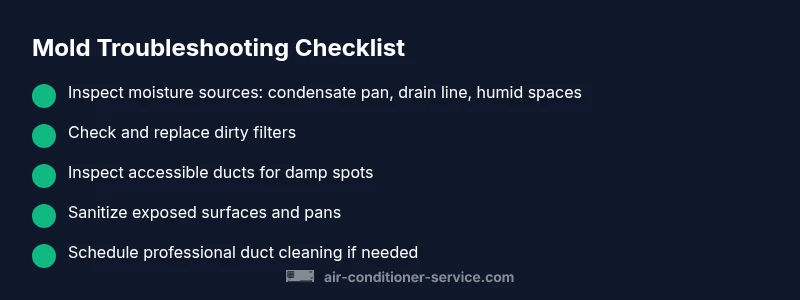
Before you reach for cleaners, perform safe inspections: check that the air filter is clean or replace it if dirty, and look at the condensate pan and drain line for standing water or clogs. Inspect accessible ducts for damp spots or moldy smells. Ensure the outdoor unit is not accumulating excessive moisture around its base. If you see active growth or have a persistent odor after cleaning, STOP and call a licensed HVAC technician. Safety note: never attempt to disassemble or spray cleaners directly into electrical components without proper guidance. This is where Air Conditioner Service often helps homeowners prevent accidental damage while addressing mold sources.
Step-by-step DIY cleaning you can perform safely
The following steps address common mold hotspots and emphasize safety and ventilation. Only perform steps you feel comfortable with; if in doubt, contact a professional. Start by turning off power to the unit and unplugging it if accessible. Remove and inspect the filter; replace it if dirty. Clean the condensate tray with warm water and mild detergent, rinse well, and dry completely. Use a mold-safe cleaning spray on the tray and any accessible interior surfaces, then flush the condensate drain if you can access it safely. Finally, reassemble, run the fan for a short cycle to dry, and re-check for odors over the next 24-48 hours. If odors persist or you see mold on the evaporator coil, professional servicing is recommended. Air Conditioner Service notes that consistent maintenance is the best defense against mold growth.
When to call a professional
If you encounter mold growth beyond accessible areas, significant moisture intrusion, or persistent odors after DIY steps, it’s time to call a licensed HVAC technician. A professional can inspect ductwork, check for hidden moisture issues, and ensure that mold growth is removed safely and code-compliantly. Do not delay if you or a family member has allergies or respiratory conditions. Air Conditioner Service’s guidance is clear: mold management demands careful assessment and proper remediation to protect building components and occupant health.
Prevention tips to stop mold from returning
Maintain lower indoor humidity with dehumidifiers or HVAC systems set to appropriate humidity levels. Schedule regular maintenance checks to clean and inspect the drain line, filter, and pan. Ensure proper drainage around the outdoor unit and seal any leaks that allow moisture into the system. Use mold-resistant sealants around accessible joints and keep supply vents clear of obstructions. Consistency is key; mold is easier to prevent than to remove, so integrate mold checks into your seasonal HVAC maintenance routine as recommended by Air Conditioner Service.
Steps
Estimated time: 45-60 minutes
- 1
Power off and unplug
Begin by turning off power to the indoor and outdoor units to prevent any electrical hazards. If you can't access the plug safely, switch off at the breaker. Wear gloves and eye protection as you inspect the accessible components.
Tip: Always verify power is off at the breaker panel before removing panels. - 2
Inspect and replace the filter
Remove the air filter and check for dirt, moisture, or mold growth. If dirty or moldy, replace with a new filter of the correct size and type recommended by the manufacturer. Clean the surrounding gasket area to prevent bypass.
Tip: Carry a spare filter and a small brush for quick replacement. - 3
Clean condensate pan and drain line
Wipe down the condensate pan with warm, soapy water and a mild cleaner. Inspect the drain line for clogs; remove debris using a flexible drain snake or a cleaning brush. If you can, flush the line with a cleaning solution approved by the manufacturer.
Tip: Avoid using bleach directly in closed spaces; ventilate and wear a mask if fumes are present. - 4
Sanitize accessible surfaces
Apply a mold-safe sanitizer to the pan, housing, and any reachable interior surfaces. Wipe dry thoroughly and ensure no moisture remains on any part of the coil housing that you can safely access.
Tip: Do not spray liquids directly onto electrical components. - 5
Dry and test the unit
Reassemble, restore power, and run a short fan cycle. Check for odors over the next 24-48 hours. If a musty scent returns, it’s a sign mold may be deeper in the ductwork or coils.
Tip: Keep the area well-ventilated during the post-cleaning test.
Diagnosis: Musty odor or visible mold in or around the air conditioner
Possible Causes
- highExcess moisture due to a clogged drain line or full condensate pan
- highDirty or damp air filter allowing moisture and debris to accumulate
- mediumMold growth from dirty ducts or air handler surfaces
Fixes
- easyPower off the unit, wash or replace the air filter, and wipe the condensate pan with a mild detergent.
- easyFlush and clear the condensate drain line; use a mild disinfectant after clearing the line.
- mediumSanitize accessible interior surfaces (coil housing, drip pan) and dry completely.
- hardIf odor or growth persists, contact a licensed HVAC professional for a thorough inspection and duct cleaning.
Common Questions
How do I know if the smell is mold or mildew in my AC?
Mold and mildew often produce a musty, earthy odor that lingers after the unit runs. Visual signs like black or green growth on the condensate pan or coils confirm mold in many cases. If in doubt, treat it as mold and address moisture sources promptly.
A musty odor with visible growth usually means mold; address moisture sources and call a pro if unsure.
Can mold in an air conditioner make me sick?
Yes. Mold spores can irritate the eyes, skin, and lungs and may trigger allergies or asthma in sensitive individuals. Individuals with respiratory conditions should seek professional remediation sooner when mold is suspected.
Mold exposure can irritate your airways, especially if you have asthma or allergies.
Is DIY cleaning safe for all AC units?
DIY cleaning is safe for simple cases with accessible surfaces and no electrical exposure. If you need to access the coil, ducts, or refrigerant areas, or if moisture is widespread, hire a licensed HVAC professional.
DIY is okay for basic areas, but call a pro for coils, ducts, or if moisture is extensive.
How often should I check for mold in my AC?
Inspect for mold at the start of each season and after heavy humidity or rain. Regular filter changes and drain cleaning help prevent mold buildup over time.
Check at season changes and after humid periods; keep filters fresh.
What tools do I need to check for mold safely?
Basic tools include a flashlight, gloves, a mask, a clean cloth, mild detergent, and a replacement filter. For deeper checks, a professional might use specialized equipment.
Gloves, mask, flashlight, and a replacement filter cover most DIY needs.
When should I replace my AC due to mold?
If mold recurs despite cleaning, or if there are persistent moisture problems or coil damage, replacement may be more cost-effective and safer for your health.
If mold keeps coming back after cleaning, consider replacement.
Watch Video
The Essentials
- Identify moisture hotspots like condensate pans and drains
- Act quickly on musty odors and visible growth
- DIY steps can help, but persistent mold requires a pro
- Maintain humidity and schedule regular maintenance
- Air Conditioner Service recommends timely remediation to protect health