How to Avoid Air Conditioner Allergy: Practical Step-by-Step Guide
A comprehensive, practical guide to reduce allergy triggers from your air conditioner through filtration, cleaning, humidity management, and maintenance for a healthier home.


If you’re searching for how to avoid air conditioner allergy, this guide provides clear, actionable steps to reduce allergens from filtration, cleaning, humidity control, and routine maintenance. By implementing targeted filtration, timely filter changes, vent cleaning, and mindful humidity management, you can dramatically improve indoor air quality and lessen allergy symptoms. Start with a quick setup and luego follow a steady maintenance plan for lasting relief.
What is AC allergy and why it happens
If you're trying to understand how to avoid air conditioner allergy, start with the basics: AC systems can circulate dust, mold spores, and pollen if filters and coils become dirty or damp. Allergens can travel through supply vents and irritate eyes, nose, and throat, especially for sensitive individuals. According to Air Conditioner Service, practical filtration and routine maintenance can significantly reduce these triggers. In this guide, we outline practical, low-effort steps you can take to limit allergen growth, protect family members, and maintain cooling comfort without sacrificing performance.
Why regular filtration and cleaning matter
Air conditioner filters capture a wide range of particulates, including dust, pollen, and dander. When filters become clogged, airflow drops and allergen concentration can rise. Air Conditioner Service analysis shows that clean filters and regular coil and duct maintenance reduce indoor allergen levels and improve overall air quality. Regular cleaning also helps prevent mold growth in condensate pans and on evaporator coils, which are common hidden sources of allergic reactions. A proactive approach yields better comfort, less sneezing, and fewer irritated eyes during allergy seasons.
Daily habits to reduce AC-related allergies
Small daily actions compound over time. Start by setting a comfortable, consistent indoor humidity level (ideally between 30% and 50%) to slow mold and dust mite proliferation. Keep doors and windows closed on high pollen days, and use a portable air purifier with a true HEPA filter in common living spaces. Schedule weekly quick checks: inspect visible vents, wipe accessible surfaces with a damp microfiber cloth, and vacuum around the outdoor condenser to reduce outdoor dust entry. These habits support the main goal: fresh, clean air circulating through your AC system while minimizing irritants.
Filter and filter maintenance for allergy prevention
Filters are the frontline defense against indoor allergens. Use filters compatible with your unit and aim for higher MERV ratings if your system allows it. Replace or clean filters as recommended by the manufacturer, typically more frequently during peak pollen seasons or in homes with pets or smokers. For households with strong allergy concerns, pair the HVAC filter with a room air purifier in high-traffic areas. Regular maintenance reduces irritants at the source and keeps the system running efficiently.
Cleaning intake vents, coils, and drain lines
Dust can accumulate on return air grilles and in ductwork. Start by powering off the system and removing accessible filters for inspection. Use a microfiber cloth or a gentle brush to clean return vents and front grilles, avoiding aggressive scrubbing that can release more dust. Vacuum coil fins carefully and apply an approved coil cleaner if you spot grime buildup. Don’t forget condensate drains—mold can grow there if the line is blocked or damp. Keeping these areas clean limits allergen reservoirs fed by your cooling cycle.
Humidity control and air quality aids
Mold thrives in damp environments, so managing humidity is essential. If your space tends to be humid, consider a dehumidifier to stay in the 30–50% range, which also improves AC efficiency. When feasible, install a high-quality, quiet HEPA-equipped air purifier to target room-level allergens. For many homes, combining a clean HVAC filter with portable purification creates layered protection, addressing both supply air and occupied spaces. Humidity control also reduces condensation on coils, which helps limit mold growth.
DIY maintenance vs. professional service
Some tasks, like filter changes, vent cleaning, and coil wiping, are safe for homeowners, provided you follow safety precautions and disconnect power first. However, when you notice standing water, persistent mold, refrigerant smells, unusual noises, or reduced cooling despite clean filters, it’s time to call an HVAC professional. Annual professional checkups can catch issues before they escalate, preserving air quality and system efficiency. The Air Conditioner Service team emphasizes a balanced approach of DIY basics with periodic professional care.
7-day starter maintenance calendar
Day 1: Inspect filters and replace or clean as needed. Day 2: Wipe vents and grilles, vacuum accessible ducts. Day 3: Check condensate drain for clogs and run a quick system test. Day 4: Run an air purifier in living spaces. Day 5: Vacuum outdoor condenser area. Day 6: Reassess humidity levels and adjust dehumidifier if present. Day 7: Schedule a professional maintenance window if symptoms persist. This starter calendar creates a predictable routine that sustains air quality.
Troubleshooting signs of AC-related allergy flare
If allergies worsen after turning on the AC, check for dirty filters, damp coils, or a blocked drain line. Persistent nasal congestion, sinus pressure, or coughing related to AC use may indicate mold growth or accumulated dust. In such cases, intensify cleaning, replace filters, and consider professional inspection. If symptoms persist despite these steps, consult a healthcare professional and an HVAC technician to identify environmental versus medical triggers.
Tools & Materials
- Replacement AC filters (MERV-rated compatible)(Check your unit's compatibility and recommended MERV rating)
- HEPA room air purifier(Place in high-traffic living areas for best coverage)
- Microfiber cloths(Lint-free for vents and coils)
- Vacuum with HEPA attachment(Use for vents, grilles, and surfaces around outdoor unit)
- Mild soap and water spray(Gentle cleaning for exterior surfaces)
- Safety gear (gloves, N95 mask)(Protective gear during cleaning)
- Coil cleaner (non-acid/alkaline)(For heavy coil buildup when permitted by manufacturer)
- Dehumidifier or hygrometer(Maintain optimal humidity levels if needed)
- Steam cleaner (optional)(Helpful for tough dust in hard-to-reach areas)
Steps
Estimated time: 90-120 minutes
- 1
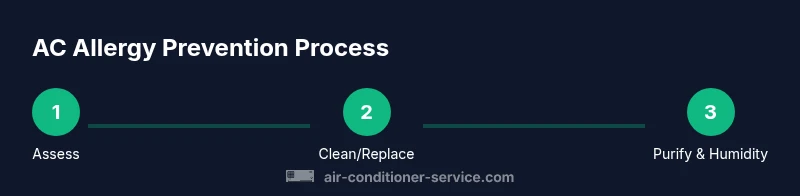
Assess your setup and symptoms
Survey your space for common allergen reservoirs and note when symptoms peak. Identify zones with poor airflow and determine which components (filters, vents, coils) need attention.
Tip: Document symptoms and correlate with HVAC usage to target improvements. - 2
Clean or replace filters
Power down the system, remove the filter, and inspect. Replace if dirty or clogged; wash reusable filters if allowed by manufacturer.
Tip: During pollen season, check monthly and replace as needed. - 3
Clean intake vents and grilles
Dust and wipe the return vents with a microfiber cloth. Vacuum around the grilles to remove embedded dust.
Tip: Avoid blasting vents with water; moisture can promote mold growth. - 4
Wipe evaporator coils and drain lines
Gently wipe accessible coil surfaces and inspect the condensate drain line for blockages. Use coil cleaner if specified by the manufacturer.
Tip: Turn off power and avoid touching electrical components. - 5
Check seals and ducts for leaks
Inspect duct seams for gaps; seal with appropriate sealant or tape as needed. Leaks can draw in outdoor pollutants.
Tip: Seal only after cleaning; leaks worsen efficiency and air quality. - 6
Add or optimize air purification
Place a true HEPA purifier in living areas to supplement HVAC filtration. Ensure airflow is not obstructed by furniture or curtains.
Tip: Pair with a properly sized purifier for best effect. - 7
Manage humidity and temperature
Use a dehumidifier if humidity remains high. Maintain AC setpoints that balance comfort and dryness without overcooling.
Tip: Humid environments amplify mold growth; control accordingly. - 8
Establish a maintenance rhythm
Create a regular schedule for filter changes, vent cleaning, and a yearly professional inspection to prevent allergen buildup.
Tip: Automation reminders help sustain long-term benefits.
Common Questions
What causes allergy symptoms related to air conditioning?
Allergy symptoms from AC stem from trapped dust, mold, pollen, and bacteria within filters, ducts, and condensate lines. Poor filtration or damp conditions escalate exposure.
Allergy symptoms from AC mainly come from dust, mold, and pollen in the system.
Do regular AC filters help reduce allergies?
Yes. Clean or replaced filters trap allergens and reduce the amount circulating through your living spaces. Maintain the filter schedule recommended by your unit manufacturer.
Yes—filters help by catching most allergens when you replace or clean them on schedule.
How often should I replace AC filters to reduce allergens?
Most homes benefit from checking filters every 1-3 months, with more frequent changes during peak allergy seasons or in households with pets or smokers.
Typically every 1-3 months depending on usage and environment.
Can duct cleaning improve indoor air quality for allergy sufferers?
Duct cleaning can help if there is visible mold or heavy dust buildup, or if symptoms persist after basic cleaning. A professional can assess whether ducts are contributing to allergens.
Duct cleaning helps if there's visible buildup or mold; consult a professional if symptoms persist.
Are there safer cleaning products for AC maintenance?
Yes. Use mild, non-ammonia cleaners and avoid mixing cleaners. Follow manufacturer recommendations and ventilate the area during cleaning.
Use mild cleaners and avoid mixing chemicals; ventilate well.
Is a standalone air purifier worth it for allergy relief?
A true HEPA purifier can capture allergens in occupied rooms and complement HVAC filtration, especially in high-traffic areas.
Yes, a HEPA purifier helps in reducing room allergens alongside your AC.
Watch Video
The Essentials
- Identify allergen sources in the AC path and address them.
- Maintain filters and clean coils/ducts regularly.
- Control humidity to limit mold and dust mites.
- Use supplementary air purification for added protection.
- Balance DIY cleaning with professional maintenance.