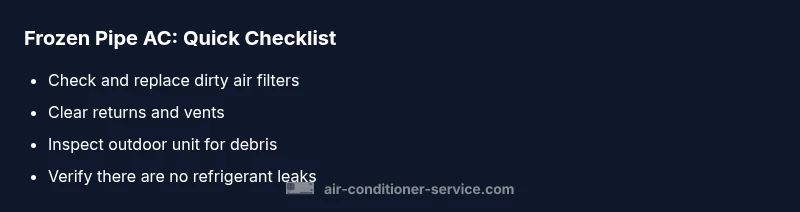
Frozen Pipe Air Conditioner Troubleshooting: Quick Guide
Urgent guide to diagnosing and fixing a frozen pipe in your air conditioner. Learn common causes, safe thawing steps, and when to call a pro for repair. This article includes quick checklists.


Most likely, the evaporator coil is freezing because of restricted airflow. Start by turning the AC off and running the fan to thaw. Check and replace the air filter, clear obstructions from returns, and ensure all vents are open. If freezing recurs, you may have a refrigerant leak or a failing compressor—call a pro.
What a frozen pipe air conditioner means
A 'frozen pipe' in an air conditioner usually means the copper refrigerant line or the evaporator coil has iced over. When ice forms, refrigerant flow is restricted, the evaporator can't absorb heat effectively, and rooms stay warm. According to Air Conditioner Service, frost buildup is a warning sign that something is wrong with airflow or refrigerant health. If you notice frost on the indoor coil or frost along the suction line, address it promptly to avoid compressor damage. This issue is more common in homes with dusty filters, closed returns, or outdoor temperatures that push the system beyond its safe operating range. Quick action now can prevent a larger breakdown later.
Common causes of a frozen pipe in an air conditioner
Most freezes start with reduced airflow or a refrigerant problem. The top causes are:
- Dirty or clogged air filters reducing airflow to the evaporator.
- Blocked vents or closed registers that trap air.
- A dirty evaporator coil or condenser fins that hinder heat transfer.
- Low refrigerant due to leaks or improper charging.
- Blowing excessively cold air in very humid environments.
- Outdoor temperatures outside the unit that cause rapid cooling of lines when the system cycles on/off.
- A malfunctioning defrost control on heat pumps (if you have a heat pump system).
If you detect frost, fix the airflow issues first; refrigerant problems require a licensed technician to avoid safety hazards and refrigerant handling rules.
Immediate safety steps to thaw and protect your unit
If you see ice, act carefully to thaw and protect components. First, switch the thermostat to OFF and set the system to the fan (if safe) to circulate air and reduce pressure. Do not smash ice with sharp tools; use a soft cloth to dab away water as it melts. Replace or clean the air filter if it is dirty. Ensure the outdoor unit is clear of snow, leaves, or debris and has at least 12 inches of clearance. After the ice melts, turn the system back on gradually and monitor for re-freeze. If frost returns within a short time, do not run the compressor; contact a professional. Air Conditioner Service emphasizes that repeated freezes often indicate a refrigerant leak or a failing compressor.
Diagnostic flow (overview) for frozen-pipe issues
This high-level flow helps you understand the likely culprits before you call a technician. Start with airflow checks (filters, returns, and ductwork). If airflow is clean, inspect for frost patterns and listen for unusual noises from the outdoor unit. Frost that appears only when the compressor runs points toward a refrigerant or airflow problem. A persistent freeze after thawing and airflow fixes usually requires professional refrigerant-systems service, as handling refrigerant requires licensing and specialized equipment.
Step-by-step fixes for the most common cause
- Turn off power at the thermostat and the breaker to ensure all devices are completely inactive. Label the breaker if you need to resume service later.
- Remove and replace the air filter if it is dirty or clogged; keep to a standard size and ensure a snug fit.
- Inspect the indoor air handler and ductwork for blockages, dust buildup, or collapsed ducts; clear blockages and vacuum accessible areas.
- Inspect the outdoor unit for debris, snow, or leaves; remove obstructions and wash the coil carefully if accessible (do not use high-pressure hoses that could bend fins).
- Allow the ice to thaw naturally, then reassemble components and power the system back on gradually.
- If frosting returns after thawing and airflow is clean, contact a licensed HVAC technician promptly as refrigerant or compressor issues require professional service.
Safety tips & common mistakes
- Do not bang or aggressively hit ice; rapid temperature changes can damage components.
- Don’t run the unit if you hear hissing, smell chemical odors, or see active refrigerant leaks.
- Never ignore frost on the evaporator coil; recurrent freezes can cause compressor injury and higher energy use.
- Regular maintenance, including monthly filter checks and annual professional checks, reduces the risk of future freezes.
- If you are unsure about handling electrical connections, call a professional immediately.
How to prevent future freezes
- Change air filters every 1–3 months depending on usage and household conditions.
- Keep all returns and supply vents open and unobstructed; ensure living spaces are evenly pressurized.
- Schedule a professional inspection at least once a year to check refrigerant levels, coil cleanliness, and airflow paths.
- Monitor outdoor temperatures and avoid running the system at inappropriate times in freezing weather; use a cover if you must run the unit during cold snaps to minimize frost formation.
Steps
Estimated time: 25-40 minutes
- 1
Power down and thaw safely
Turn off the thermostat and switch off power at the breaker to the indoor and outdoor units. Allow ice to thaw gradually; avoid prying or hammering the ice, which can damage copper lines or coils.
Tip: Leave the area to warm naturally if possible; rapid thaw can cause water leaks. - 2
Inspect and replace the air filter
Remove the filter and inspect for dirt, dust, or mold. Replace with a filter of the correct size and MERV rating for your system to improve airflow.
Tip: Hold the new filter up to a light source; if you cannot see through, it’s time to replace. - 3
Clear airflow paths
Ensure all returns and supply vents are open and free of obstructions. Vacuum around the blower compartment and inspect ductwork for obvious kinks or leaks.
Tip: Use a flashlight to inspect ducts behind grills for blockages. - 4
Check the outdoor unit and coil
Clear any snow, leaves, or debris from the outdoor condenser; ensure at least 12 inches of clearance around it. If accessible, lightly rinse the coil to remove dirt.
Tip: Never spray water directly into electrical components or fans while powered. - 5
Gradually restart and monitor
Power the system back on and set to a comfortable temperature. Monitor for re-freeze and unusual noises over the next 24–48 hours.
Tip: Keep a log of frost events to help your technician diagnose recurring issues.
Diagnosis: Ice on refrigerant lines or evaporator coil; reduced cooling and frost on indoor unit
Possible Causes
- highRestricted airflow due to dirty filter or blocked vents
- mediumLow refrigerant or refrigerant leak
- lowThermostat/defrost control malfunction or blower issue
Fixes
- easyTurn off the system, thaw, and replace dirty air filters; ensure vents are open.
- easyCheck outdoor unit clearance and clean the coil if accessible; remove debris.
- hardIf frost recurs after thawing and airflow is clear, call a licensed HVAC technician to inspect refrigerant and compressor components.
Common Questions
What causes a frozen pipe on an air conditioner?
Common causes include restricted airflow from dirty filters and blocked vents, along with refrigerant leaks. Other contributors include dirty coils and very cold outdoor conditions. Address airflow first; refrigerant issues require a pro.
Most freezes come from airflow problems or refrigerant leaks. Start with filters and vents, then call a pro if it keeps freezing.
Should I ignore a small frost on the evaporator coil?
No. Small frost can grow quickly and damage the compressor if left unchecked. Thaw the unit, fix airflow, and monitor for recurrence.
Don’t ignore frost. Thaw and fix airflow to protect the compressor.
Can a frozen pipe be caused by low refrigerant?
Yes. A refrigerant leak or improper charging can cause icing on the coil or lines. This needs professional repair and refrigerant handling.
Low refrigerant can freeze lines; leaks require a licensed technician.
Is it safe to thaw ice myself?
Yes, with caution. Turn off power, avoid sharp tools, and use a cloth to wipe melted ice. If the ice reappears, stop and call a pro.
Yes, but be careful and don’t force anything. If it freezes again, call a professional.
When should I call a professional?
If the ice persists after thawing, if you smell refrigerant, or if you hear hissing, schedule service. Refrigerant handling requires licensing.
If it keeps freezing or you suspect a leak, call a pro.
How can I prevent future freezes?
Keep filters clean, ensure unobstructed airflow, and schedule annual maintenance to keep coils clean and refrigerant levels correct.
Keep filters clean and get an annual checkup to prevent future freezes.
Watch Video
The Essentials
- Check airflow first (filters/vents)
- Thaw ice safely before power restoration
- Recurrent freezes likely indicate refrigerant or compressor issues
- Call a licensed technician for leaks or compressor problems
- Maintain yearly professional HVAC checkups