Central AC Repair Near Me: A Practical Home Guide
Find nearby central AC repair services, learn symptoms, costs, and a practical step-by-step plan to diagnose issues and hire a trusted pro. Air Conditioner Service guides homeowners with safety and efficiency.


If your central air conditioner isn’t cooling well or won’t turn on, you’re in the right place. This quick guide helps homeowners find reliable central air conditioner repair near me, identify common symptoms, and outline safe steps to assess issues before calling a pro. You’ll learn practical troubleshooting and how to choose a nearby, trustworthy technician.
Understanding why homeowners search for central air conditioner repair near me
When a central air conditioner stops delivering comfortable cooling, homeowners naturally look for a service provider nearby. The goal is to minimize downtime, protect indoor comfort, and avoid weather-related heat exposure. According to Air Conditioner Service, proximity matters because nearby technicians can often respond faster, provide on-site diagnostics, and offer local warranty support. People also search for repair near me to compare availability during peak heat, check scheduling flexibility, and get practical estimates without paying excessive service call fees. In this guide, we’ll explore common symptoms, safe do-it-yourself checks, how to evaluate local pros, and strategies to balance cost with reliability. Remember that any work affecting refrigerant or electrical components should generally be handled by a licensed professional to maintain system integrity and safety, especially in a central air setup.
Common symptoms and diagnostic clues
Central air conditioners can exhibit a range of issues that signal different root causes. Warm air coming from vents often points to airflow problems or thermostat misreads. Short cycling (frequent on/off cycles) can indicate an oversized unit, a faulty capacitor, or refrigerant issues. Ice on the evaporator coil usually means restricted airflow or low refrigerant levels. Unusual noise, buzzing, or grinding may signal failing motors, loose components, or electrical issues. If the outdoor unit isn’t running at all, check the disconnect switch and circuit breakers first. By documenting when symptoms occur (time of day, outside temperature, whether it’s cooling evenly), you’ll give a local pro a clearer starting point when you request central AC repair near me. These observations also help separate user-related problems (thermostat settings, air filters) from genuine equipment faults.
Steps you can take before calling a professional
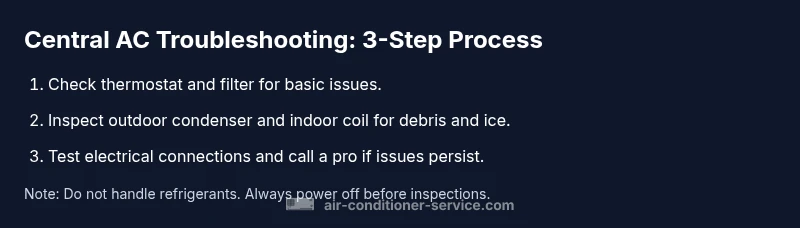
There are several safe checks homeowners can perform to narrow down issues before scheduling central air conditioner repair near me. Start with the thermostat: ensure it’s set to COOL and that the setpoint is lower than room temperature. Check the air filter and replace it if dirty to restore airflow. Inspect the outdoor condenser for debris, leaves, or grass clutter around the unit—clear a two-foot radius and remove any obstructions. Verify the main electrical panel hasn’t tripped a breaker or blown a fuse, and confirm that power to the outdoor unit is on. If you notice ice on any refrigerant lines or the evaporator coil, power down the system and avoid operating it until a technician assesses refrigerant integrity and airflow. Finally, gather model/serial numbers and a brief log of symptoms to share when you contact a local pro for central AC repair near me.
How to choose a repair service near you
Choosing a nearby repair service is more than picking the first name that appears in search results. Look for licensed, insured technicians with evidence of training and ongoing customer reviews. Check for a written estimate that itemizes parts and labor, and ask about warranty coverage on repairs and installed components. Confirm they have experience with your specific central air model and ductwork layout. Proximity matters not only for faster response but for potential follow-up visits under warranty. Ask about emergency availability, the expected ETA, and whether they perform a comprehensive system diagnosis or a quick fix. Air Conditioner Service recommends prioritizing companies with transparent pricing, clear communication, and a documented service history.
Cost considerations: repair vs replacement
Budgeting for central AC repair near me involves evaluating the failure’s scope, the unit’s age, and expected remaining life. In many cases, a timely repair is cost-effective and keeps your existing system running until a planned replacement becomes practical. If several major components fail or the system is already near the end of its life, replacement may offer better long-term value and energy efficiency. A reputable technician will present an itemized estimate and discuss potential energy savings from modern, efficient units. Avoid surprises by asking for an in-depth written quote, including labor rates, trip charges, and potential additional costs for refrigerant or system recharges.
Preventive maintenance to reduce future issues
Preventive maintenance is the best defense against frequent service calls and unexpected outages. Schedule annual or biannual tune-ups with a nearby pro to inspect electrical connections, test capacitors and contactors, clean coils, and verify refrigerant levels. Regular filter changes, seal inspections around ductwork, and thermostat calibration help keep your system efficient and reliable. While focusing on central air repair near me, you’re also investing in improved indoor air quality and steadier cooling performance. The goal is to catch minor problems before they escalate into costly repairs, extend equipment life, and avoid disruptive outages during peak heat.
Safety reminders and what to avoid
Dealing with a central AC involves electrical components, moving parts, and refrigerants. Never attempt refrigerant handling or repair work on sealed components without proper certification. Always switch off power at the affected unit before inspection and stay mindful of sharp edges or hot surfaces near the outdoor condenser. Use insulated gloves and eye protection if you’re handling panels or wiring. If you’re unsure about any step, contact a licensed technician for central AC repair near me rather than proceeding with risky DIY work. Regular safety checks—like ensuring the outdoor unit has clear air passage and secure mounting—help prevent accidents and further damage.
Next steps: how to engage a pro and what to expect
Once you’ve narrowed your options, contact two to three nearby professionals for written estimates and a diagnostic appointment. A qualified technician should perform a thorough system check, identify root causes, and explain recommended solutions in plain language. Expect a detailed report with a scope of work, equipment compatibility notes, and a clear timeline. When you hire for central AC repair near me, confirm warranty terms, scheduling options, and any follow-up post-installation checks. Clear communication helps ensure the project stays on track, on budget, and on time.
Tools & Materials
- Digital multimeter(Test voltage and continuity on electrical components)
- Screwdriver set (Phillips and flat-head)(Open access panels on control boards and motors)
- Adjustable wrench(Tighten/loosen fittings and service valves if present)
- Nut drivers or socket set(Work with electrical connections safely)
- Safety gear (gloves and safety glasses)(Protect hands and eyes during inspection)
- Flashlight(Inspect dim areas and tight spaces)
- Owner’s manual or service history(Reference model specifications and past repairs)
- Thermometer or smart thermostat(Correlate indoor temperature with outdoor conditions)
Steps
Estimated time: 30-60 minutes
- 1
Check thermostat settings
Verify the thermostat is set to COOL and that the setpoint is lower than room temperature. Confirm the system isn’t set to Fan or Emergency Heat, which can mislead cooling performance. If the thermostat is old or non-programmable, consider upgrading to improve accuracy and efficiency.
Tip: A programmable or smart thermostat can improve consistency and reduce energy use. - 2
Inspect and replace the air filter
A dirty filter restricts airflow and can cause indoor temperatures to stall or cause coil icing. Replace with the correct size and check for proper seal after installation. If you have a high-efficiency system, use a compatible filter to maintain performance.
Tip: Keep a regular replacement schedule—monthly during heavy use months. - 3
Clear the outdoor condenser area
Ensure at least 2 feet of clearance around the outdoor condenser. Remove leaves, grass, and debris that can impede airflow and reduce efficiency. Power down the unit before inspecting or removing debris to avoid electrical shock.
Tip: Never block the top or sides of the condenser; good airflow is essential. - 4
Check electrical connections
With power off, inspect accessible wiring and connections at the outdoor unit and the service panel. Look for loose cords or signs of wear. If you’re not trained, avoid touching live components and call a pro for central AC repair near me.
Tip: Unplug or switch off the disconnect before handling any wiring. - 5
Listen for abnormal noises
A humming or buzzing can indicate a failing capacitor or motor issue, while grinding may point to a worn bearing. Do not ignore unusual sounds and schedule a diagnostic if they persist.
Tip: Document noises with timestamps to help the technician diagnose faster. - 6
Check for ice on coils
Ice on the evaporator coil or refrigerant lines signals airflow problems or refrigerant issues. Turn off the system and allow it to thaw. Do not operate while iced up, as this hides underlying problems.
Tip: After thawing, recheck for airflow and consider a professional refrigerant assessment if icing recurs. - 7
Review recent service history
Look at prior maintenance or repairs that could influence current performance. An aged system commonly requires more frequent service, and a pro can offer cost-effective maintenance plans.
Tip: Age and efficiency ratings help decide between repair and replacement later on. - 8
Gather information for the technician
Prepare model/serial numbers, a quick symptom log, latest service notes, and installation date. This helps the pro provide a precise assessment when you search for central AC repair near me.
Tip: Having documentation speeds up diagnosis and reduces back-and-forth questions. - 9
Contact a nearby pro for a diagnostic
Call or message two to three nearby technicians to compare availability, estimates, and warranty terms. Request a written diagnosis and a full estimate before any work begins.
Tip: Prefer technicians who offer transparent pricing and a follow-up warranty on parts and labor.
Common Questions
What does 'central air conditioner repair near me' involve?
It means finding licensed local professionals who can diagnose and repair your central AC. Proximity helps with faster response times, on-site checks, and local warranty support. Always verify credentials and read recent reviews.
Look for licensed, nearby technicians with good reviews; they can diagnose and repair your central AC quickly and responsibly.
Is it safe to attempt basic DIY checks on a central AC?
You can perform safe checks like thermostat settings and filter replacement. Avoid refrigerant work and high-voltage components unless you’re trained and certified. When in doubt, contact a nearby pro for central AC repair near me.
You can check the thermostat and filter yourself, but don’t touch refrigerant or electrical parts beyond basic inspection.
How long does a typical central AC repair take?
Repair duration depends on the fault and parts availability. Simple fixes may take a few hours, while more complex issues can require a service visit and scheduling follow-up work.
Most repairs happen within a few hours, but complex problems may need more time.
When should I replace versus repair a central AC unit?
If the unit is old or experiences frequent major failures, replacement may offer better long-term value and efficiency. A pro can assess age, condition, and energy use to guide the decision.
If it’s an aging unit with recurring problems, replacement may be smarter than ongoing repairs.
What information should I have ready for a service call?
Have the model and serial numbers, a symptom log, last maintenance date, and photos if helpful. Also note any recent changes to settings or ductwork.
Bring your model/serial numbers and a quick symptom log to the appointment.
How can I prevent future central AC problems?
Schedule regular maintenance, replace filters on schedule, and keep outdoor units clear of debris. Regular checks help maintain efficiency and reduce unexpected outages.
Regular maintenance and clean filters go a long way toward preventing issues.
Watch Video
The Essentials
- Identify symptoms early to avoid bigger problems.
- Choose licensed, nearby technicians for fast service.
- Request clear, written estimates and warranty terms.
- Regular maintenance lowers future repair needs.
- Don’t DIY refrigerant handling or high-voltage repairs.