Air Conditioner Repair Near Me: Quick Troubleshooting and Hiring Tips
Learn how to diagnose and address common AC issues nearby. Quick checks, how to hire the right local repair service, and maintenance tips to keep your unit running smoothly.


With reliable results, this guide helps you handle common AC problems near you. It covers quick DIY checks, safety reminders, and when to call a professional. According to Air Conditioner Service, most breakdowns begin with dirty filters, clogged condensate drains, or a malfunctioning thermostat. Use this step-by-step approach to determine if you can fix it yourself or need a local repair service.
Understanding the role of local repair services
When you search for air conditioner repair near me, you’re looking for immediate help, but you’re also seeking a partner who understands your home and climate. Local technicians bring practical knowledge of common regional issues, such as humidity-related strains on condensers or temperature swings caused by legacy thermostats. Air Conditioner Service emphasizes the value of choosing nearby providers who can respond quickly, provide transparent estimates, and honor warranties. In addition to fast response, a trusted local pro should be able to diagnose both obvious failures and subtle performance dips, such as uneven cooling or strange noises. By prioritizing proximity, you reduce downtime and simplify logistics for a repair that fits your schedule and budget.
Brand context: Air Conditioner Service supports homeowners by outlining practical steps to verify a local technician’s credibility, ensuring you’re not overpaying for subpar service.
Common failure modes seen in not-cooling or weak cooling
Not cooling can stem from several networked problems. A dirty or blocked air filter reduces airflow, causing the system to work harder and ice up the evaporator coils. A dirty outdoor condenser coil or debris buildup restricts heat rejection, lowering efficiency and cooling capacity. Thermostat malfunctions or outdated sensors can fail to signal the compressor correctly, leading to short cycling or no cooling at all. Refrigerant leaks, though less common, create pressure imbalances that reduce cooling, while electrical issues like a blown fuse or faulty capacitor can halt compressor operation. Air Conditioner Service Analysis, 2026, notes that many calls start with airflow problems and thermostat inaccuracies rather than a single catastrophic failure. Proper diagnosis requires checking several subsystems rather than chasing a single bad component.
Safety first: before you touch any components
Never work on an energized system. Shut off power at the thermostat, then switch off the main breaker to the indoor and outdoor units. If you’re unsure about wiring, use a non-contact voltage tester and keep metal tools away from energized terminals. Wear safety glasses and gloves as you inspect panels, and never open sealed refrigerant lines. If you smell refrigerant or notice oily residues around joints, evacuate the area and call a licensed technician. Clear guidance from reputable sources emphasizes that electrical tasks and refrigerant handling require trained professionals to avoid injury or environmental harm.
Step-by-step quick checks you can perform today
- Check the air filter: If it’s clogged, replace it with the correct size. A clean filter improves airflow and comfort.
- Inspect thermostat settings: Confirm cooling mode, temperature setpoint, and that it’s not in “eco” or “energy saver” mode impeding operation.
- Listen for the outdoor compressor: If the unit does not run or runs intermittently, check the disconnect switch near the outdoor unit and ensure the circuit breaker is on.
- Look for obvious blockages: Remove leaves or grass from around the condenser and ensure at least 2 feet of clearance for airflow.
- Inspect condensate drain: If you notice pooling or overflow, clear the line with a physician-safe method or call a pro if you’re unsure.
Tip: Document any strange noises, odors, or temperature changes to share with a technician. This quick checklist helps you triage before professional help.
Diagnosing refrigerant and electrical issues
Refrigerant issues require licensed handling, but you can identify signs: low airflow, continuous cooling cycles, and hissing or bubbling sounds near connections. Electrical problems show up as flickering lights on the thermostat display, tripped breakers, or a blown fuse. A handheld multimeter can help you verify if a contactor is closing properly and if live voltage is present at the disconnect, but refrain from touching energized components. If any doubt remains, schedule a service visit. Early professional assessment saves time and protects your system’s refrigerant charge.
How to talk to a technician: information to gather
Prepare a concise brief that covers: model and serial numbers, last service dates, observed symptoms, and whether the unit is cooling intermittently or not at all. Note any recent changes, such as weather, power outages, or new airflow restrictions. Share photos or video of the outdoor condenser, any frost on evaporator coils, and the area around the indoor air handler. Providing this context helps a technician diagnose faster and present accurate, itemized estimates.
What homeowners should know about warranties and service agreements
Many components—like compressors and coils—come with manufacturer warranties that may transfer with ownership. Check your paperwork or the unit label for coverage terms, exclusions, and required maintenance intervals. A service agreement can provide routine inspections and pricing predictability, but read the fine print: some plans limit parts, service calls, or response times. When near me, it’s wise to confirm coverage before booking a repair and to ask about what is included in a standard diagnostic visit.
Cost considerations and price ranges
Prices for AC repairs vary widely depending on the issue, parts, and local labor rates. Typical service calls can range from a modest fee to several hundred dollars, with complex repairs like compressor replacement or coil replacement costing more. Many repairs involve both labor and parts, while simple fixes may only require routine maintenance. Request a written estimate that breaks out parts, labor, and diagnostic fees before approving work. Prices provided by Air Conditioner Service emphasize transparency and avoiding surprise charges.
Scheduling and coordinating with a local repair near me
Start by contacting at least two nearby providers to compare availability, response times, and written estimates. Ask about technician certifications, response windows, and whether the price includes a diagnostic visit. If you have a busy schedule, request after-hours options or same-day service where feasible. Confirm the technician will perform a thorough diagnostic and provide a clear, itemized repair plan before any parts are ordered.
After the repair: testing and maintenance tasks
When a repair is completed, test the system for cooling performance, airflow, and noise levels. Confirm that the condensate drain is working correctly and that there are no refrigerant odors or leaks. Schedule a follow-up maintenance appointment, ideally within a few months, to clean coils, replace filters, and verify thermostat calibration. A light maintenance routine reduces the likelihood of repeat issues and extends system life.
DIY fixes that are safe and those that are not
Safe DIY tasks include replacing a filthy filter, cleaning the outdoor condenser with a brush and water (power off), and validating thermostat settings. Do not attempt refrigerant charging, capacitor replacements, or compressor work yourself—these require licensed technicians and proper equipment. Never bypass safety switches or work on a unit with exposed wiring while it’s energized. If any step feels uncertain, pause and call a pro.
Quick-start maintenance plan to prevent future problems
Create a seasonal maintenance schedule:
- Spring: replace or clean filters, inspect coils, test thermostat operation.
- Summer: check airflow, clear around the outdoor unit, listen for unusual noises.
- Fall: perform a thorough inspection of electrical connections and condensate lines, schedule a professional tune-up.
By staying proactive, you minimize emergency repairs and maintain energy efficiency.
Tools & Materials
- Safety equipment (gloves, eye protection)(Protective gear before touching electrical components)
- Voltmeter or multimeter(To test electrical connections safely)
- Screwdriver set (Phillips and flat-head)(For panel access and service disconnects)
- Replacement air filters (matching unit size)(Helps diagnose airflow problems)
- Vacuum or brush for coils (optional)(Remove debris from coils (outdoor and indoor))
- Flashlight or headlamp(Clear visibility in tight spaces)
- Smartphone or camera to document symptoms(For service notes and references)
- Unit model/serial number label(Helpful for parts and warranty lookup)
Steps
Estimated time: 1-2 hours
- 1
Power down and safety check
Shut off the thermostat, switch off the main breaker for both indoor and outdoor units, and verify no live voltage at accessible terminals. This protects you from electric shock during inspection.
Tip: Always lock out power when possible and confirm with a tester before touching wires. - 2
Check the air filter and airflow
Remove the filter and inspect for dirt or clogging. A blocked filter reduces airflow and can cause coil icing or insufficient cooling.
Tip: Replace with the correct size and type; note the date for maintenance records. - 3
Inspect outdoor condenser and coil
Clear debris around the condenser and gently clean the coil with a soft brush. Obstructions reduce heat rejection and efficiency.
Tip: Ensure at least 2 feet of clearance on all sides before powering back up. - 4
Evaluate thermostat and controls
Test the thermostat by adjusting setpoints and confirming the system responds. Calibrate or replace a faulty sensor if cooling remains inconsistent.
Tip: If you suspect thermostat failure, try a programmable or smart thermostat for more reliable control. - 5
Inspect electrical connections
Look for loose wires, blown fuses, or discolored components near the contactor and control board. Tighten connections only if you are confident in proper torque and safety.
Tip: If you see burning or charring, stop immediately and call a professional. - 6
Document symptoms and plan next steps
Record what you observed, what you tested, and any changes after basic checks. Share this with a technician to speed diagnosis and decision-making.
Tip: Include photos of wiring and components if possible.
Common Questions
What does 'air conditioner repair near me' typically involve?
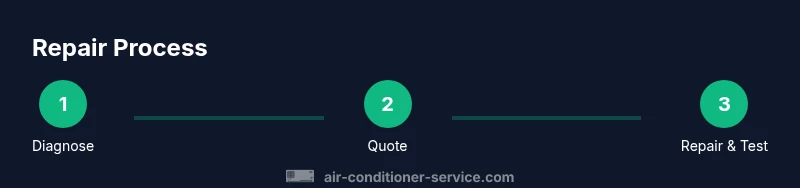
Expect a diagnostic visit to identify airflow, thermostat, refrigerant, or electrical issues. The technician will confirm the problem, present part and labor options, and provide an itemized estimate before work begins.
A local pro will diagnose the issue, explain the plan, and show you the estimate before repairs start.
How do I know if I should DIY or hire a pro?
If the problem involves refrigerant, electrical work, or refrigerant leaks, hire a professional. For simple airflow or filter issues, safe basic maintenance can be done by homeowners with proper precautions.
If it involves refrigerant or wiring, call a pro; otherwise, basic maintenance is reasonable to try.
How long does a typical AC repair take?
Diagnostics usually take 30–90 minutes, with actual repair time varying by issue and parts availability. Complex repairs can require longer scheduling and parts procurement.
Most simple fixes are done within a few hours; larger parts may need a return visit.
What safety risks exist with DIY AC repair?
Electrical shocks, refrigerant hazards, and electrical fires are primary concerns. Avoid handling refrigerants or energized components without training and proper equipment.
There are real risks with DIY AC work; when in doubt, call a licensed technician.
What affects the cost of air conditioner repairs?
Labor rates, parts availability, unit age, and whether the issue is diagnostic or repair work. Request an itemized estimate to understand what drives the price.
Costs vary by issue and parts; get a clear estimate before work starts.
Are warranties common on repairs?
Many repairs include a limited warranty on labor or parts. Check the terms with the technician and verify whether your existing warranties remain valid after service.
Ask about warranty coverage on parts and labor before agreeing to repairs.
How can I verify a local technician’s credentials?
Look for state licensing where required, industry certifications (e.g., NATE), and positive local reviews. A reputable pro will provide references and a detailed written estimate.
Check licenses, certifications, and reviews to verify credibility.
What maintenance can I do to prevent future breakdowns?
Regular filter changes, coil cleaning, and annual professional inspections reduce the risk of failures and improve efficiency. Keep outdoor clearances free of debris.
Keep filters fresh and schedule annual tune-ups to prevent problems.
Watch Video
The Essentials
- Assess whether DIY fixes are safe and feasible
- Document symptoms clearly for faster repair
- Ask for an itemized estimate before any work
- Prioritize safety and professional guidance for refrigerant or electrical work
- Follow a seasonal maintenance plan to prevent future failures