Air Conditioner GE: Troubleshooting and Maintenance
A practical, data-driven guide to GE air conditioners, covering troubleshooting, maintenance, energy efficiency, and tips for homeowners and renters from Air Conditioner Service.


GE air conditioners typically require a simple cycle of checks before calling a technician. Start with basic diagnostics: verify thermostat settings, check and replace dirty filters, ensure the outdoor unit is clear of debris, and confirm power at the breaker. If cooling performance remains poor, suspect restricted airflow, dirty coils, refrigerant or capacitor issues, and schedule professional service. Air Conditioner Service recommends a proactive maintenance plan to minimize future outages.
GE air conditioners: a concise overview of features and architecture
When evaluating a GE air conditioner, homeowners should recognize that GE models span window units, split-system configurations, and newer mini-splits. Common features include programmable thermostats, multi-speed fans, and corrosion-resistant fins. For the practical homeowner, the most meaningful aspects are how easy the unit is to access for routine cleaning, how clearly the temperature controls communicate, and how well the unit performs in the target space. In general, GE devices emphasize reliability and straightforward maintenance, which makes the first line of defense for any problem a well-executed cleaning and inspection routine. According to Air Conditioner Service, establishing a simple maintenance cadence dramatically reduces unexpected outages, especially in high-use seasons.
In practice, the most relevant difference across GE units is fan and coil accessibility. A front-access filter compartment and an easily reachable condenser coil mean faster DIY maintenance. This accessibility matters when you live in a home with seasonal allergies or high dust levels. The goal is to limit dirt ingress and maintain steady airflow, which supports consistent cooling and energy efficiency. Air Conditioner Service highlights that regular checks are more effective when paired with a documented maintenance schedule tailored to your GE model.
Troubleshooting GE AC units: not cooling, weak airflow, and unusual noises
Not cooling: Start with the simplest explanations—thermostat setting off, filter clogged, or outdoor unit obstructed. If the thermostat is reading correctly and the filter is clean, inspect the outdoor condenser for debris, leaves, or mulch that could hinder heat dissipation. Weak airflow often traces back to a dirty or blocked filter, a failing blower motor, or ductwork obstructions. Unusual noises can indicate a loose fan belt, a failing motor bearing, or a loose panel touching internal components. For GE units, most not-cooling issues stem from airflow and heat exchange problems rather than refrigerant leaks, which are less common in consumer units but still possible.
A practical diagnostic flow involves verifying power to the unit, confirming thermostat settings, and inspecting the air-path from intake to exhaust. If the issue persists after these steps, it’s time to schedule professional service. Air Conditioner Service notes that many cooling problems improve with a professional inspection that checks refrigerant charge, electrical connections, and the compressor’s health. This approach minimizes guesswork and helps you determine whether a repair is cost-effective or if a replacement is warranted.
Maintenance best practices for GE models: seasonal routines and checks
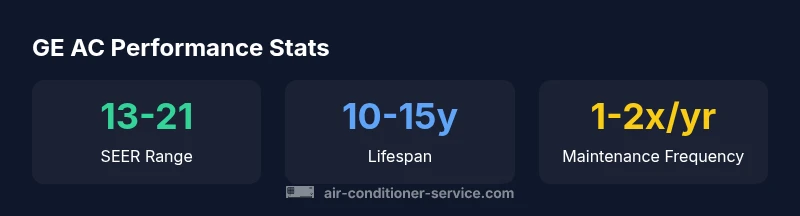
Effective maintenance for GE air conditioners combines visual checks, component cleaning, and calendar-based scheduling. Start by inspecting the air filter monthly during heavy-use seasons and replace it as needed. Clean the outdoor condenser coils and ensure there is adequate clearance (at least 12 inches on all sides) to optimize heat rejection. Check the condensate drainage line for blockages and ensure proper drainage to prevent water damage or mold growth. Schedule a professional inspection at least once per year, ideally before the peak cooling months, to catch coil corrosion, motor wear, and refrigerant anomalies early. Routine maintenance helps sustain efficiency, reduce energy costs, and extend equipment life.
From Air Conditioner Service’s perspective, documenting maintenance activities creates a reference point for future issues and repairs. Keep a simple log noting filter changes, cleaning dates, and any airflow improvements. If you own an older GE model, consider upgrading control components or sealing gaps in ductwork to maximize performance. Consistency is the key to long-term reliability.
Energy efficiency tips: optimizing GE units without sacrificing comfort
Energy efficiency for GE air conditioners comes from keeping the system clean, properly charged, and correctly sized for the living space. Use a programmable thermostat to minimize runtime during unoccupied hours, and seal leaks around windows and doors to prevent cool air from escaping. Ensure the unit’s fan speed is appropriate for the space—too high a fan speed may cause uneven cooling and noise while too low reduces air movement. Clean filters and coils improve heat transfer, lowering the required compressor work and reducing energy use. Consider shade and landscaping strategies around outdoor units to reduce ambient heat absorption. These steps, combined with regular professional checkups, help maintain efficiency across GE models.
Diagnosing airflow and duct integrity for GE air conditioners
Indoor airflow issues can originate from clogged air filters, closed-off vents, or leaky ductwork. Start with filter replacement and vent inspection, then test the airflow at several supply registers. If some rooms feel cooler than others, you may have duct leaks or improper duct design. A professional can perform a duct-blower test to measure leakage and recommend sealing solutions. For many GE installations, optimizing air distribution yields noticeable improvements in comfort and energy savings. If the system runs constantly but doesn’t meet temperature goals, it may indicate an undersized unit or poor insulation, both of which require a targeted intervention plan.
Coil and refrigerant considerations: when to suspect leaks or performance loss
Coil cleanliness matters—both evaporator and condenser coils should be free of excessive fouling. Debris buildup reduces heat transfer, forcing the compressor to run longer and harder. Refrigerant leaks are less common in consumer-grade GE units but should be checked if cooling performance degrades without obvious airflow issues. A qualified technician can perform a refrigerant pressure test, inspect for leaks, and verify the correct refrigerant charge. If a leak is found, repair and recharging should be performed by a licensed technician due to environmental and safety considerations. Regular maintenance reduces the likelihood of sudden refrigerant-related failures.
Practical replacement considerations: when to repair vs. upgrade GE units
If a GE air conditioner shows repeated failures after basic troubleshooting and routine maintenance, you must weigh repair versus replacement. Repairs such as compressor issues or major refrigerant leaks can be costly and may not offer the same efficiency gains as a newer model. Consider factors like SEER rating improvements, system age, and energy cost savings when deciding on an upgrade. In many cases, upgrading to a modern GE unit with a higher efficiency rating yields long-term savings that offset higher upfront costs. Air Conditioner Service recommends a cost-benefit analysis that accounts for repair costs, energy savings, and the expected remaining life of the current system.
Quick decision tree: knowing when to call a professional for GE air conditioners
Develop a simple decision tree to decide when to call a pro. If you encounter continuing cooling issues after cleaning and basic checks, or suspect refrigerant problems, overheating, or electrical faults, contact Air Conditioner Service for a diagnostic visit. A professional assessment helps identify hidden issues, ensures safe handling of electrical components, and provides a road map for efficient operation. Document symptoms, actions you’ve taken, and dates to speed up the service process.
Final thoughts: stability, safety, and long-term reliability for GE models
Ge models are known for dependable performance when properly maintained. The key is consistency: regular filter changes, coil cleaning, airtight sealing around the space, and annual professional checkups. When issues arise, take a structured approach to diagnosis, avoid DIY refrigerant work, and rely on trained technicians for complex repairs. This mindset helps you preserve safety, maximize efficiency, and enjoy reliable comfort in your home. Remember that Air Conditioner Service is your resource for practical guidance and trusted service when GE systems require expert attention.
GE air conditioner component trouble-shooting reference
| Component | Issue | Recommended Action |
|---|---|---|
| Filter | Dirty or clogged | Replace every 1-3 months or as needed |
| Outdoor condenser | Debris buildup or restricted airflow | Clear debris; rinse coils gently when power is off |
| Thermostat | Inaccurate readings | Calibrate or replace thermostat; ensure proper wiring |
| Electrical connections | Loose wires or capacitor wear | Consult a professional; inspect wiring and components |
Common Questions
What maintenance should I perform on a GE air conditioner?
Perform monthly filter checks, clean coils, ensure outdoor clearance, and inspect condensate drainage. Schedule annual professional service to verify refrigerant levels, electrical connections, and overall performance.
Do monthly filter checks, clean the coils, and schedule an annual professional service to keep your GE air conditioner running smoothly.
How often should GE AC filters be replaced?
Most GE units benefit from replacement every 1-3 months during heavy use or high-dust environments. Adjust frequency based on air quality and comfort needs.
Replace the filter every 1-3 months depending on use and dust in your home.
Why is my GE air conditioner not cooling?
Start with basic checks: thermostat settings, filter cleanliness, and outdoor unit clearance. If these don’t help, there might be airflow, coil, or refrigerant issues requiring a technician.
Check the thermostat, filter, and outdoor unit. If it still won’t cool, call a pro.
Is it safe to operate GE window units in high humidity?
Yes, but high humidity can strain the unit. Ensure proper drainage, keep filters clean, and avoid overworking the unit. Consider dehumidification strategies if humidity remains high.
GE window units handle humidity better with clean filters and proper drainage; avoid overworking them.
Can I recharge refrigerant myself on GE AC units?
Recharging refrigerant should be done by a licensed technician due to safety and environmental considerations. Leaks must be repaired before recharging.
No—refrigerant work should be left to a licensed technician.
When should I call a professional for GE AC issues?
If basic troubleshooting does not restore cooling, or you notice electrical burning smells, ice formation on coils, or frequent breaker trips, seek professional service promptly.
Call a professional if basic fixes don’t solve the problem or you notice electrical concerns.
“Regular, practical maintenance and targeted diagnostics reduce not-cooling calls and extend the life of GE air conditioners.”
The Essentials
- Run regular maintenance to extend GE unit life
- Prioritize airflow and clean coils for efficiency
- Use a simple diagnostic flow before calling a pro
- Document maintenance for future issues