Air Conditioner Disconnect: Safe Setup, Testing, and Troubleshooting
A practical, homeowner-friendly guide to locating, powering down, testing, and servicing the air conditioner disconnect safely to prevent electrical hazards and improve performance.


By the end of this guide, you will safely locate your air conditioner disconnect, verify power is off, inspect the wiring and fuse, and either reseat the disconnect or replace a faulty component. This procedure emphasizes safety, the importance of using proper tools, and testing the circuit before restoring operation.
Understanding the air conditioner disconnect: purpose and safety
The air conditioner disconnect is a dedicated safety device that allows you to completely isolate an outdoor condenser from the electrical supply. It is a required access point in many electrical codes, designed to let service technicians work on the unit without energizing it. For homeowners, understanding the disconnect helps you perform basic maintenance and recognize when professional help is needed. Think of it as a centralized power switch for the outdoor component of your AC system. Proper use reduces shock risk, arc faults, and accidental startup during repairs or cleaning. When you see the disconnect box mounted near the outdoor unit, you know you have a clear, code-compliant point to shut off power before any inspection or work begins. Always treat the disconnect as energized until you verify isolation beyond reasonable doubt.
Air Conditioner Service emphasizes safety as the first rule: never bypass the disconnect or attempt work while any source of power remains connected. The disconnect is not a fuse or a random access point; it’s a dedicated safety feature that should be handled with respect and the right tools.
Quick identification tips
- Location cues: outside near the outdoor condenser, often mounted on a wall or in a weatherproof box.
- Visual checks: a lever or pull-out switch, sometimes labeled with ON/OFF and voltage ratings.
- Unplug-like behavior: even when the main breaker is off, the disconnect may remain a separate, accessible control to guarantee isolation at the unit.
If you cannot locate a disconnect near your condenser, consult the installation diagram from your unit’s manual or contact a licensed electrician. Air conditioner disconnects come in different styles, but their purpose remains the same: isolate the circuit safely before service. Weather exposure can degrade enclosures; when the box feels warm or smells burnt, treat it as a management issue that requires inspection and possibly replacement.
Tools and safety precautions before you begin
Before touching any electrical components, gather your tools and set up a safety environment. Wear protective gloves rated for electrical work and safety glasses. Ensure you have a stable work surface and adequate lighting. Lockout/Tagout is ideal in shared spaces, but at minimum, disable power at the main breaker and the disconnect, then test to confirm no voltage exists. Avoid standing in water or on damp surfaces while working on electrical equipment. Only perform this work if you are confident with basic electrical procedures. If in doubt, call a licensed professional. Remember: a small mistake here can cause serious injury or fire.
Step-by-step: locate, verify, and power down
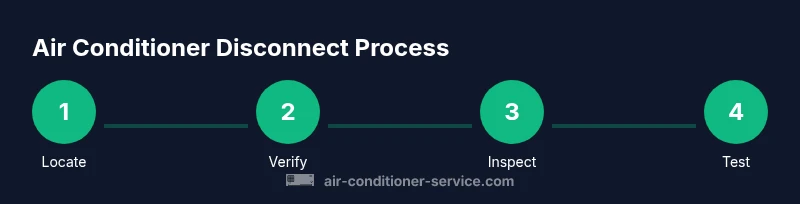
- Locate the disconnect box at or near the outdoor condenser. 2) Open the box and visually confirm the switch/lever is in the OFF position. 3) Use a non-contact voltage tester to confirm there is no live voltage on the conductors feeding the unit. 4) If you must touch conductors, wear insulated gloves and only handle insulated parts. 5) Label the wires if you plan to disconnect anything for later reassembly. 6) If the switch or fuses look damaged, mark them as unsafe and proceed with caution. 7) Close the box and move to a safe workspace well away from the unit while performing any inspections. 8) Re-check that the main service disconnect is OFF before continuing any work inside the enclosure.
Time estimate for locating, verifying, and powering down: about 15-30 minutes, depending on access.
Inspecting the disconnect: common issues and tests
A visual inspection can reveal obvious problems: melted plastics, burnt smells, loose or corroded terminals, and signs of moisture intrusion. Remove the cover only if you are sure power is isolated and you understand how to reassemble it. Tighten loose screws that secure conductors and inspect the wiring insulation for cracks. If you see melted insulation or a burnt odor, treat it as a high-risk condition and avoid re-energizing until a professional examines the unit. A multimeter or voltage tester can help you verify that the circuit remains isolated after you open the box. If you aren’t sure how to test safely, skip the test and call a licensed electrician. Regular inspection of disconnect components helps prevent nuisance outages and prolongs the life of the outdoor unit.
Replacing a faulty disconnect or fuse: procedure and cautions
If you determine the disconnect or fuse is faulty, replacement is often straightforward but requires attention to correct ratings and wiring configuration. Ensure the replacement part matches the original amperage/voltage rating and complies with local codes. Disconnect power at the main and the disconnect box before removing any hardware. Take clear photos of wiring routes and labels before removing any leads. Reconnect in the reverse order, tighten all terminals evenly, and recheck for secure connections. If the box is damaged or weathered, replace the entire enclosure rather than patching a damaged part. If you are unsure about part ratings or wiring color codes, consult the manual or contact a qualified electrician. After replacement, re-energize slowly and test the system with the thermostat to confirm normal operation.
Re-energizing and testing the system after work
With the work complete, restore power at the main breaker first, then flip the local disconnect switch to ON. Listen for the outdoor fan to start and verify there is airflow from the condenser. Use a thermostat to call for cooling and observe the indoor unit responding within 5-10 minutes. If the system does not respond, recheck wiring and fuses, and confirm that the low-voltage controls are intact. If you notice any abnormal heat, smoke, buzzing, or a burning odor, shut down the system immediately and call a professional. Document any changes you made to wiring or the enclosure and keep a log for future maintenance. Always respect the risk of live circuits and never bypass safety features.
Maintenance tips to prevent future disconnect problems
To reduce future issues with the air conditioner disconnect, schedule annual inspections of the exterior enclosure for corrosion and moisture intrusion. Keep the area clear of debris and ensure the enclosure remains weatherproof. Clean the surrounding area and remove leaves or vegetation that could trap moisture near electrical components. Verify that all labeling remains legible and that the disconnect cover seals properly. If you notice rust or cracks, consider replacing the enclosure to maintain a safe barrier against the elements. Routine checks also include confirming the outdoor unit is properly grounded and that the disconnect is mechanically reliable during operation.
Common mistakes and safety reminders
Common mistakes include leaving the main breaker ON while working in the disconnect, neglecting to verify absence of voltage, and selecting incompatible replacement parts. People often overlook moisture ingress or fail to re-seal the enclosure after maintenance. Always wear PPE, test isolation with an appropriate instrument, and never assume that a disconnected-looking device is de-energized. If any step feels uncertain, pause and contact a licensed electrician. The cost of professional service is a small price to pay for safety and code compliance, especially when dealing with high-current outdoor equipment.
Tools & Materials
- Non-contact voltage tester(Enables verification of live voltage without contact)
- Insulated screwdriver set(For safely loosening screws on the disconnect box)
- Voltage tester/multimeter(For precise voltage checks at terminals)
- Insulated gloves, safety glasses(Personal protective equipment)
- Labeling materials (tags, tape)(Mark wires before disconnecting)
- Replacement disconnect switch or fuse (if needed)(Ensure correct rating and enclosure compatibility)
- Wire stripper and pliers(For custom rewiring if required)
- Weatherproof enclosure sealant or gasket(Maintain weatherproofing when resealing)
Steps
Estimated time: 45-90 minutes
- 1
Prepare and power down
Identify the disconnect location and confirm you have safe access. Turn off the main service disconnect and the local outdoor disconnect. Use a non-contact tester to confirm there is no voltage in the cabinet before proceeding. This ensures you are working with a de-energized circuit and reduces shock risk.
Tip: Always test multiple conductors in the box to confirm isolation. - 2
Open and inspect safely
Carefully remove the disconnect cover using the insulated screwdriver. Visually inspect the enclosure for signs of moisture, corrosion, or scorching. Do not touch exposed conductors if you are unsure about their status. Close the box if you found no obvious damage and proceed to test again outside the enclosure.
Tip: Take photos of wiring layout before disconnecting any wires. - 3
Verify isolation with a meter
Use a multimeter to verify there is no continuity between line and load when disconnected. If there is any voltage reading, stop and recheck the isolation or call a professional. Record meter readings for your records.
Tip: Set meter to the correct voltage range and test with probes in insulated contact areas. - 4
Inspect terminals and conductors
Look for loose terminals, discoloration, or damaged insulation. If any terminal is loose, tighten it to the manufacturer’s torque specification. If you see damaged wires, replace or repair only if you have the proper training and tools.
Tip: Loose connections often cause heat buildup and arcing. - 5
Decide on replacement
If the disconnect or fuse shows signs of wear, corrosion, or damage beyond simple tightening, plan for replacement. Ensure you have the correct amp rating for both the disconnect and the outdoor unit. Do not install a mismatched unit.
Tip: Always match the rating label to the original part. - 6
Reconnect with care
Attach wires to the correct terminals as per your photos and labels. Tighten screws evenly and confirm there are no stray strands. Reinstall the cover, ensure weatherproofing is intact, and tidy the wires away from sharp edges.
Tip: Double-check labeling before final closure. - 7
Restore power and test
Turn the main breaker ON first, then switch the outdoor disconnect to ON. Observe the outdoor unit start and listen for normal compressor operation. If the unit does not respond, re-check wiring and tester readings.
Tip: Test with the thermostat set to cool and observe indoor fan behavior. - 8
Document and monitor
Note the date, parts used, readings, and any changes to wiring. Monitor the system for a few days and re-test if you notice any unusual noise, vibration, or performance issues.
Tip: Keep a simple maintenance log for future reference.
Common Questions
Is it safe to work on an air conditioner disconnect without turning off the main breaker?
No. Always shut off power at both the main service disconnect and the outdoor disconnect. Verify isolation with a tester before any probing. Working on energized conductors can cause severe injury or fire.
No, always switch off both the main breaker and the disconnect, and verify there is no voltage before you begin.
How do I know if the disconnect is fused?
Some disconnects include replaceable fuses or cartridges inside the box. Look for a fuse holder or cartridge inside the enclosure and check the rating label on the part itself. If unsure, consult the unit's manual or a professional.
Look for a fuse holder inside the box and check the part label; if in doubt, contact a licensed electrician.
Can I replace a faulty disconnect myself?
Only if you have training with electrical components and the correct ratings. If the task feels risky, call a licensed electrician. Incorrect replacements can cause shocks or electrical fires.
Only attempt it if you’re comfortable with electrical work; otherwise, call a professional.
What tools do I need for disconnect maintenance?
Have insulated screwdrivers, a voltage tester or multimeter, needle-nose pliers, electrical tape, and personal protective equipment. Use proper-rated tools designed for electrical work to avoid damage or injury.
You’ll want insulated screwdrivers, a tester, and PPE for safety.
How long does it take to service the disconnect?
Most service tasks take between 30 and 60 minutes, depending on accessibility and whether parts need replacement. Complex cable routing or a damaged enclosure can extend the time.
Typically 30 to 60 minutes, possibly longer if parts must be replaced.
Are there code requirements for outdoor disconnects?
Yes. Local codes vary, but disconnects should be accessible, clearly labeled, and weatherproof where required. Check your local authority having jurisdiction for specifics related to outdoor units.
Outdoor disconnects should be accessible and properly labeled per local code.
Watch Video
The Essentials
- Turn off power at the disconnect before touching wires.
- Verify isolation with a test meter to prevent shocks.
- Label and photograph wiring before any disassembly.
- Replace faulty parts only with correct ratings and enclosure compatibility.
- Test system operation after re-energizing to confirm normal cooling.