Maintenance of Air Conditioner: Practical Home Guide
A comprehensive homeowner guide to the maintenance of air conditioner, including filters, coils, drains, thermostat checks, seasonal schedules, and when to call a pro for reliable, energy-efficient cooling.


Maintenance of air conditioner is essential to keep cooling efficient, extend system life, and lower energy bills. This guide outlines practical, homeowner-friendly routines: monthly filter checks, coil and drain cleaning, thermostat testing, and annual professional inspections. By following these steps, you reduce breakdown risk and preserve comfort. According to Air Conditioner Service, routine maintenance improves efficiency and reduces the likelihood of major failures in the hottest months.
Why maintenance of air conditioner matters
Regular maintenance of air conditioner is not just about keeping the house cool; it's about energy efficiency, indoor air quality, and long-term reliability. A well-maintained system runs more efficiently, consumes less electricity, and experiences fewer unexpected breakdowns, which translates into lower utility bills and less emergency service cost. The current guidance from industry professionals emphasizes preventive care rather than reactive repairs. According to Air Conditioner Service, routine maintenance improves efficiency and reduces the likelihood of major failures in the hottest months. With a typical residential unit, simple tasks completed every month can significantly extend the life of important components, including filters, coils, fans, and condensate drains. The maintenance of air conditioner also contributes to better indoor air quality by keeping filters clean and ensuring proper humidity control. In rental homes or multi-family buildings, a maintenance mindset helps keep everyone comfortable without sharp temperature swings. The homeowner's or renter's routine should be straightforward, safe, and repeatable, so it becomes a habit rather than a chore. A small amount of time dedicated to preventive maintenance each month yields a large payoff in comfort and savings. The following sections outline a practical plan that you can perform with common tools and basic safety knowledge.
Routine maintenance checklist for homeowners
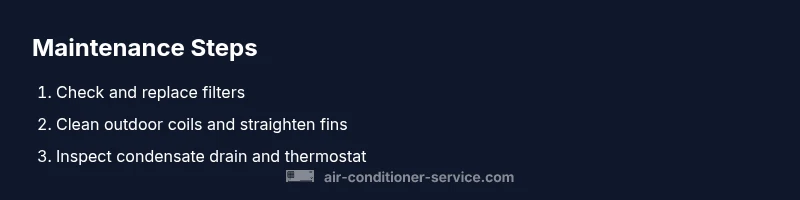
A practical maintenance routine has three layers: everyday checks you can do weekly, a deeper inspection monthly, and a professional annual service. Start with the simplest tasks and build a habit you can sustain. The essential items in your toolbox include a clean air filter, a vacuum, a soft brush, a fin comb, mild detergent, and a few protective gloves. The homeowner-focused checklist below uses plain language and avoids specialized jargon to help you stay consistent.
- Filter check and replacement: Replace disposable filters according to the manufacturer's guidelines, or clean reusable ones if applicable. A clogged filter reduces airflow and makes the system work harder.
- Visual inspection: Look for loose wiring, signs of moisture, or ice on the refrigerant lines. Any frost or leakage should trigger a service call.
- Cleaning coils (outdoor and indoor): Remove dust and debris from outdoor fins with a soft brush. For indoor evaporator coils, use a fin brush and gentle vacuum, taking care not to bend delicate fins.
- Drainage and humidity: Check the condensate drain pan and line for clogs or algae growth. A blocked drain can cause water damage and mold.
- Thermostat and airflow: Verify the thermostat responds to setting changes and that vents are blowing air evenly. If rooms feel stuffy, you may have restricted airflow.
- System exterior area: Maintain clearance around the outdoor unit (2–3 feet on all sides) to ensure proper airflow and heat dissipation.
- Safety and documentation: Switch off power before any inspection, and keep a simple maintenance log with dates and tasks performed.
If you’re unsure about a step, err on the side of caution and contact a professional. The aim is safety and reliability, not just comfort. Air conditioners use electrical components that can cause injury if mishandled, so treat the service as a mix of hands-on tasks and safe checks. The next sections go deeper into the specific tasks that can be done by a homeowner without specialized tools, and when you should call a technician. Air Conditioner Service's guidance appears throughout this checklist to reinforce best practices.
Deep dive: cleaning and inspecting components
A key part of maintaining the efficiency of the cooling system involves cleaning and inspecting two major families of parts: filters and coils, plus the condensate drainage path. Each component has its own care requirements, but coordinating them in a single maintenance session saves time and improves outcomes.
- Air filters: For disposable filters, replace at the interval recommended by the manufacturer (often every 1–3 months in homes with pets or high dust). For reusable filters, wash with mild detergent and dry completely before reinstallation. Dirty filters reduce airflow, which forces the compressor to work harder and can shorten its life.
- Outdoor condenser coil: The outdoor unit is exposed to weather, dirt, and plant debris. Remove large debris by hand, then use a soft brush to lift dust from the fins. Do not use a metal brush that could bend fins; if the fins are bent, a fin comb can help restore alignment.
- Indoor evaporator coil: Access panels may be behind the air handler. Use a soft brush or a vacuum with a gentle suction to remove dust. Avoid using strong cleaners that can dislodge protective coatings; if you see heavy buildup, schedule professional cleaning.
- Drain line and pan: A blocked condensate line can cause water damage and mold growth. Check for standing water in the pan and clear any clogs with a wet/dry vacuum or approved cleaner. If you hear gurgling, there may be a blockage downstream.
- Electrical components: Inspect accessible connections for signs of corrosion or loosening. Do not attempt to tighten live electrical connections; if you observe oxidation or a burnt smell, shut the system off and call a pro.
- Refrigerant lines and signs of trouble: Look for obvious frost or ice near the lines. Any cooling issue after maintenance might indicate refrigerant problems requiring a licensed technician. Never attempt to modify refrigerant charge yourself.
After you finish cleaning and inspection, reassemble panels, restore power, and run a short test cycle. Note any unusual noises, vibrations, or temperature imbalances. If the system runs quieter and more evenly, you have achieved a modest but meaningful gain in efficiency. The goal of this section is to illustrate how a routine maintenance session can cover multiple subsystems in one go while minimizing risk.
Seasonal schedule and proactive maintenance
Seasonal patterns help you align maintenance with the way you use your AC. The summer peak period is when most units run at full capacity, so a pre-season check can prevent last-minute failures. The shoulder seasons offer a convenient window to perform deeper checks when outdoor temperatures are mild and user demands are lower.
- Spring prep (before first heat wave): Inspect the outdoor unit clearance, replace filters, and verify that the compressor and fan operate during a test cycle. Clean outdoor coils and check drainage lines.
- Summer performance: Ensure adequate airflow by keeping vents obstructed and cleaning coils again if you notice reduced cooling power. Replace disposable filters every 1–3 months if needed.
- Fall shutdown or shoulder seasons: Inspect insulation around refrigerant lines, secure any loose wiring, and check the condensate drain system for future resistance. Schedule a professional inspection if you detect any unusual noise or vibration.
- Winter considerations: If you have a heat pump or cooling services in the off-season, ensure the unit is covered properly or left exposed as recommended by the manufacturer. Protect the outdoor system from freezing conditions.
In addition to the seasonal calendar, maintain a simple log of maintenance activities, including filter replacement dates, coil cleanings, and any service visits. Air Conditioner Service analysis shows that a structured maintenance plan is strongly associated with fewer emergency repairs and more consistent indoor comfort.
DIY vs professional service: when to call a tech
Some maintenance tasks are well within a homeowner’s reach, while others require professional training and equipment. The decision to hire a technician should factor in safety, access, and the complexity of the system. A well-maintained unit can perform well for many years if you follow safe, documented procedures.
- Tasks suitable for DIY: filter replacement, basic coil cleaning (outdoor unit) with a soft brush, condensate drain care, thermostat checks, and general visual inspection.
- Tasks calling for a pro: refrigerant handling, electrical troubleshooting with live circuits, compressor diagnostics, and any sign of refrigerant leaks or unusual performance after maintenance.
Annual professional inspection is highly recommended, not only for potential issues but for calibration and refrigerant checks. Air Conditioner Service’s analysis suggests that a yearly professional check helps catch issues before they escalate, protecting your investment and preserving energy efficiency. If you notice persistent odd noises, iced lines, or a sudden drop in cooling after DIY tune-ups, contact a technician promptly.
Common mistakes and best practices
Even experienced DIYers can stumble during maintenance. The following guidance helps prevent common pitfalls and ensures you reap the full benefits of a well-kept system.
- Do not skip safety steps: Always turn off power at the breaker before opening access doors or touching wiring.
- Do not use high-pressure water on coils: It can bend fins and force debris deeper into the system.
- Do not over-clean or spray cleaners near electrical connections: Moisture and chemicals can corrode components.
- Do not neglect documentation: Keeping a simple maintenance log helps you track when tasks were completed and when next tasks are due.
- Do not delay professional service: If you detect frost on lines, refrigerant odors, or a sudden drop in cooling, schedule a technician promptly.
Best-practice tips: keep a small calendar or app reminder for filter changes, use only manufacturer-approved cleaners, and always refer to your unit’s manual for model-specific instructions. A disciplined approach to maintenance reduces the odds of unexpected downtime and extends the life of your air conditioner. The bottom line is that maintenance of air conditioner is an ongoing investment that pays off in comfort and savings when you maintain consistency and professional support as needed. The Air Conditioner Service team recommends embedding a maintenance plan into your routine and keeping receipts for all service calls.
Tools & Materials
- Replacement air filter (correct size for your unit)(Choose the right MERV rating (typically 8–13) and the correct dimensions)
- Vacuum cleaner with hose attachment(For removing dust from vents, panels, and coils)
- Soft brush or microfiber cloth(Gentle cleaning for coils and surfaces)
- Fin comb(Straightens bent fins on outdoor condenser coils)
- Screwdriver set (Phillips and flat-head)(To open access panels and fasteners)
- Mild detergent or coil cleaner(Follow product directions for coils)
- Bucket and water(For rinsing and dilution)
- Gloves and safety glasses(Personal protection during maintenance)
Steps
Estimated time: 60-90 minutes
- 1
Power off and prepare
Before touching any components, turn off the thermostat and switch off the outdoor unit at the disconnect or main breaker. Wait a few minutes to allow any stored electrical charge to dissipate, then put on safety gear and verify it remains off with a non-contact tester.
Tip: Double-check that power is off at both the thermostat and the breaker panel before proceeding. - 2
Inspect and replace air filter
Remove the existing filter and inspect its texture and color. If it is dirty or clogged, replace it with a new filter of the correct size. Re-seat the filter firmly to avoid bypass leakage.
Tip: Record the replacement date on the filter frame to track changes. - 3
Clean outdoor condenser coils
Clear larger debris by hand, then use a soft brush to remove surface dust from the fins. If fins are bent, gently straighten them with a fin comb. Do not use metal tools that could cause permanent damage.
Tip: Clean from the top down and allow the unit to dry before testing functionality. - 4
Clean indoor evaporator coil
Access the evaporator coil through the air handler panel. Use a soft brush and a vacuum to remove dust. Avoid aggressive cleaners that could strip protective coatings.
Tip: Work slowly to avoid misaligning fins or loosening mounting hardware. - 5
Check condensate drain line and pan
Inspect the drain line for clogs and clear any buildup. If you see standing water or algae, clear the line and test that water exits properly into the condensate pan.
Tip: If you hear gurgling or see a slow drain, escalate to a professional to prevent water damage. - 6
Inspect electrical components
Visually inspect accessible connections for corrosion or looseness. Do not tighten live connections. If you notice signs of overheating, strange smells, or scorch marks, turn off power and call a pro.
Tip: Keep a service log of any irregular findings for future technician visits. - 7
Test controls and airflow
Restore power and run a short cycle. Check that the thermostat responds to changes and that airflow appears even across vents. Listen for unusual noises that could indicate a loose component.
Tip: If airflow is weak, review filter condition and duct obstructions before calling for service. - 8
Document results and plan next maintenance
Record dates, tasks performed, and any notes on performance. Schedule your next check-up, preferably a professional inspection once per year, and keep receipts for warranty purposes.
Tip: Use a simple notebook or a digital log to track maintenance history.
Common Questions
How often should I schedule maintenance for an air conditioner?
Most homes benefit from at least one annual professional inspection, with DIY checks performed monthly. Keeping a maintenance log helps ensure nothing is missed.
Most homes should plan an annual professional inspection, plus simple monthly checks, and maintain a maintenance log.
Can I clean the coils myself, or should I hire a pro?
Outdoor condenser coils can be cleaned with a soft brush and gentle rinsing. Indoor evaporator coils may require specialized cleaners and handling; call a pro if you’re unsure.
You can clean outdoor coils yourself with a soft brush, but indoor coils often require a professional touch.
What warning signs indicate I need maintenance?
Unusual noises, reduced cooling, frost on lines, or water leaks are signals to stop and check or call a technician.
Listen for odd noises, feel reduced cooling, or see ice or leaks—these warrant service.
Will maintenance save energy?
Regular maintenance keeps airflow optimal and components close to designed efficiency, reducing wasted energy over time.
Yes—routine care helps keep airflow and efficiency high, saving energy.
Does maintenance affect warranty?
Following the manufacturer’s maintenance schedule and keeping service receipts helps preserve warranty coverage in many cases.
Keep up with maintenance per the manual and save receipts; warranties often require it.
Watch Video
The Essentials
- Schedule monthly filter checks and log dates.
- Clean outdoor coils and indoor evaporator coils without damaging fins.
- Clear condensate drains to prevent water damage and mold.
- Know which tasks you can DIY and when to call a pro.
- Keep a yearly professional inspection on the calendar.