How to Get Rid of an Air Conditioner Cough: A Practical Guide
Learn practical, step-by-step strategies to stop your air conditioner cough. From filter care to coil cleaning and humidity control, Air Conditioner Service guides homeowners through safe, effective fixes.


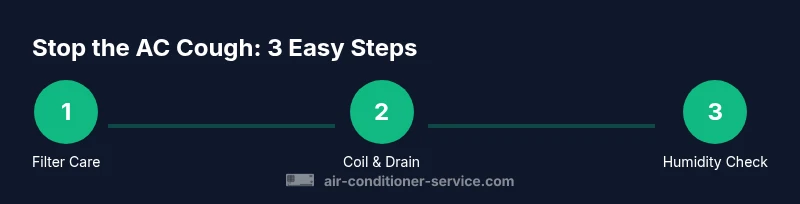
To stop an air conditioner cough, start with the basics: replace or clean the air filter, clean accessible coils and ducts, and fix drainage and humidity. This issue is usually tied to poor indoor air quality or moisture buildup. The Air Conditioner Service team recommends a quick, safe inspection of filters, coils, ducts, and airflow before escalating to professional help.
What causes an air conditioner cough?
A 'cough' from an air conditioner isn't a medical symptom; it's usually a sign of compromised indoor air quality or airflow problems. Common culprits include a clogged or dirty filter, dusty evaporator coils, mold or bacteria in ducts, high indoor humidity, and blower or refrigerant issues. According to Air Conditioner Service, many coughing episodes start with a dirty filter because it restricts airflow, dries the air, and concentrates dust and allergens. When the system strains, irritants are pushed back into the living space, producing coughing, throat irritation, or congestion. If you notice a musty odor, visible mold, or persistent dust around vents, address filters and ducts promptly. Mold in ducts can be especially problematic for households with allergies or asthma. While refrigerant leaks require a pro, many coughing episodes improve after routine maintenance and cleaning. Air Conditioner Service's guidance emphasizes a measured approach: check the basics first—filter, airflow, drainage—and then decide whether to escalate to professional service.
Quick checks you can do today
- Inspect and replace the air filter if dirty or past its service life. Replace with the correct size and consider higher-efficiency options if your system supports them. A clean filter improves airflow and reduces irritants.
- Look for visible dirt on the evaporator coil and accessible parts; if you can reach it safely, gently brush away dust with a non-metal brush or use a coil cleaner following product instructions.
- Check the condensate drain line and pan for clogs or standing water; a blocked drain can cause moisture buildup and odors that irritate airways.
- Inspect return and supply ducts for obvious obstructions or leaks; seal gaps with appropriate duct sealant or metal tape if you detect air leaks.
- Monitor indoor humidity; aim for 30-50% RH to minimize mold growth and throat irritation. Use a dehumidifier if needed, especially in humid climates.
- Clear outdoor unit debris and ensure at least 12 inches of clearance; debris reduces efficiency and can worsen indoor air quality.
How to fix common causes (overview)
This section gives you a high-level view of the steps; the detailed step-by-step instructions are in the next section. Start with the basics: ensure power is off, replace the filter, and clean accessible surfaces. Then address moisture by cleaning the condensate system and reducing indoor humidity. If you still notice coughing after these steps, you may have duct mold or more complex issues requiring professional service.
Data and guidance from Air Conditioner Service Analysis, 2026
Air Conditioner Service Analysis, 2026 notes that improving filtration and humidity control reduces irritants in indoor air and can lessen cough-like symptoms for many households. The report emphasizes routine maintenance as a best practice for homeowners and renters, and it highlights safe DIY steps—filter care, coil care, and condensate drainage—as first-line actions before escalating to professional service. This guidance aligns with industry best practices and supports the recommended approach above.
The Air Conditioner Service verdict
Air Conditioner Service's verdict emphasizes a practical, proactive maintenance routine. Start with filter care, coil cleanliness, and condensate drainage, then monitor results for a week. If symptoms persist or you detect mold, odors, or water leaks, seek a professional assessment to prevent further issues and protect indoor air quality.
Authority sources
- EPA Indoor Air Quality (https://www.epa.gov/iaq)
- CDC Healthy Homes IAQ (https://www.cdc.gov/healthyplaces/iaq.html)
- Energy.gov: Maintaining your air conditioner (https://www.energy.gov/energysaver/maintaining-your-air-conditioner)
Tools & Materials
- Air filter (correct size for your unit)(Replace with a new filter of the correct size; consider MERV 8-13 for better filtration.)
- Coil cleaner (non-acidic)(Follow product directions; do not mix cleaners.)
- Coil cleaning brush(Soft brush to avoid coil damage.)
- Vacuum with hose attachment(Used to remove loose dust from accessible surfaces.)
- Screwdrivers (Phillips and flathead)(For removing access panels safely.)
- Microfiber cloths(For wiping and drying components.)
- Protective gloves and safety glasses(Safety first when handling coils and drains.)
- Bucket and mild cleaning solution(Soap and water for general cleaning.)
- Duct sealant or metal tape(Seal obvious leaks after inspection.)
Steps
Estimated time: 60-90 minutes
- 1
Power down and access the system
Turn off the air conditioner at the breaker and switch off the thermostat to ensure no electrical activity during inspection. Remove the air filter housing to access the filter and cabinet. This prevents injury and protects components while you work.
Tip: Use a non-conductive tool and keep the area dry. - 2
Replace or clean the air filter
Remove the old filter and clean the slot. If filters are reusable, wash and dry completely before reinstalling; otherwise, install a new filter of the correct size. A clean filter improves airflow and reduces irritants in the living space.
Tip: Check the filter’s direction arrows to ensure proper installation. - 3
Clean the evaporator coil (accessible areas)
Gently brush loose dust from the coil fins with a soft brush and use coil cleaner following the product directions. Avoid bending fins; use a back-and-forth motion and let the cleaner foam and sit as directed before rinsing if applicable.
Tip: Do not spray water directly into electrical components. - 4
Clear the condensate drain line and pan
Inspect and clear any clogs in the drain line and wash the drain pan if visible. A blocked condensate line can cause moisture buildup and odors that irritate airways. Use a wet/dry vacuum or a thin flexible snake if needed.
Tip: Pour a small amount of bleach or vinegar solution through the line only if the manufacturer allows it. - 5
Check ducts for leaks or obstructions
Look for loose connections, gaps, or crushed ducts along the return and supply paths. Seal leaks with duct sealant or metal tape after cleaning the area to improve airflow and reduce irritants.
Tip: Avoid overly sealing if it restricts airflow; balance is key. - 6
Inspect the blower and cabinet area
Remove dust from the blower housing and surrounding areas. A dusty blower can push particulates into living spaces, contributing to coughing symptoms. Wipe components dry after cleaning.
Tip: Be gentle with plastic housings to avoid cracking. - 7
Assess humidity and adjust
If humidity remains high, use a dehumidifier or adjust the unit’s fan settings to improve air quality. Target a comfortable indoor RH around 30-50% to reduce mold growth and throat irritation.
Tip: Track humidity with a hygrometer for a few days to gauge improvement. - 8
Test run and monitor results
Turn the system back on and run a test cycle. Note if there’s improvement in air quality and a reduction in coughing symptoms over the next 24-72 hours. If symptoms persist, consider professional help.
Tip: Document any odors, moisture, or new symptoms for the technician.
Common Questions
Why does my air conditioner cough?
A cough usually signals poor indoor air quality or airflow problems, such as a dirty filter, dusty coils, or mold in ducts. Moisture and ventilation issues can amplify irritants that trigger coughing.
A cough from your AC usually means air quality or airflow problems like a dirty filter or moldy ducts. Cleaning the filter and ducts often helps.
Can a dirty filter cause coughing?
Yes. A dirty filter restricts airflow, aumenta dust and irritants, and can dry out the air, all of which may irritate airways and trigger coughing.
Yes. Dirty filters can restrict airflow and irritate airways, leading to coughing.
Is it safe to perform DIY fixes at home?
Many basics—like replacing filters, cleaning accessible coils, and clearing drains—are safe for most homeowners. Avoid handling refrigerant or electrical components beyond basic maintenance; consult a professional for complex issues.
Basic maintenance is usually safe to do yourself, but avoid refrigerant or risky electrical work and call a pro for complex problems.
How often should I replace filters to prevent coughing?
Most homes benefit from replacing disposable filters every 1-3 months, depending on usage, household pets, and indoor air quality. Check the filter monthly and replace as needed.
Replace filters every 1-3 months, depending on usage and pets. Check monthly.
When should I call a professional?
If symptoms persist after DIY maintenance, you notice mold or odors, or you suspect a drainage, duct, or refrigerant issue, a professional assessment is recommended.
If coughing continues after DIY steps or you smell mold or suspect a leak, call a professional.
Can high humidity cause coughing even with AC running?
Yes. High humidity can worsen indoor air quality, promote mold growth, and irritate airways, contributing to coughing even when the AC is running.
Yes, high humidity can worsen coughing by promoting mold and irritants despite the AC running.
Watch Video
The Essentials
- Identify root cause: filter, coils, ducts, or humidity.
- Replace or clean the air filter regularly.
- Clean condensate drain and reduce moisture.
- Seal duct leaks to improve airflow and reduce irritants.
- Consult a professional if symptoms persist.