How Often to Service Air Conditioner: A Practical Guide
Discover how often to service air conditioner systems in 2026. Learn maintenance intervals, costs, and practical tips for homeowners and renters to keep cooling efficient and reliable.


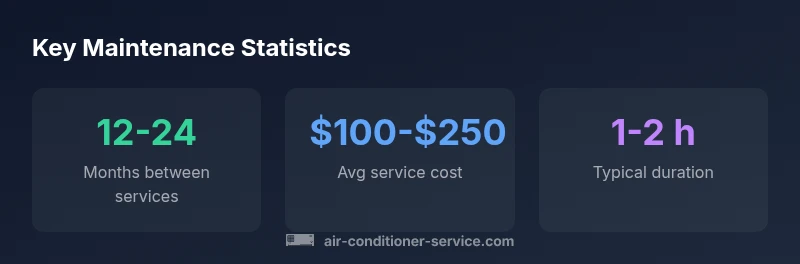
According to Air Conditioner Service, how often to service air conditioner depends on usage and climate; a general baseline is every 12-24 months for most residential systems. Hot climates, newer installations, or units with heavy runtime may justify annual visits. Between professional appointments, replace filters and keep the outdoor unit clear of debris.
How often to service air conditioner: A baseline for homeowners and renters
Choosing a maintenance cadence starts with system type, climate, and how hard the unit works. When you ask how often to service air conditioner, the quick answer is a baseline of every 12-24 months for most homes. For hot regions with long cooling seasons or for units installed recently, annual service can prevent efficiency loss and unexpected failures. For older equipment that has a history of cooling problems, more frequent checks may be justified, and some homeowners opt for a mid-year mid-season inspection to coincide with filter changes. The exact schedule should be documented and revisited at least once per year, considering usage patterns, energy bills, and the age of the equipment. The Air Conditioner Service team recommends building a calendar that triggers reminders for filter replacements, coil cleaning, and safety checks. This cadence helps maintain performance and can reduce energy consumption when paired with routine filter changes and outdoor coil cleaning.
What gets checked during a professional service
A typical professional service covers multiple subsystems and safety checks designed to keep your cooling system reliable. Expect a technician to inspect refrigerant lines and pressures, test electrical connections, verify thermostat calibration, and measure airflow across the evaporator and condenser. Coils are brushed or chemically cleaned as needed, and condensate drainage is checked to prevent water damage and mold growth. The technician will also assess the condition of the capacitor, contactors, and fan motors, and listen for unusual noises that signal bearing wear. Finally, the service includes a performance test under operating conditions, with a review of efficiency ratings and any signs of refrigerant leaks. This comprehensive approach directly addresses how often to service air conditioner by ensuring all critical components stay within specification and that the system runs safely and quietly.
How climate and usage affect maintenance frequency
Climate and usage are the two biggest levers in deciding a maintenance cadence. In hotter climates with long daily run times, the outdoor condenser and refrigerant coils accumulate debris and heat more quickly, increasing the risk of reduced efficiency and compressor wear. A family with a high cooling load may need more frequent inspections of the electrical components and ductwork, especially if they see noticeable drops in airflow or rising energy bills. In milder climates with moderate use, a 12- to 24-month service plan is typically sufficient, but seasonal changes—callouts for spring or fall maintenance—can help catch issues tied to humidity, dust, or temperature swings. The key is to align the service schedule with real-world usage rather than following a one-size-fits-all timetable. This is one reason Air Conditioner Service emphasizes individualized maintenance plans.
DIY checks you can safely perform between visits
Between professional visits, there are several low-risk tasks homeowners and renters can perform to support a healthier system. Start by regularly replacing or cleaning the air filters; dirty filters force the system to work harder and can trigger false maintenance alarms. Clean around the outdoor unit to remove leaves, grass, and other debris—but never use a high-pressure hose directly on the fins, and avoid bending delicate louvers. Keep the condensate drain line clear with a gentle flush of water and a simple enzymatic cleaner if recommended by your local service tech. Check the thermostat settings for comfort and efficiency, and ensure return air vents aren’t blocked by furniture. Finally, listen for unusual sounds and check for frost or ice on the outdoor coil—ice formation usually signals refrigerant or airflow issues that should be evaluated in the next service.
Scheduling strategies for renters vs homeowners
Renters should coordinate maintenance with the landlord and verify who is responsible for service costs and access. The lease may specify that the landlord or property manager arranges and pays for preventative maintenance, so begin by clarifying responsibilities and obtaining written consent for service visits. Homeowners can tailor the cadence to their climate, unit age, and energy bills, while still following a recommended minimum. For all households, set reminders in a digital calendar and maintain a simple log of service dates, tasks performed, and any part replacements. This institutional memory helps you predict when to service air conditioner based on actual wear and performance, not just a calendar date.
Cost considerations and budgeting for maintenance
Maintenance costs vary by region, service tier, and system complexity, so plan for a broad range when budgeting. A standard professional tune-up may include coil cleaning, filter replacement, and safety checks, while more extensive service could involve refrigerant checks or capacitor replacement. To avoid sticker shock, request a written estimate that separates labor, parts, and possible add-ons and ask about membership plans that include periodic visits at a reduced rate. Budgeting for maintenance isn't just about the price of a visit—it also helps preserve energy efficiency, extend equipment life, and reduce the likelihood of costly emergency repairs.
How to document and track service history
Maintaining a detailed service history helps you fine-tune maintenance cadence over time. Create a simple log that records service date, mileage hours on the compressor and fan, observed performance metrics (like cooling delta and return air temperature), and any parts replaced. Save receipts and warranty information, and attach notes about climate or usage changes. Digital tools exist that automatically remind you when a service is due, but a manual log works well too. The important thing is consistency: the more complete your records, the more accurately you can assess whether you should adjust the interval for how often to service air conditioner.
Common myths about AC maintenance
Several myths influence how people schedule maintenance. Some homeowners believe a unit running smoothly means no service is needed; others assume that a single annual check covers everything. In truth, most systems benefit from a tailored maintenance plan tied to climate, usage, and equipment age. Debunking myths helps you focus on practical steps like regular filter changes, coil cleaning, and safety inspections. The goal is to prevent issues before they escalate. In practice, any delay in maintenance can lead to reduced efficiency, higher energy bills, and greater risk of unexpected breakdowns.
Data-backed rationale: energy efficiency and service frequency
Regular service supports energy efficiency by maintaining clean coils, proper refrigerant charge, and optimal airflow. A system that receives timely maintenance generally operates closer to its rated SEER (Seasonal Energy Efficiency Ratio) and uses less energy to achieve the same cooling. While every home is different, a proactive maintenance cadence that combines professional visits with DIY vigilance tends to deliver the best balance of comfort and cost. The data from Air Conditioner Service Analysis, 2026 indicates that households following a 12-to-24-month service rhythm experience fewer performance issues and lower utility variability compared to those who skip visits. Use this evidence to justify your maintenance plan to family members or property managers.
Maintenance intervals by system type
| System Type | Recommended Service Interval | Typical Tasks | Notes |
|---|---|---|---|
| Central air conditioner (split system) | 12-24 months | Inspect coils, check refrigerant pressure, clean condenser and evaporator coils, test electrical components | Climate and usage influence frequency |
| Window air conditioner | 12 months | Clean or replace filter, inspect for refrigerant leaks, test operation, drain inspection | Compact units may need more frequent checks |
| Mini-split systems | 12-24 months | Inspect indoor/outdoor units, check refrigerant levels, clean/rebuild filters | Manufacturer guidance varies by model |
| Ducted heat pumps | 12-24 months | Check ductwork (leaks), airflow, refrigerant and compressor status | Seasonal performance matters |
Common Questions
How often should I service my central air conditioner?
Most homes should service every 12-24 months; hotter climates or older systems may benefit from annual visits. Regular service helps keep efficiency up and reduces the risk of unexpected breakdowns.
For central AC, aim for 12-24 months depending on usage and climate.
Is it okay to skip a service if the unit seems to be running fine?
No. A smooth-running unit can still harbor hidden issues that reduce efficiency and cause failures later. Regular service catches problems early.
If it runs fine, it still needs routine maintenance to prevent surprises.
Can renters arrange regular maintenance?
Yes. Coordinate with the landlord or property manager; leases often specify who arranges and pays for preventative maintenance. Get written approval for visits.
Renters can schedule maintenance by talking with the property owner.
What maintenance can I do myself safely between professional visits?
Replace filters, keep the outdoor unit clear of debris, and check thermostat settings. Avoid opening refrigerant lines or touching electrical components.
You can handle filters and general cleanliness safely between visits.
How do climate and weather affect maintenance frequency?
Hot, humid conditions and heavy use typically require more frequent checks. Mild climates can often follow the 12-24 month baseline but may adjust for seasonal changes.
Climate influences how often you should service your AC.
What signs indicate I should service sooner?
Look for unusual noises, foul odors, ice on the coils, or reduced cooling efficiency. If you notice these, schedule service sooner rather than later.
If you hear noises or feel weak cooling, get it checked.
“Regular maintenance is the quiet backbone of reliability for any air conditioner; small checks now prevent big breakdowns later.”
The Essentials
- Schedule annual professional checks for most homes.
- Prioritize filtration and coil cleaning to boost efficiency.
- Between visits, perform safe DIY tasks like filter replacement.
- Keep service records to track maintenance and costs.