How to Install a Split Air Conditioner System
Learn how to install a split air conditioner system with a practical, step-by-step approach. From planning and mounting to wiring and testing, this guide helps homeowners complete a safe, reliable DIY install.


By following this guide, you will learn how to install a split air conditioner system safely and effectively. The process covers planning, mounting, refrigerant handling, electrical wiring, and testing. Note that some steps require permits or professional assistance. Use the right tools, work with a partner, and respect local codes to ensure a reliable, long-lasting installation.
Prerequisites and Planning
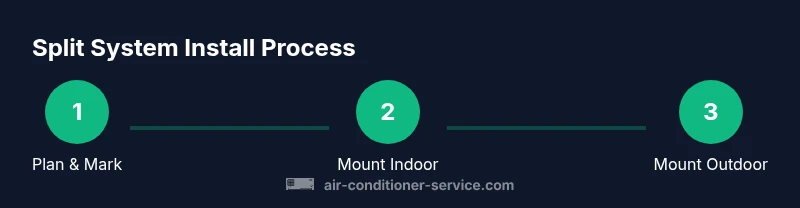
Planning is the foundation of a successful split system install. Before touching a single bolt, map out the room layout, identify a suitable location for the indoor unit with minimal obstruction, and choose an outdoor condenser that has adequate clearance and airflow. According to Air Conditioner Service, proper planning reduces field errors and helps you anticipate future maintenance needs. Consider the orientation of the indoor air outlet to maximize efficiency and comfort. Check that the wall structure can accommodate a mounting bracket and a small service panel without compromising structural integrity. Verify that there is a convenient electrical supply nearby, and that the outdoor unit can be placed with enough space to allow adequate air movement and noise separation from sleeping areas. Finally, confirm local codes and permit requirements in your municipality; ignoring these can void warranties and create safety risks.
System Components Overview
A split air conditioner system consists of an indoor evaporator unit, an outdoor condenser, a line set of copper tubing, a condensate drain, mounting brackets, a control wiring harness, a disconnect switch, and a thermostat. Familiarize yourself with the components before you start: note the service ports, the recommended line set sizes, and the thermostat compatibility. Understanding how these pieces work together helps you plan proper clearances, refrigerant routing, and service access. Remember that performance and reliability depend on correct matching of indoor and outdoor units, correct mounting orientation, and secure electrical connections. This overview also reminds you to verify warranty requirements and ensure you have the right replacement parts on hand if needed. Air Conditioner Service emphasizes that skilled installation supports efficiency and longevity of the system.
Safety and Compliance Considerations
Electrical work and refrigerant handling introduce safety risks. Always shut off power at the main breaker before beginning any installation work and use a lockout/tagout if available. Wear eye protection and gloves, and keep bystanders clear of the work area. In most jurisdictions, refrigerant handling and system charging require licensed HVAC technicians and permits; consult local codes and your home insurer. Ensure you have a clear route for line sets and drains, and avoid running lines through areas subject to vibrations or where they could be damaged. Properly securing outdoor equipment minimizes noise transfer and vibration that could affect neighbors or other equipment. Air Conditioner Service recommends verifying that your installation complies with building codes and manufacturer guidelines to protect warranty eligibility.
Step 1: Prepare interior wall opening
Step 1 lays the groundwork for the indoor unit mount. Mark the location on the wall at a comfortable height for room occupants, then locate studs and avoid plumbing or electrical lines. Use a drywall saw to create a neat opening with enough clearance for the wall sleeve or mounting plate. Deburr edges to prevent damage to refrigerant lines and insulation. Install a protective sleeve or gasket to seal the wall opening and reduce drafts. Allow for a short trial fit to confirm that the indoor unit will sit flush and level once mounted. If your wall is masonry, you may need a masonry bit and appropriate anchors. Practical caution: this cut creates dust and requires PPE and a dust mask. Time estimate: 1–2 hours depending on wall material.
Step 2: Install indoor mounting bracket and rail
Step 2 focuses on secure mounting. Attach the indoor mounting bracket or rail level using a spirit level, and anchor it into studs or a solid backing. Ensure the bracket is perfectly plumb so the indoor unit hangs evenly and seals properly against the wall. Slide the mounting plate into place and tighten all fasteners before verifying alignment. A stable bracket prevents bimetallic expansion or misalignment, which could affect drainage and airflow. Pro tip: temporarily support the indoor unit during mounting to prevent accidental damage. Time estimate: 30–60 minutes depending on wall structure.
Step 3: Choose and prepare outdoor location
The outdoor location should offer ample clearance for air intake and discharge, away from windows and doors, and placed on a solid base or pad. Ensure level footing to prevent vibration and noise. Install a concrete pad or anti-vibration mounts if recommended by the unit manufacturer. Consider sun exposure, weather protection, and line-set routing to minimize bending radii. If you mount on a wall, provide a drip loop for condensate and a weatherproof disconnect enclosure. A good outdoor setup reduces noise transfer and improves long-term efficiency. Time estimate: 1–2 hours for placement and base preparation.
Step 4: Create pass-through for line set and drainage
Pass-through planning minimizes risk of refrigerant line damage and leakage. Drill appropriately sized holes for the line set, condensate drain, and wiring; use a wall sleeve or conduit to protect the lines and keep moisture out. Seal gaps with silicone after passing lines through to prevent drafts and pests. Ensure the drain line slope is correct to promote gravity drainage toward the exterior. Label the pass-through area to simplify future service work. Time estimate: 30–60 minutes.
Step 5: Run line set and drain through wall
Carefully route the copper line set and drain hose through the wall opening, avoiding sharp bends and kinks. Keep line-set lengths to manufacturer-recommended maximums to ensure proper refrigerant charge and pressure. Use wall brackets or clips to secure the line set along its run, protecting it from physical damage. Seal joints with approved insulation and protective sleeving to minimize heat gain or moisture intrusion. Time estimate: 60–90 minutes.
Step 6: Wire the control system and power supply
Shut off all power before wiring. Run the control cable and any required electrical wiring through the wall, connecting the indoor and outdoor units to the thermostat or control board according to the wiring diagram. Secure the outdoor disconnect box with weatherproof fasteners and ensure a proper ground connection. If you’re uncertain about electrical codes, consult a licensed electrician. Time estimate: 1–2 hours.
Step 7: Attach indoor unit and connect line set
Hang the indoor unit onto the mounted bracket and align it with the return air path. Connect the line set to the indoor evaporator with the appropriate flare nuts and a leak-tight seal. Use insulation on the line set to prevent condensation and energy loss. Attach the drain line to the pan and verify slope. Time estimate: 45–90 minutes.
Step 8: Mount outdoor unit and connect line set
Carefully position the outdoor condenser onto its base, aligning it with the pre-run line set. Connect the line set to the outdoor unit, ensuring secure brazed or flare connections per manufacturer instructions. Check for level and unobstructed airflow around the unit. Time estimate: 45–60 minutes.
Step 9: Evacuate, leak test, and refrigerant charging considerations
An essential safety step is evacuating the line set to remove moisture and air. If you don’t have the proper vacuum pump and gauges, consider hiring a professional; improper evacuation can lead to compressor damage. Perform a leak check with a compatible refrigerant leak detector or soap solution. If the system is pre-charged at the factory, refrigerant charging should be performed by a licensed technician in accordance with local regulations. Time estimate: 1–2 hours; sometimes longer if leaks are found.
Step 10: Commissioning and thermostat testing
Power up the system and set the thermostat to cooling mode. Check airflow, temperature drop, and fan operation. Confirm the outdoor unit starts and stops on demand and that the indoor display reads correct data. Listen for unusual noises, vibrations, or refrigerant smell. Time estimate: 20–40 minutes.
Step 11: Final safety checks and cover plates
Reinstall any access panels, seal all exterior holes, and ensure the electrical disconnect remains easily accessible. Clean up the work area and verify that all tools are removed. Check that there are no open electrical boxes or exposed conductors. Time estimate: 15–30 minutes.
Step 12: Maintenance plan and long-term care
Document model numbers, service dates, and warranty details. Create a simple maintenance routine: filter checks every 1–3 months, outdoor unit clearance nomore than 2 feet, and annual professional inspection. Keep a spare fuse or circuit breaker handle within reach. Regular maintenance preserves efficiency and comfort. Time estimate: 10–20 minutes.
Tools & Materials
- Cordless drill(Bits sized for mounting screws and wall anchors)
- Hole saw kit(Sizes for typical wall sleeves (3.5–4.5 inches))
- Level(Ensure brackets are perfectly plumb)
- Measuring tape(Check clearances and distances between units)
- Screwdrivers (Phillips and flathead)(Assorted sizes for electrical panels and bracket screws)
- Adjustable wrench(For mounting nuts and fittings)
- Nut drivers set(For electrical connections and line-set fittings)
- Tubing/copper pipe cutter(Cut line set to required lengths)
- Copper line set and insulation(Typically pre-sized by unit; insulation reduces condensation)
- Pipe insulation(At least 1/2 inch thickness where exposed)
- Drain piping and condensate hose(Ensure proper slope away from indoors)
- Silicone sealant and weatherproof caulk(Seal external penetrations and wall sleeves)
- Electrical tester/voltage meter(Verify power is off before work)
- Wall sleeve or conduit(Protects lines and wires through wall)
- Mounting brackets or rails(Indoor unit mounting hardware)
- Protective gloves and safety goggles(Personal protective equipment)
Steps
Estimated time: 4-8 hours
- 1
Prepare interior wall opening
Mark and cut the interior opening at the planned location. Ensure the opening accommodates the wall sleeve and allows space for the indoor unit and drainage. Deburr edges and wear PPE while cutting to prevent injury and dust inhalation.
Tip: Use a drywall saw with slow, steady strokes to avoid splintering; double-check measurements before cutting. - 2
Install indoor mounting bracket and rail
Attach the indoor mounting bracket level to a solid wall section aligned with the planned inlet outlet. Double-check plumb and secure fasteners to tolerate unit weight. Prepare for wall sleeve installation if applicable.
Tip: Check level in two axes; a small deviation can cause poor drainage or suspension of the unit. - 3
Choose and prepare outdoor location
Select a location with clear airflow, away from humidity-sensitive areas, and a stable base. Install a concrete pad or vibration isolators as recommended by the manufacturer. Ensure access for service and a safe electrical disconnect.
Tip: Leave at least 12–24 inches of clearance around the condenser for optimal operation. - 4
Create pass-through for line set and drainage
Drill or cut holes for the refrigerant line set, condensate drain, and wiring. Use a wall sleeve or conduit to protect lines. Seal penetrations to prevent drafts and pests.
Tip: Use a dedicated passage to keep weight off the lines and avoid kinks. - 5
Run line set and drain through wall
Carefully route the line set and drain through the wall, avoiding sharp bends. Secure with clamps and protect from physical damage. Check line-set length against manufacturer guidance.
Tip: Keep strain relief gentle to prevent tube damage. - 6
Wire the control system and power supply
Route and connect low-voltage control wiring and high-voltage power as per the wiring diagram. Install a weatherproof disconnect and ensure proper grounding. If uncertain, consult a licensed electrician.
Tip: Always de-energize the circuit and tag out before wiring. - 7
Attach indoor unit and connect line set
Mount the indoor unit onto the bracket, connect the line set with proper flare fittings, and insulate the lines. Attach the condensate drain to the pan and confirm slope toward the exit.
Tip: Do not overtighten flare fittings to avoid leaks. - 8
Mount outdoor unit and connect line set
Position the condenser on its base, align with line set, and secure. Connect refrigerant lines and ensure a tight, leak-free seal. Verify ground and anti-vibration measures.
Tip: Ensure the outdoor unit is level to prevent oil pooling and compressor strain. - 9
Evacuate, leak test, and refrigerant considerations
If you have a vacuum pump, evacuate the lines to remove moisture. Perform a leak check using soap solution or detector. Refrigerant charging should comply with local regulations and, if required, be performed by a licensed technician.
Tip: Never smoke or use ignition sources near refrigerant lines while testing. - 10
Commissioning and thermostat testing
Power up the system and set cooling mode. Confirm airflow, temperature drop, and outdoor unit cycling. Check for accurate thermostat readings and ensure all safety devices function.
Tip: Document any unusual noises and address them before completion. - 11
Final safety checks and cover plates
Reinstall panels, close access doors, and ensure disconnect box is accessible. Clean the workspace and verify there are no exposed wires. Run a final safety check before leaving.
Tip: Lockout any unused openings to prevent pests. - 12
Maintenance plan and long-term care
Create a maintenance routine: filter checks, outdoor coil cleanliness, and annual professional inspection. Record warranty details and service dates for easy future reference.
Tip: Schedule seasonal checks to sustain efficiency and prolong unit life.
Common Questions
Do I need a permit to install a split air conditioner system?
Permit requirements vary by location. Many jurisdictions require electrical or mechanical permits for outdoor condensers and system charging. Check with your local building department before starting, and follow label instructions and code guidelines.
Check your local building codes; you’ll likely need a permit for outdoor installations and electrical work.
Can I install a split system myself, or should I hire a pro?
Basic mounting and wiring can be DIY in some cases, but refrigerant charging and leak testing should be performed by a licensed technician. Always consider local rules, warranty conditions, and your own skill level.
DIY is possible for mounting and wiring, but refrigerant work is best left to a pro.
Is a vacuum pump required for every installation?
Vacuum pumping is recommended to remove moisture from lines. If you don’t have a vacuum pump and related gauges, professional equipment and training are advised to avoid damage.
A vacuum pump helps, but if you don’t have one, hire a professional to ensure proper evacuation.
What tools are essential for installing a split system?
Key tools include a drill, level, wrenches, tubing cutter, pipe insulation, and a multimeter. Having a proper ladder or scaffold and safety gear is also important.
Have the basics: drill, level, wrenches, and insulation along with safety gear.
How long does installation typically take?
A typical residential install ranges from a few hours to a full day depending on wall type, permits, and whether any structural work is required. Planning reduces delays.
It usually takes several hours, but can take longer if there are complicating factors.
When should I hire a professional?
If you’re unsure about electrical work, refrigerant handling, or code compliance, hire a licensed HVAC contractor. Professional installation protects warranty coverage and safety.
Hire a pro if you’re not confident with electrical or refrigerant work.
The Essentials
- Plan carefully before cutting any wall openings
- Secure mounts level and sturdy to prevent future issues
- Avoid DIY refrigerant charging unless licensed
- Verify electrical safely and grounding before powering on
- Test operation comprehensively and document maintenance plan