Can You Put an Air Conditioner in a Garage? A Practical Guide
Discover how to safely install an air conditioner in a garage, including unit types, electrical needs, insulation, moisture control, and long-term maintenance.


Garage cooling is possible, but success hinges on climate, insulation, airflow, and the electrical setup. The right garage-rated unit, proper venting or sealing, and adherence to local codes are essential for comfort and efficiency. Consider dehumidification, winter heating options, and how venting affects outdoor air. Follow a code-compliant installation plan for best results.
Can you put an air conditioner in a garage? Practical feasibility and limits
The question can you put air conditioner in a garage often comes up for homeowners who want a comfortable workspace or a vehicle-storage area. According to Air Conditioner Service, the feasibility hinges on climate, garage insulation, ventilation, and the electrical setup. Garages are typically not designed as living spaces, so they experience wider temperature swings and higher humidity than interior rooms. With careful planning, however, you can select the right unit, prepare the space, and install safely to achieve reliable cooling and dehumidification. This section introduces the core considerations, flags potential pitfalls, and sets the stage for a practical, code-compliant approach that protects both people and equipment. We'll also note when a garage is not a good candidate for a cooling system and when alternatives like a portable solution or improving garage sealing may be preferable.
Space, insulation, and airflow: laying the groundwork
Before selecting any unit, measure the garage area and assess insulation levels in walls, ceiling, and doors. Poor insulation or large gaps will let warm outdoor air invade, making the unit work harder and increasing energy use. Airflow matters too: ensure there is enough clearance around any unit for intake and exhaust; blocked vents can undermine efficiency. If you can, seal leaks around doors, window gaps, and electrical penetrations. Practically, can you put air conditioner in garage more effectively in spaces with well-sealed doors and a modest heat load, rather than a well-insulated interior room? The goal is to limit heat intrusion while providing enough circulation for even cooling. For many garages, adding weatherstripping and door sweeps yields measurable improvements in comfort and energy use.
Unit types: window, portable, and ducted options
Garage environments often constrain the choice of cooling equipment. Window units are common for smaller garages, portable units offer flexibility, and mini-splits provide zoning without compromising exterior space. When considering can you put air conditioner in garage, match the unit to the space size, ceiling height, and moisture risk. A window unit or portable model might suffice for a single-car garage, while a larger two-car space may benefit from a ducted or ductless mini-split system. In any case, select models labeled for garage use or at least rated for wide temperature ranges and high humidity. A properly sized unit will improve comfort without wasting energy.
Electrical safety and circuit demands
Garage installations require careful electrical planning. Ensure a dedicated circuit can handle the unit’s startup surge and running current, with appropriate gauge wiring and a circuit breaker sized for the load. If the garage lacks GFCI protection, arrange one where code allows. Avoid extension cords for operating HVAC equipment; instead, install a proper outlet in a safe location. Ground fault protection helps reduce the risk of electrical shock in damp environments. Following can you put air conditioner in garage guidelines, a licensed electrician should verify the circuit, wiring, and safety clearances.
Moisture control, ventilation, and dryness
Humidity can degrade efficiency and promote mold growth in garages. Use a unit with a dehumidification function or pair the AC with a dedicated dehumidifier in particularly damp spaces. Ventilation matters: exhaust vents, leaky doors, or poorly sealed gaps can introduce humidity and moisture-laden air from the outdoors. If your garage stores vehicles or fuels, ensure ventilation strategies do not introduce fumes into living areas. Sealing penetrations around pipes and wires helps maintain a stable climate, reducing the unit’s workload and extending equipment life.
Installation scenarios: step-by-step approach for different unit types
Your choice of unit determines the installation steps. A window unit typically requires securing a mounting kit and weatherproofing around the opening. A portable unit demands a stable surface and an exhaust hose routed to outdoors. A mini-split system involves mounting an outdoor condenser, running copper lines into the garage, and mounting indoor air-handling units in appropriate positions. Regardless of type, follow the manufacturer’s installation instructions, ensure refrigerant lines are insulated, and confirm proper drainage. Can you put air conditioner in garage effectively by planning a clean, code-compliant path from the electrical panel to the unit and keeping the outdoor components well ventilated?
Maintenance and long-term use in a garage environment
Garage climates can stress air conditioners due to temperature swings and dust. Create a simple maintenance routine: replace or clean filters monthly during peak season, inspect seals around the unit annually, and clear debris from outdoor condensers. Schedule professional checkups to verify refrigerant charge and electrical connections. Regular maintenance reduces energy waste and extends system life. Remember that a well-maintained garage AC not only cools but also dries air to reduce condensation on stored items.
Authority resources and troubleshooting: 2-3 credible references
For safety and best practices, consult reliable sources such as government and university guidance on HVAC installations and indoor air quality. These references help validate steps and ensure code compliance when answering can you put air conditioner in garage questions. [External links will be provided in this section for user reference.]
Can you put air conditioner in garage: summary of best practices
In summary, placing an air conditioner in a garage is feasible with careful planning: correct unit type and size for the space, proper electrical readiness, good insulation, humidity control, and regular maintenance. If the space experiences extreme temperature swings or persistent moisture, weigh alternatives like improved sealing, dehumidification-only strategies, or converting part of the garage to a conditioned area before installing a cooling unit. Air Conditioner Service emphasizes planning, safety, and energy efficiency as the core drivers of success.
Tools & Materials
- Voltmeter or non-contact voltage tester(Verify circuit voltage before wiring; test outlets and equipment.)
- Dedicated electrical outlet (GFCI where required)(Size and placement depend on unit's cord length and location.)
- Mounting brackets or window kit appropriate for unit type(Securely fasten to frame or wall; follow manufacturer specs.)
- Copper refrigerant lines (insulated) and quick-connects(For mini-split installations; ensure proper sizing.)
- Drain tubing or condensate pump(Ensure gravity flow or pump elevation for reliable drainage.)
- Weatherproof sealant and insulation(Seal around penetrations and reduce air leaks.)
- Screwdrivers, drill, level, and misc. fasteners(Basic hand and power tools for mounting and securing components.)
- Protective gear (gloves, safety glasses)(Wear during electrical and mounting tasks.)
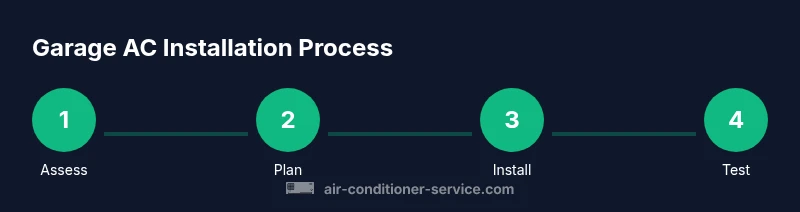
Steps
Estimated time: 3-6 hours
- 1
Assess garage readiness
Measure the space and evaluate insulation, door seals, and moisture levels. Determine whether the garage can reasonably maintain comfort with a cooling load appropriate for the area. This helps decide the unit type and size.
Tip: Document dimensions and take photos of gaps to reference later. - 2
Choose unit type based on space
Select between window, portable, or mini-split depending on space, budget, and whether you prefer a permanent install. Ensure the unit is rated for garage environments or wide temperature ranges.
Tip: For variable climates, a mini-split offers efficient zoning with minimal space impact. - 3
Check electrical readiness
Verify circuit capacity and install a dedicated outlet. If a GFCI is required, place it per local code. Do not use extension cords for HVAC units.
Tip: Consult a licensed electrician to inspect panel capacity and wire gauge. - 4
Prepare mounting location or window opening
If using a window unit, install the mounting kit and reinforce the frame. For wall-mounted or through-wall setups, ensure a clean, level mounting surface with proper clearance.
Tip: Use a level and shims to ensure a stable installation, preventing vibrations. - 5
Install unit and connect refrigerant lines
Mount the indoor unit (and outdoor condenser for a mini-split) and connect refrigerant lines with proper insulation. Secure lines and check for airtight seals to prevent leaks and energy loss.
Tip: Handle refrigerant lines with care; avoid kinks and protect from physical damage. - 6
Set up drainage and condensation control
Route drainage to a suitable outlet or install a condensate pump if gravity drainage is not possible. Ensure no backflow and that lines remain vapor-tight.
Tip: Incline drainage lines slightly away from the unit to prevent standing water. - 7
Test and calibrate the system
Power on the unit, verify airflow, cooling performance, and humidity control. Listen for unusual noises and verify safety shutoffs operate correctly.
Tip: Run a full cycle in cooling and dehumidification mode to ensure consistency.
Common Questions
Is it legal to install an air conditioner in a garage?
Yes, it is generally legal in many areas, but you must follow local electrical codes and building regulations. A permit may be required for certain installations or larger systems. Check with your local building department.
Yes, you can usually install a garage air conditioner, but verify local electrical codes and permit requirements with your city or county.
Do I need a permit for a garage AC installation?
Permits depend on the unit type and local rules. Window units often require fewer regulations, while ducted or through-wall systems may need electrical and structural permits. When in doubt, contact your local building department.
Permits vary by location and system type; check with your local authority to be sure.
Can a garage AC heat the space in winter?
Most garage units focus on cooling; some models offer heating or you can pair a separate heater with dehumidification. Consider insulation and radiant heat as alternatives if winters are harsh.
Some units include heating, but many garages require additional heating or insulation to stay comfortable in winter.
Which unit is best for a two-car garage?
A ducted mini-split or two-zone mini-split can efficiently cool a two-car garage, while a large window or portable unit may suffice for smaller loads. Size the system to the calculated cooling load.
For two cars, a multi-zone mini-split is usually the most efficient option; sizing is key.
How do I prevent mold and moisture in a garage AC setup?
Control humidity with proper insulation, a dehumidifier or dehumidification mode, and regular filter changes. Ensure good drainage and avoid trapping moisture in closed spaces.
Control humidity with dehumidification, keep drainage clear, and maintain good ventilation.
Watch Video
The Essentials
- Assess space and insulation before choosing a unit.
- Select a garage-rated model and ensure proper electrical readiness.
- Seal gaps and manage moisture to maximize efficiency.
- Follow local codes and use a professional when needed.