How to Air Condition a Garage: A Practical Guide
Learn practical, step-by-step methods to cool a garage safely with portable, window, or mini-split units. Includes venting, electrical safety, installation tips, and maintenance insights from Air Conditioner Service.


This guide shows you how to air condition a garage safely and effectively using portable, window, or mini-split units. You’ll learn how to size and place the unit, vent properly, handle electrical safety, and perform a quick startup that yields comfortable, usable space. Follow these steps to improve garage comfort without compromising safety.
Getting started with how to air conditioner garage
If you're asking how to air conditioner garage, this guide will walk you through practical, safe, and effective ways to cool a space that can face extreme heat, poor insulation, and vehicle-related fumes. Start by identifying what kind of cooling device fits your garage: a portable air conditioner for flexibility, a window unit for a quick install, or a mini-split for long-term comfort. According to Air Conditioner Service, the right setup hinges on sizing for load, proper venting, and solid electrical planning. The Air Conditioner Service team found that many garages fail to stay comfortable because they neglect venting and electrical safety, not just the cooling unit itself. Plan your project around safety first, then focus on efficient cooling that won’t run up energy bills or create fire hazards. By outlining your space, traffic patterns, and the tools you own, you’ll choose a solution that works now and scales later as your needs change.
Safety first: electrical, ventilation, and CO considerations
Before you begin, ensure you have a safe electrical setup and adequate ventilation. Garages often lack climate control and may be connected to outlets that are not designed for heavy loads or outdoor exposure. Install a dedicated circuit or ensure the existing circuit can handle the added load without tripping. Use a GFCI outlet if moisture or vehicle washing is nearby. Install carbon monoxide detectors if there is any fuel-burning equipment in the area, and keep all flame sources away from the cooling unit. Good airflow reduces humidity and helps your unit run more efficiently. Air Conditioner Service emphasizes that safety and venting are as important as the unit’s rating when cooling a garage.
Unit types: portable, window, or mini-split
Portable air conditioners offer flexibility and easy relocation, making them popular for garages with variable usage. Window units are cost-effective for smaller garages and require a vent through a window. Mini-splits provide quiet, long-term cooling with flexible placement and no window venting, but installation is more involved. For a garage, you’ll usually balance cost, space, and future needs. Regardless of type, ensure the unit is rated for the space you intend to cool and that it can be adequately vented to the outdoors or through an exterior wall.
Sizing and placement: estimate cooling needs and where to put the unit
Sizing a garage cooling solution centers on space, sun exposure, and how often the space is occupied. Larger or sun-exposed garages require more cooling capacity, while insulated spaces stay cooler with less effort. Place the unit where airflow can circulate freely and avoid blocking doors or high-traffic pathways. Elevate portable units if the floor is dusty or damp, and ensure there is nothing flammable near the exhaust vent. Air Conditioner Service notes that a well-planned placement minimizes energy use and maximizes comfort, especially in garages used for projects or storage.
Venting and exhaust: venting options and best practices
Exhaust venting is critical for any garage cooling setup. For portable units, route the exhaust hose through a window or through-wall vent designed for HVAC use. Avoid long, convoluted vent runs that increase back pressure and reduce cooling efficiency. If using a mini-split, interior air should be independent of outside air, but you still need proper line-set routing and outdoor condenser placement with clearance around the unit. Ensure venting materials are sealed to prevent hot air from re-entering the space and to stop moisture from condensing inside walls.
Electrical setup and safety basics
A garage AC installation typically requires a dedicated circuit and a properly rated outlet. Do not rely on extension cords for permanent setups; instead, install a dedicated outlet or run a dedicated circuit with a hard-wired connection if needed. Use proper wiring and circuit protections, and avoid overloading the panel. Keep electrical components dry, away from potential vehicle leaks, and follow manufacturer instructions for power requirements. The Air Conditioner Service team stresses that a safe electrical foundation is essential for reliable cooling and long-term performance.
Installation paths: step-by-step options for different unit types
If you choose a portable unit, follow the manufacturer’s window vent kit setup and ensure the exhaust vent is sealed to prevent hot air return. For window units, a through-wall adapter minimizes energy loss and keeps the exterior vent clear of debris. Mini-splits require mounting hardware, refrigerant connections, and a condensate drain—usually installed by a professional. Regardless of type, ensure clearance around the unit for airflow, avoid placing the unit near vehicles or tools that could obstruct the intake or exhaust, and verify that the space remains dry and well ventilated during operation.
Operating tips for efficiency and comfort in garages
Keep the space insulated and sealed when not in use, especially around doors and windows. Use a programmable thermostat or smart controller to align cooling with your garage usage, reducing energy waste. Utilize dehumidification features when available to improve comfort on humid days. Keep tools and solvents away from the unit and ensure that vents have unobstructed air paths. Regularly check for dust buildup and clean filters to maximize efficiency and prolong unit life.
Maintenance, common issues, and quick fixes
Establish a simple maintenance routine: clean or replace filters monthly during heavy use, inspect hoses and seals for leaks, and check for frost on coils which indicates airflow or refrigerant issues. If the unit struggles to start, verify the outlet and circuit status before investigating the compressor. For persistent issues, rely on manufacturer guidance and consulting a professional when needed. A well-maintained garage AC system reduces the likelihood of costly breakdowns and extends the lifespan of the equipment.
Tools & Materials
- Garage-rated portable air conditioner unit(Energy Star-rated preferred, mobile for flexible use)
- Window vent kit or through-wall vent(Provides proper exhaust path for portable units)
- Dedicated electrical circuit and outlet(Ensure 15-20 amp circuit; use a GFCI if near water or humidity)
- GFCI outlet (where required)(Necessary if outlet is exposed to moisture or cleaning areas)
- Vent hose extension kit(Longer runs may be needed for remote venting but avoid excessive length)
- Thermometer and hygrometer(Monitor temperature and humidity to optimize comfort)
- Weatherstripping and foam sealant(Seal gaps around doors/windows to prevent warm air ingress)
- Carbon monoxide detector(Install if garage includes any fuel-burning appliances)
- Basic tools (screwdrivers, level, drill)(For mounting and securing units or vent kits)
Steps
Estimated time: 1-2 hours
- 1
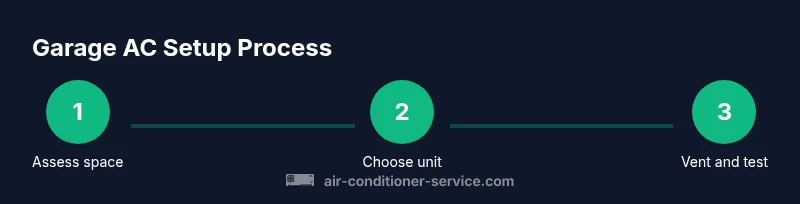
Assess space and choose unit type
Measure garage dimensions, note sun exposure, and decide whether a portable, window, or mini-split system best fits the space and usage. Consider future needs such as workshop activities or storage that may alter cooling needs.
Tip: Choose a unit with flexible venting options to adapt to door openings or seasonal changes. - 2
Prepare the installation area
Clear space around the chosen location to ensure unobstructed airflow and safe operation. Remove flammable materials from the immediate vicinity and inspect nearby outlets for compatibility with the unit’s power requirements.
Tip: Keep the area dry and clean to prevent rust and electrical hazards. - 3
Install venting path
Set up the vent kit through a window or wall as appropriate for the unit. Ensure the exhaust hose is as straight as possible and sealed to prevent warm air backflow.
Tip: Test vent seals before powering the unit to avoid leaks and energy waste. - 4
Set up electrical connections
Create a dedicated circuit if possible, or confirm the existing circuit can safely handle the extra load. Use proper outlets and avoid extension cords for permanent setups.
Tip: Use a surge protector only if recommended by the unit manufacturer and never power multiple heavy devices from one outlet. - 5
Position and secure the unit
Place the unit where airflow is unobstructed and the exhaust path remains clear. Elevate if the floor is dusty and ensure the unit is level for optimal drainage.
Tip: Avoid blocking doors or frequent traffic areas to keep air circulation consistent. - 6
Initial startup and testing
Power on the unit, set the thermostat to a comfortable level, and check that air is circulating, the exhaust is venting, and there are no unusual noises or leaks.
Tip: Run the unit for at least 30 minutes to observe performance and humidity changes. - 7
Calibrate thermostat and airflow
Adjust the thermostat and fan speeds for optimal comfort. If humidity remains high, consider using dehumidify mode if available or improving ventilation.
Tip: Keep a log of temperatures and humidity to refine settings over time. - 8
Routine checks and maintenance
Inspect filters, seals, and hoses monthly or per manufacturer guidance. Clean or replace filters to maintain airflow and efficiency.
Tip: Set reminders for seasonal maintenance to avoid performance declines.
Common Questions
What factors determine the best cooling unit for a garage?
Consider space size, sun exposure, ventilation options, and whether you need portable flexibility or a permanent solution. Each option has trade-offs in cost, installation effort, and long-term efficiency.
Look at space, sun exposure, and venting options to pick the best garage cooling solution.
Do garages require a dedicated circuit for AC?
A dedicated circuit is strongly recommended for a garage air conditioner to avoid overloading existing outlets and to ensure safe operation.
Yes, a dedicated circuit is usually best for garage air conditioning.
Can I vent through a window or wall for a garage unit?
Yes. Portable units commonly vent through windows or through-wall vents. Ensure vent seals are secure to prevent hot air from re-entering the space.
Window or wall venting is common and effective if sealed properly.
Is it safe to cool a garage with a car inside?
Cooling a garage with a car inside is possible but requires proper ventilation and fuel-burning safety considerations. Check for carbon monoxide detectors and adequate exhaust paths.
It can be safe with proper ventilation and detectors.
How can I improve garage cooling efficiency?
Seal leaks around doors, insulate walls if feasible, and choose a unit sized for the space. Use dehumidification features and schedule cooling to match usage.
Seal, insulate, and use the right-sized unit for better efficiency.
What maintenance should I perform regularly?
Clean or replace filters, inspect seals, check hoses for wear, and ensure the exhaust path remains clear.
Keep filters clean and vents clear for best performance.
Watch Video
The Essentials
- Choose the right unit type for your space and usage.
- Vent properly to prevent hot air from re-entering the garage.
- Ground safety with dedicated circuits and proper outlets.
- Regular maintenance improves efficiency and longevity.
- Prioritize safety and ventilation alongside cooling capacity.