Air Conditioner 8000 BTU Room Size: Sizing and Efficiency Guide
Discover how to size an 8000 BTU air conditioner for your space. This guide covers ideal room sizes, insulation, sun exposure, and practical tips to maximize comfort and efficiency.


An 8000 BTU air conditioner is typically suitable for small to medium rooms up to about 300–350 square feet, depending on insulation, sun exposure, and occupancy. In hotter climates or bright rooms, expect a more conservative range around 250–300 sq ft; in cooler or well-insulated spaces, you might reach toward 350 sq ft. Always follow manufacturer guidelines and verify fit in your space.
How BTU sizing supports comfort and efficiency
Sizing the right BTU rating is more than just cooling capacity. An 8000 BTU unit is designed to manage heat loads in smaller living areas while balancing energy use and humidity control. When a unit is underpowered for the space, you’ll feel persistent heat pockets and the compressor may run continuously, increasing energy consumption and wear. Conversely, an oversized unit can cool the space quickly but may cycle on and off frequently, reducing dehumidification and leading to a clammy feel. For dependable comfort, pair the cooling capacity with proper insulation and moisture control throughout the room. This section explains how 8000 BTU units fit typical home configurations and what to measure to confirm a good match.
- Understand your space: 8000 BTU targets smaller living areas, bedrooms, and studio apartments.
- Consider climate: Hot, humid climates may push the effective range toward the lower end of the spectrum.
- Humidity matters: Efficient dehumidification supports comfort even if the air feels cool.
- Don’t strictly rely on square footage: Ceiling height and shading change load; adjust expectations accordingly.
- Follow manufacturer guidance and local building codes to ensure safe and effective operation.
Ideal room size ranges for an 8000 BTU unit
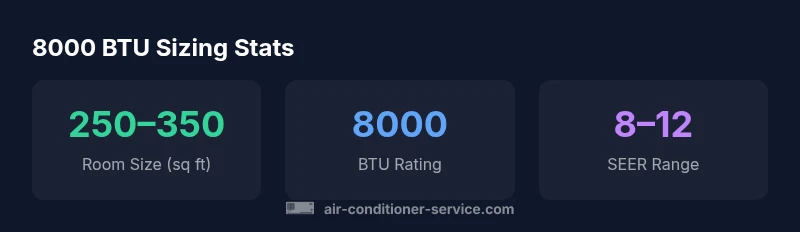
In practice, an 8000 BTU air conditioner often performs best in spaces roughly 250–350 square feet. The exact range depends on ceiling height, window orientation, insulation, and how many people regularly occupy the room. A well-insulated room with moderate sun exposure may comfortably sit near the upper end of this range, around 320–350 sq ft. In very hot climates or sun-lit rooms, the lower end around 250–300 sq ft is more realistic to avoid overworking the compressor. Always cross-check with the product’s installation manual and consider an on-site assessment if your space sits on the margins of these ranges.
- 250–300 sq ft: common target for hot climates or bright rooms
- 300–350 sq ft: feasible with strong insulation and moderate sun exposure
- Above 350 sq ft: consider higher BTU or multiple units
- Use a load calculation (manual J) for precision when in doubt
Insulation, windows, and sun exposure impact on performance
The actual cooling load is shaped by more than room size. Insulation reduces heat gain, while windows and sun exposure add load. Poor insulation can turn a spacious room into a hot trap, making an 8000 BTU unit work harder. Conversely, good insulation and window treatments can effectively extend the unit’s comfort range. Consider these factors:
- Attic and wall insulation quality
- Window type, orientation, and shading
- Sun exposure during peak hours
- Leak-prone doors and drafts around the room
- Ventilation and air flow within the space
- Ceiling height, which increases volume and load A practical approach is to evaluate these elements before selecting or benchmarking the unit.
Installation considerations for 8000 BTU units
Proper installation ensures the 8000 BTU unit reaches its rated performance. When choosing between a window unit and a through-the-wall model, consider ease of removal for maintenance and potential noise transfer. Ensure the unit is level to prevent drainage issues and sealed to limit drafts. Keep the condensate drainage clear and check for proper electrical supply (voltage, circuit capacity, and dedicated breaker if required). Vacuum seals around the mounting area reduce air leaks, while using appropriate sealant helps maintain efficiency.
- Choose the correct mounting location for efficient airflow
- Verify electrical circuit requirements and GFCI protection if needed
- Seal gaps around the installation to minimize heat gain
- Regularly inspect condensate drainage and filters for optimal performance
- Schedule professional checks if you’re unsure about the electrical setup
How to verify comfort after installation
Test the system’s performance after installation by tracking temperature consistency, humidity, and noise level. Start with a target room temperature and allow a 20–30 minute stabilization window. Monitor for hot spots and adjust airflow with vents and fan settings. If humidity remains high or if the unit struggles to maintain the setpoint, re-check insulation and sealing, and consider supplemental cooling or dehumidification as needed. Document the observed conditions for future reference.
- Record initial setpoint and actual room temperature
- Note humidity levels and any noticeable dampness
- Check airflow distribution with adjustable vents
- Confirm there are no drafts or leaks around windows and doors
- Keep a simple maintenance log for filters and drainage
Common mistakes to avoid
Common missteps include selecting a unit without considering climate load, poor insulation, or improper installation. Avoid under-sizing or over-sizing, as both degrade comfort and efficiency. Don’t ignore maintenance like filter cleaning and debris removal from exterior grills. Finally, never skip on safety checks for electrical compatibility and outdoor clearance to prevent overheating or fire risk. Use a load calculation for precise sizing when possible.
BTU sizing guidance by room size
| Room size (sq ft) | Recommended BTU range | Notes |
|---|---|---|
| 150–250 | 5000–7000 BTU | Small bedroom or home office |
| 251–350 | 8000 BTU | Typical living rooms or studios |
| 351–450 | 10000 BTU | Large rooms or bright sun exposure |
Common Questions
What size room is best for an 8000 BTU air conditioner?
An 8000 BTU unit typically covers about 250–350 sq ft, depending on climate, insulation, and sun exposure. Use a load calculation for more precision and consider dehumidification needs in humid areas.
Best for rooms around a quarter to a third of a thousand square feet; size it with a load calculation if you’re unsure.
Can I use an 8000 BTU AC in a larger room?
If the room exceeds 350 sq ft, an 8000 BTU unit may struggle to reach the set temperature and run more often, increasing energy use. Consider a higher BTU unit or additional cooling strategies.
Probably not ideal for much larger rooms; you’ll want more cooling power or multiple units.
How does insulation affect 8000 BTU performance?
Good insulation reduces heat gain, allowing an 8000 BTU unit to maintain comfort in larger spaces. Poor insulation increases load, making the unit work harder and less efficiently.
Insulation is a big deal—better insulation means you can comfortably use an 8000 BTU unit in a bit larger space.
What maintenance helps an 8000 BTU unit perform best?
Regularly clean or replace filters, ensure proper airflow around the unit, check for leaks and condensation, and keep coils clean. Regular maintenance sustains efficiency and comfort.
Keep filters clean and vents clear so the unit can work without blockages.
Should I trust BTU guidelines or manufacturer recommendations?
Manufacturer guidelines reflect the tested performance and safety limits for your model. Use them as the baseline, and supplement with independent load calculations for optimal results.
Manufacturer guidelines are your baseline—when in doubt, run your own load check.
Is a window unit better than a through-wall unit for 8000 BTU?
Window units are often easier to install and service for 8000 BTU scenarios, but through-wall units can be tidier and more secure in some spaces. Choose based on room layout, noise, and long-term needs.
Window units are common for 8000 BTU spaces, but it depends on your room and setup.
“Sizing an 8000 BTU unit correctly is as important as the unit’s efficiency. A precise match to room characteristics minimizes energy waste and maintains comfort.”
The Essentials
- Size matters: match BTU to space for comfort and efficiency.
- Expect 250–350 sq ft coverage for 8000 BTU in typical homes.
- Insulation and sun exposure shift the effective room size by tens of square feet.
- Install and seal properly to avoid air leaks and wasted energy.
- Use a load calculation when possible for precise sizing.