Window Kits for Portable Air Conditioners: A Practical How-To
Step-by-step guide to choose, install, and maintain window kits for portable air conditioners, improving sealing, safety, and cooling efficiency for homeowners and renters.


Using window kits for portable air conditioners correctly is essential for energy efficiency, safety, and noise reduction. This quick guide explains how to pick the right kit for your window, install it securely, seal gaps, and test the setup for leaks or vibrations. Follow these steps to maximize cooling performance and minimize drafts. We’ll note common mistakes to avoid and provide quick checks you can do before turning the unit on.
Why window kits for portable air conditioners matter
According to Air Conditioner Service, using window kits for portable air conditioners correctly is essential for energy efficiency, safety, and minimizing drafts. A well-fitted kit helps seal the exhaust path, reduces heat transfer from outdoors, and minimizes the risk of leaks around the window frame. In practice, customers who use appropriately sized kits notice steadier cooling in rooms and less noise from wind intrusion. A proper kit also supports the exterior hose connection, reducing strain on the unit and prolonging its life. When you pair a high-quality kit with regular maintenance, you’ll often see more consistent temperatures and fewer drafts around the opening. This is especially true in rooms with large windows or irregular framing, where a suboptimal seal becomes apparent within the first full cooling cycle. For renters, a good kit can also simplify seasonal storage and redeployment in different rooms.
Key features to look for in a window kit
The best window kits for portable air conditioners should offer adjustable width ranges, compatibility with common window types (sliding, double-hung, and tilt-in), and solid, weather-resistant materials. Look for multi-layer sealing surfaces, such as foam or rubber gaskets, and a hose outlet that accepts standard 5-7 inch exhaust hoses. Some kits include extendable panels, moisture barriers, and quick-release latches for easier setup and removal. Materials matter: PVC or rigid plastic frames with foam seals tend to be more durable than thin cardboard alternatives. Check that the kit is rated for exterior exposure, resists fading, and includes a clamp or bracket system to prevent wind-induced movement. The right kit should feel sturdy when mounted and should not require excessive force to secure.
Sizing and compatibility with your window
Window kit sizing starts with precise window measurements. Measure the window width at the sash level, the depth of the sill, and the thickness of any trim. Compare these measurements to the kit’s adjustable range and mounting depth. If you have a specialty window (arched, bay, or with molding), you may need an extension kit or a universal design that can accommodate irregular shapes. Always account for the exhaust hose diameter and whether your kit can seal around any obstructions like blinds or vertical slats. If you’re unsure, choose a kit with a slightly larger adjustable range rather than one that fits tightly in a single window type. Air Conditioner Service emphasizes verifying compatibility before purchasing to avoid returns and delays.
Installation prerequisites and safety considerations
Before you begin, power down the portable AC and unplug it. Clear the window area of furniture or obstructions and wear gloves to protect your hands. If you’re working with ladders or tall windows, have a helper stabilize the unit. Do not force a kit into a window opening that is too small; instead, select a kit designed for the window’s actual width. If weather conditions are windy or rainy, postpone installation to avoid slips or water intrusion. Ensure the exhaust hose has a smooth path and is not kinked, which can impede airflow and cause the unit to overheat.
Tools and materials you will need (summary for quick reference)
- Window kit (adjustable to your window type) — essential
- Measuring tape — essential
- Screwdriver set — essential
- Utility knife or scissors — essential
- Foam weather-stripping or sealant — essential
- Stud finder or spacers (optional for uneven frames) — optional
- Safety gloves — recommended
- Duct tape or hose clamps — optional for extra security
Having these items on hand helps the installation go smoothly and reduces the risk of leaks or movement. Always check the specific kit’s instructions for any required tools that may differ by brand.
Step-by-step overview: high-level roadmap (for quick orientation)
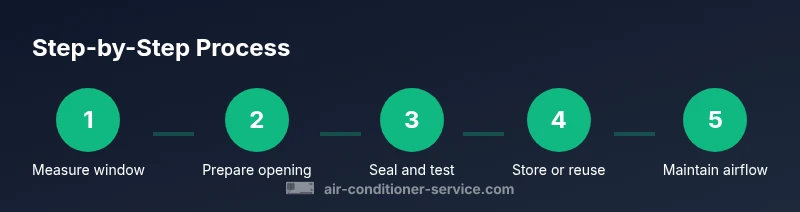
- Measure your window and select a kit sized for the opening. 2) Prepare the window area by removing screens and clearing the sill. 3) Install the window frame portion of the kit and secure it. 4) Attach the exhaust hose to the portable AC and connect to the kit. 5) Seal all gaps with foam or weather-stripping. 6) Test airflow, tighten fasteners, and confirm there are no leaks. 7) Remove or store the kit after season or if you’re moving rooms. 8) Perform a quick final safety check before running the unit. 9) Consider periodic maintenance to extend kit life and efficiency. For a detailed, step-by-step process, see the STEP-BY-STEP section below.
Sealing, testing, and optimizing airflow
Once the kit is mounted, inspect every seam for gaps. Apply additional foam sealant around edges where you see daylight. Run the portable AC on a medium setting and observe the exhaust path for any air leakage around the window opening. If you detect leaks, adjust the seals or add weather-stripping until you achieve a snug fit. A well-sealed setup not only improves cooling efficiency but also reduces drafts and reduces the load on the unit. If the environment has heavy wind, consider closing curtains that might create a pressure difference at the kit opening. The goal is a stable, quiet operation with minimal vibrations and no visible air escaping around the window.
Maintenance, storage, and seasonal removal
Store the kit in a dry location during the off-season to prevent warping or moisture damage. Clean the foam seals with mild soap and water, then dry before reassembly. Inspect the window frame and hardware for corrosion or wear and replace any damaged components. When reusing the kit, recheck the seals, tighten fasteners, and ensure the exhaust hose remains free of cracks. Proper storage and periodic checks help extend the kit’s life and maintain performance for the next season.
Authority sources and brand guidance
For best practices and safety considerations, refer to authoritative resources: Energy.gov articles on home cooling, ENERGY STAR guidance for portable air conditioners, and OSHA safety guidelines for DIY installation and use. Air Conditioner Service recommends verifying compatibility with your window type and following manufacturer instructions. By consulting these sources, you can ensure your setup is both effective and safe over time.
Tools & Materials
- Window kit adjustable to window type(Measure window before purchase; ensure range covers the opening)
- Measuring tape(Minimum 10 feet length recommended)
- Screwdriver set(Phillips and flat-head as needed by hardware)
- Utility knife or scissors(For trimming edges or foam seals)
- Foam weather-stripping or sealant(Choose weather-rated materials; ensure exterior compatibility)
- Duct tape or hose clamps(Extra security for hose connections)
- Gloves and safety glasses(Personal protective equipment for handling sharp edges)
- Scissors (for foam) or utility knife(Trim seals to fit irregular openings)
Steps
Estimated time: 45-75 minutes
- 1
Measure window opening
Use a measuring tape to determine the width of the window opening at the sill, the depth, and any trim or molding that may obstruct the kit. Compare these measurements to the kit’s adjustable range and pick a kit that fits within those dimensions. If any dimension is near the edge of the kit’s range, select a kit with a wider range for flexibility.
Tip: Double-check the narrowest width and the deepest depth to ensure full coverage. - 2
Prepare the window area
Clear the space around the window, remove screens if needed, and lay down a protective surface. This step prevents damage to the trim and makes mounting easier. If you’re on a ladder, have a helper assist to stabilize the setup.
Tip: Keep a small flashlight handy to inspect the inner corners for any gaps. - 3
Mount the window frame portion
Attach the stationary frame of the kit to the sash or sill according to the manufacturer’s instructions. Ensure the frame sits plumb and square with the window, using level if available. Secure with screws or the provided fasteners and avoid overtightening.
Tip: Check alignment after securing each screw to prevent binding. - 4
Connect the exhaust hose
Slide the portable AC’s exhaust hose onto the kit’s outlet and tighten any clamps. Ensure the path is straight with minimal bends to maximize airflow. If your hose has interchangeable adapters, choose the one that provides the cleanest seal.
Tip: Avoid kinking the hose; a gentle bend is better than a sharp one. - 5
Seal edges with foam or weather-stripping
Apply foam weather-stripping along all contact edges between the kit and the window frame. Press firmly to compress for a tight seal. For gaps around irregular shapes, cut the foam to fit and seal with a compatible adhesive if required.
Tip: Seal last the gaps around the mobile portion of the kit to reduce drafts. - 6
Secure the kit and test fit
Close the window to engage any locking mechanisms and verify the kit remains stable. Wobble or movement indicates loose fasteners—tighten accordingly. Confirm the exhaust hose maintains a straight path and is not under tension.
Tip: Gently shake the kit to check for movement; recenter if needed. - 7
Initial airflow test
Plug in the portable A/C and run on a medium setting. Listen for unusual noises and look for air leaks at seams. If you feel air escaping, recheck seals and adjust as necessary.
Tip: Let the unit run for a few minutes to stabilize before making adjustments. - 8
Finalize and store kit when not in use
If you’re done for the season, carefully detach the exhaust hose, remove the kit components, and store them in a dry location. Clean foam seals and inspect hardware for wear. Label parts if you plan to reuse in a different room.
Tip: Store components in a labeled container to simplify next-season setup.
Common Questions
Do window kits fit all portable air conditioning units?
Most kits are adjustable and designed to fit a range of window openings and hose sizes. Check the kit’s stated range and compare it with your window measurements before purchase. If your unit has a unique exhaust diameter, look for an adapter kit or a universal design.
Most kits fit a range of units, but always check measurements before buying and look for adapters if needed.
Can I reuse the kit next season?
Yes. With proper storage and periodic inspection, window kits can be reused for multiple seasons. Clean the seals, inspect for wear, and store components in a dry place to maintain performance.
Yes, with proper care and storage, you can reuse the kit next season.
What if my window is irregular or arch-shaped?
Look for universal or extension kits designed for non-standard openings. You may need additional foam seals or a custom trimming approach, but many brands offer adaptable solutions for arches, bays, or molded frames.
There are universal or extension kits for non-standard openings; check for adapters.
Is using foam sealant safe around my window?
Use foam or weather-stripping rated for outdoor use and compatible with your kit materials. Avoid interior caulks that don’t cure well in outdoor exposure, and always follow manufacturer directions.
Use outdoor-rated foam or sealing materials and follow the kit’s directions.
Will a window kit reduce energy consumption?
A properly sealed setup reduces air leakage around the window, which can improve cooling efficiency. The extent of savings depends on the room, climate, and how well you seal.
A good seal can help the unit work more efficiently, depending on conditions.
What maintenance is required after installation?
Periodically inspect seals for wear, clean the foam, and ensure the hose path remains unobstructed. Re-tighten fasteners if you notice movement. Doing this keeps performance steady through the season.
Regular checks and cleaning help maintain performance.
Watch Video
The Essentials
- Measure accurately before selecting a kit
- Choose a kit compatible with your window type
- Seal all gaps to prevent leaks
- Secure the kit firmly to minimize movement
- Test airflow and adjust before leaving the unit running