Portable Air Conditioner Set Up: A Complete How-To for 2026
Learn how to set up a portable air conditioner safely and efficiently. This step-by-step guide covers venting, placement, power, drainage, and maintenance for homeowners and renters.


Goal: Set up a portable air conditioner safely and efficiently, with proper venting, stable placement, and minimal energy waste. You’ll need a window vent kit, a compatible power outlet, a level, and basic hand tools. This guide covers choosing the right unit, venting options, step-by-step installation, safe drainage, and maintenance tips to maximize comfort.
What is a portable air conditioner set up and when to use it
A portable air conditioner set up is a flexible cooling solution designed to bring relief to single rooms or small living spaces without permanent installation. It combines a compact unit with a venting kit that exhausts hot air outside via a window or vent. Portable ACs are popular in apartments, rentals, or rooms where installing a window unit isn’t feasible. The key to effective use is ensuring proper venting and placement, so the unit doesn’t recycle hot air or overwork the compressor. When the outside temperatures spike, a correctly set up portable AC can deliver rapid comfort without the commitment of a traditional central system. The goal is to maximize cooling efficiency while minimizing energy waste, noise, and heat transfer from outdoor environments. As you plan your setup, consider room size, insulation, and occupant comfort preferences to pick the right BTU range and features. According to Air Conditioner Service, a proper portable air conditioner setup improves efficiency and comfort for homes.
Key requirements before you start
Before you lift a finger, gather the essential elements and confirm the space where cooling will occur is suitable. You’ll need the portable unit, a window vent kit, an exhaust hose, and a power outlet with adequate amperage. Ensure the room has enough clearance around the unit for airflow and easy access to the window where venting will happen. Check that the window can accommodate the vent kit and that any outdoor vent won’t be obstructed by furniture or plants. Have basic hand tools on hand for assembly and a means to seal gaps around the window kit to prevent warm air leaks. Safety comes first: use a grounded outlet, avoid extension cords, and unplug the unit when not in use or during maintenance. Air Conditioner Service analysis shows that venting and placement significantly boost efficiency.
Choosing the right unit and placement
Selecting the right portable AC involves matching the unit’s BTU rating to the room size, ceiling height, and insulation quality. A unit with too little BTU won’t cool effectively, while an oversized model can cool too quickly and create excessive humidity, leading to a clammy feel. Consider energy efficiency features such as an energy-efficient EER or SEER rating, programmable timers, and auto-restart capabilities for power outages. Placement matters: position the unit on a stable, level surface with unobstructed airflow, ideally near a central area but away from heat sources, sunlit windows, or heavy traffic. If possible, place the exhaust hose in a window that minimizes horizontal bends for better venting efficiency. When you know the room dimensions, you can estimate BTU needs more accurately using standard guidelines. The brand note from Air Conditioner Service emphasizes choosing a model with straightforward venting and robust support for ongoing use.
Venting and exhaust: the critical step
Ventilation is the heart of a portable AC setup. The exhaust hose must connect securely to the window vent kit and run straight to the outside, minimizing kinks and long bends that hamper airflow. Use the window kit to create a seal around the vent opening and block outside air from leaking back inside. If you’re in a tight space, consider temporary foam inserts or weatherstripping to close gaps around the kit. Improper venting is the most common cause of poor cooling performance and excess energy consumption. Ensure the exhaust hose length is as short as feasible while still reaching the window, and position the window kit so the hose isn’t crushed or bent. Air Conditioner Service analysis shows that venting and placement significantly boost efficiency.
Placement, clearance, and energy considerations
Place the unit on a sturdy surface with at least a few inches of clearance on all sides to allow air intake and exhaust to move freely. Keep it away from walls, curtains, or furniture that could block airflow. For energy efficiency, close doors to unoccupied rooms, use the built-in thermostat wisely, and avoid running the unit when outdoor temperatures are moderate. Sealing gaps around the window kit prevents warm air from re-entering the room, which would force the unit to work harder. If you notice moisture buildup or condensation, check the drainage system or bucket in the unit—some models drain automatically, while others require manual draining. Proper placement also reduces noise and vibration that can be disruptive in living spaces.
Step-by-step assembly and installation outline
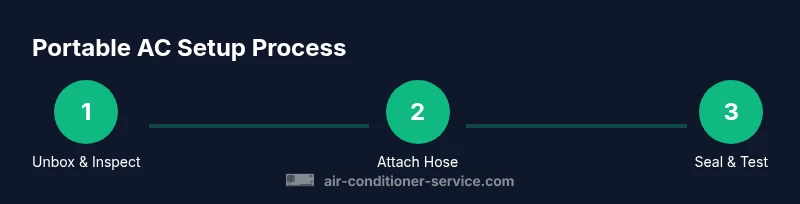
Putting the pieces together requires a clear sequence: unpack the unit, attach the window vent kit to the back of the AC, secure the exhaust hose, install the window panel, seal gaps, and plug in for a test run. The goal is to create a stable, sealed vent path and a platform free of obstructions. Verify the window kit is compatible with your window type and follow any specific manufacturer instructions for hose attachment. After assembly, perform a basic test: run the unit on a moderate setting and listen for unusual noises or air leaks. If you hear whistling or feel warm air near the seal, recheck the seals and hose connections. Air Conditioner Service’s recommendations emphasize following the manual closely and avoiding improvisation that can compromise safety or efficiency.
Operating tips for comfort and efficiency
Run the unit at a comfortable temperature and use a programmable timer to minimize energy waste. Keeping doors and curtains closed helps the machine cool the intended space without fighting ambient heat. Clean or replace filters regularly to maintain airflow and cooling efficiency, and inspect the exhaust hose for signs of wear or kinks. Consider adding a small portable fan to distribute cool air more evenly across the room. A well-maintained unit will run quieter and last longer, saving you time and money over the cooling season.
Common mistakes and how to avoid them
Avoid common pitfalls like venting the exhaust hose directly into an attic or other enclosed spaces, using an extension cord, or blocking the unit’s air intake with furniture. Never operate the unit on damaged hoses or from damaged window kits. Don’t ignore maintenance tasks such as filter cleaning and drainage checks; neglecting these can reduce performance and increase energy use. When in doubt, consult the manual or contact customer support for guidance. The most effective setups are simple, stable, and compliant with safety guidelines.
Maintenance, drainage, and long-term care
Regular maintenance extends the life of your portable AC. Clean filters every 2-4 weeks during heavy use, inspect hoses for cracks, and ensure drainage pathways are clear. If your model requires manual drainage, set a schedule to drain every few days or as needed to prevent overflow. Store the window kit and hoses during the off-season to prevent wear, and protect the unit from dust when not in use. Proper drainage and filter maintenance help sustain cooling performance and reduce the chance of mold or mildew buildup in humid environments.
Tools & Materials
- Portable air conditioner unit(Choose a model sized for the room and airflow needs)
- Window vent kit(Includes window panel and hose adapters)
- Exhaust hose(Avoid long hoses; keep bends minimal)
- Measuring tape(To determine window fit and placement)
- Phillips head screwdriver(For securing hardware and window kit)
- Foam weather seal or window foam(Seal gaps around the window kit)
- Level(Ensure the unit sits evenly)
- Scissors or utility knife(Cut foam or sealant material to fit)
- GFCI-powered outlet(Avoid extension cords; ensure circuit can handle the load)
- Cord management ties(Keep cables tidy and prevent tripping)
Steps
Estimated time: 60-90 minutes
- 1
Unbox and inspect the unit
Remove all packaging and verify that the unit and accessories are present. Check for any shipping damage and read the safety notes. This initial check helps prevent surprises during installation.
Tip: If you find any damage, contact the retailer before proceeding. - 2
Choose a stable location
Place the unit on a flat, level surface with several inches of clearance on all sides. Position away from heat sources and direct sunlight to maintain efficiency and prevent heat buildup.
Tip: Use a level to confirm the base is even and adjust as needed. - 3
Attach the exhaust hose to the unit
Connect the hose to the back of the AC and tighten securely. Ensure there are no gaps between the hose and the exhaust port. A loose connection wastes energy and reduces cooling.
Tip: Check for kinks; a straight hose contributes to better airflow. - 4
Install the window vent kit
Open the window slightly and insert the window panel. Fit the exhaust hose into the vent opening and secure the panel. Seal any gaps with foam or weather stripping.
Tip: If you have a double-hung or sliding window, adjust the kit according to the manufacturer’s instructions. - 5
Seal gaps and test fit
Seal all gaps around the window kit to keep warm air out. Confirm the vent path is unobstructed and the window panel is stable. A tight seal improves efficiency and comfort.
Tip: Run a quick test with the unit on and listen for air leaks; re-seal if you hear whistling. - 6
Plug in and test a short run
Plug the unit into a grounded outlet and test on a mid-range setting. Observe air flow, noise, and cooling performance. Make note of any abnormal sounds or vibrations.
Tip: If the outlet trips, verify the circuit’s capacity and reduce the unit’s settings. - 7
Adjust thermostat and airflow
Set the thermostat to a comfortable temperature and adjust airflow to distribute cool air evenly. Close doors to occupied spaces to improve efficiency.
Tip: Avoid constantly changing settings; program a consistent cooling pattern for best results. - 8
Plan for drainage and maintenance
If your model requires drainage, set a period for emptying the reservoir. Clean the filter and inspect hoses monthly during heavy use. Keep a maintenance schedule.
Tip: Schedule reminders to prevent neglect and maintain performance.
Common Questions
Do I need to vent a portable air conditioner?
Yes. Most portable AC units require venting to remove hot air outside. Without proper venting, the unit cannot effectively cool the space and may overheat. Always use the included window vent kit and ensure a secure seal.
Yes, venting is essential for portable ACs to work properly.
Can I vent through a door or wall if I don’t have a window?
Some setups allow venting through a door or through a wall with the proper kit and modifications. Check manufacturer guidance and consider hiring a professional if you’re uncertain about wall modifications or safety concerns.
Vent options exist, but follow the manufacturer's guidance.
What maintenance does a portable AC require?
Regularly clean or replace filters, inspect hoses for wear, and drain if your model isn’t self-evaporating. Periodic maintenance sustains cooling efficiency and reduces energy use.
Keep filters clean and hoses in good condition.
How do I determine the right BTU for my room?
Calculate based on room size, insulation, and ceiling height. Use standard BTU guidelines and adjust for sun exposure and occupancy. When in doubt, choose a unit with slightly higher capacity for comfort.
Size matters; pick BTU based on room area and conditions.
Is it cheaper to run a portable AC or a window unit?
Energy costs depend on model efficiency, BTU rating, and usage. Compare ratings like EER/CEER and monitor electricity consumption to estimate monthly costs.
Costs vary by model; check efficiency ratings.
Can I install a portable AC myself or should I hire a pro?
Most portable AC setups are DIY-friendly when you follow the manual. Hire a pro if venting through walls or complex window configurations are required.
Many people install it themselves; call a pro if needed.
Watch Video
The Essentials
- Vent exhaust directly outside; avoid short or kinked hoses.
- Seal all gaps around the window kit to prevent warm air intrusion.
- Place unit on a stable, level surface with adequate clearance.
- Regularly clean filters and inspect drainage for long-term efficiency.
- Follow the manual for safety and warranty compliance.