How to Use a Portable Air Conditioner: A Complete Guide
Learn how to safely set up and operate a portable air conditioner. This step-by-step guide covers venting, drainage, placement, and maintenance for efficient cooling in small to medium rooms.


You will learn how to safely set up and operate a portable air conditioner, including placement, venting, drainage, and basic maintenance. This quick answer points you to a step-by-step approach that improves cooling efficiency and comfort while reducing energy use. Follow the instructions for safe operation and lasting performance.
What a portable air conditioner is and how it works
A portable air conditioner is a self-contained cooling unit that you can move between rooms. It draws warm air from the room, cools it with a built-in condenser and refrigerant loop, and exhausts heat through a hose to an outside opening. Because the unit handles both cooling and exhaust, it offers flexibility for renters and homeowners who need temporary cooling without a window-mounted unit. According to Air Conditioner Service, portable ACs are a practical option for quick cooling in small to medium spaces, especially when a permanent installation isn’t possible. The system requires proper venting, drainage, and clearances to work efficiently, alongside regular maintenance like filter cleaning. By understanding the basics, you’ll know what to expect and how to optimize performance without wasting energy.
Space matters: how much room do you need?
Before buying or setting up a portable AC, measure the room square footage and ceiling height to estimate cooling needs. A unit rated between 8,000 and 12,000 BTU is typically suitable for most bedrooms and small living rooms, while larger spaces may require higher capacity. Placement near the center of the room helps distribute air evenly, but you should avoid corners blocked by furniture. Air Conditioner Service notes that proper space around the unit improves airflow and reduces the chance of overheating. Keep furniture at least 12 inches away from the rear grille to prevent restricted airflow, and ensure windows or doors stay mostly closed while the unit runs for maximum efficiency.
Venting essentials: exhaust hose, window kit, and alternatives
Ventilation is the heart of any portable AC. The exhaust hose must lead outside to remove heat and humidity. Install the window kit so the hose drops directly to the outside world, with minimal bends and gaps. Use foam sealant or rubber gaskets to reduce air leaks around the kit. If windows won’t accommodate a traditional kit, consider a connection through a vented wall sleeve or a sliding door kit. Air Conditioner Service emphasizes tight venting to prevent warm air from re-entering the room and to improve cooling efficiency. Always avoid venting into attics or closed spaces, which can create moisture and mold problems.
Drainage decisions: gravity drain vs pump
Most portable ACs produce condensation that must be removed. The simplest method is a gravity drain into a nearby drain or bucket, but this may require a low-hanging setup or a floor drain. If your layout doesn’t allow gravity drainage, you can use a condensate pump to push water to a higher drain or out a window. The key is ensuring the drain hose has a gentle slope and is not kinked. Air Conditioner Service reminds homeowners that keeping the condensate line clear avoids backups and odors, and regular checks prevent long-term damage to the unit.
Electrical safety and power considerations
Use a dedicated, grounded outlet to power the portable AC, ideally one with a proper circuit capacity for the unit’s BTU rating. Avoid using extension cords unless the manufacturer specifies a compliant cord; mismatched cords can overheat and trip breakers. Ensure the outlet is easily accessible and not overloaded by other devices. A GFCI outlet in damp areas adds an extra layer of safety. If the unit trips a breaker, the problem may be an overloaded circuit or a faulty cord rather than the AC itself.
Setup overview: initial placement and installation steps
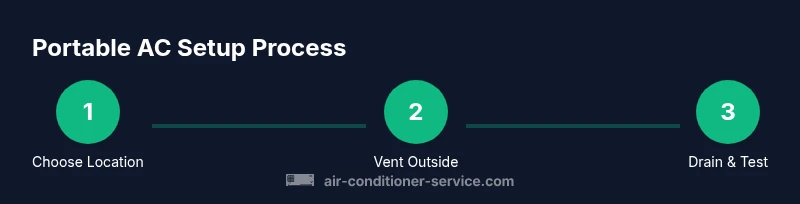
Start with selecting a location near an exterior wall for venting flexibility, then set the unit on a stable, level surface. Attach the exhaust hose to the back of the unit and secure the window kit or alternative vent path. Seal any gaps around the vent to prevent warm air leaks. If you’re using a pump or gravity drain, connect the drain line per the manufacturer’s instructions and test for leaks with the unit off. Verify that the exhaust is venting outside and that there’s no air bubbling back into the room when you run a quick test.
Operating modes and efficiency tips
Most portable ACs offer cooling, fan, and dehumidification modes. Start with a mid-range temperature setting (around 74–78°F / 23–25°C) and let the unit stabilize before adjusting. Use “eco” or energy-saving modes if available to reduce power consumption during extended periods of use. Keep doors and nonessential windows closed to prevent air exchange with warm space. If humidity remains high, you can run the unit with the fan at a lower speed to promote air circulation while still removing moisture.
Maintenance to keep performance high
Regular maintenance includes cleaning or replacing the filter every 2–4 weeks of use, depending on dust levels and usage. Wipe the exterior and wipe down the air intakes to prevent dust buildup that can reduce efficiency. Inspect the exhaust hose for kinks or crush points and replace damaged hoses promptly. A clean, well-maintained unit runs cooler, uses less energy, and lasts longer. Air Conditioner Service notes that simple routine upkeep translates to noticeable improvements in comfort and reliability.
Troubleshooting common issues
If the unit seems underpowered, check that the vent hose is fully extended, the window kit is properly sealed, and the filter is clean. A rattling noise often indicates loose panels or a blocked intake; re-seat parts and clear obstructions. If there’s excess moisture around the drain line, stop the unit and verify the drainage path isn’t blocked. If the unit shuts off unexpectedly, inspect the power outlet and circuit capacity. Addressing these issues promptly minimizes wear and ensures consistent cooling.
Safety reminders and common mistakes to avoid
Never vent a portable AC into enclosed spaces like attics or crawl spaces, as this can cause moisture buildup and mold. Do not block the unit’s rear grille or exhaust path. Avoid using it in damp basements without proper venting. Always unplug before cleaning or servicing, and avoid contact with water. Air Conditioner Service emphasizes following the manufacturer’s instructions for installation and operation to prevent damage and ensure safe use.
Energy efficiency and smart usage tips
Maximize efficiency by setting the thermostat a few degrees higher when you’re away, using energy-saving modes, and ensuring the space is well insulated. Close off unused rooms to prevent air loss; compartmentalizing space reduces the cooling load. Schedule maintenance so the filter remains clean, which improves airflow and lowers energy consumption. Consistent upkeep over time yields better performance and lower running costs.
Tools & Materials
- Portable air conditioner unit(Ensure BTU rating matches room size (see sizing guidance))
- Window vent kit(Includes panel, sealant, and hoses; compatible with unit model)
- Exhaust hose(Attached to the back of the unit and vented outside)
- Foam seal or rubber gasket(Seal gaps around the window kit to prevent air leaks)
- Drain hose or condensate pump (if needed)(Use gravity drain if possible; pump for higher elevation or blocked drains)
- Dedicated grounded outlet (GFCI preferred)(Avoid extension cords if not specified by manufacturer)
- Measuring tape(Useful for measuring window width and clearance)
- Cable ties or Velcro straps(Route hoses neatly and prevent kinks)
- Cleaning supplies (soft cloth, mild detergent)(For routine exterior cleaning and filter care)
Steps
Estimated time: 20-40 minutes
- 1
Unbox and inspect components
Unpack the unit and verify all parts are present. Check the hose, window kit, seal, drain hose, and power cord for damage. If anything is missing, contact the retailer before use.
Tip: Take photos of all parts before installation to document condition. - 2
Choose a location and prepare the space
Select a location close to an exterior wall with a stable surface. Ensure there is enough clearance (at least 12 inches around the back and sides) and that doors are kept closed while operating.
Tip: Avoid placing unit where furniture blocks air intake. - 3
Attach the exhaust hose to the unit
Connect the exhaust hose firmly to the back of the unit and route the hose toward the window or vent. Do not force bends; keep the hose straight for best airflow.
Tip: Check for kinks periodically during use. - 4
Install the window vent kit and seal gaps
Place the window kit in the window, extend to fit the opening, and seal around the kit with foam or gasket material. Ensure there is a secure, airtight path for exhaust.
Tip: Test for air leaks by running a quick fan test with the window partly open. - 5
Set up drainage path
Connect the drain hose to the unit or pump and route it to a suitable drain or outside the window. Check for a gentle slope and no kinks to prevent backups.
Tip: If using a pump, verify it’s powered and connected correctly. - 6
Power up and configure initial settings
Plug into a grounded outlet and power the unit. Select cooling mode, set a comfortable temperature, and choose a fan speed that balances comfort with energy use.
Tip: Start with a mid-range setting and adjust after stabilization. - 7
Run a quick functional test
Let the unit run for 10–15 minutes and observe airflow, venting accuracy, and any leaks. Confirm condensation drains correctly and there are no unusual noises.
Tip: Listen for rattles and tighten panels if needed. - 8
Schedule routine maintenance
Clean or replace filters, wipe down surfaces, and inspect hoses monthly during heavy use. This helps sustain efficiency and prolongs life.
Tip: Mark a calendar reminder to keep a regular maintenance cadence. - 9
Shut down and store properly (if not in use)
Power down, unplug, and store hoses neatly. If you plan to store for a while, clean the unit and keep it dry to prevent mold or corrosion.
Tip: Keep the window kit protected from dust when not in use.
Common Questions
Can I vent a portable air conditioner through a window that’s irregular or has a tilt?
Yes, most window vent kits are adjustable to fit irregular openings. Use the foam seals and adjust the kit to create a tight seal. If the window won’t close properly, consider a door kit or wall vent option as an alternative.
Yes, adjustable vent kits work for irregular windows; seal gaps tightly or consider an alternative vent path.
Does a portable AC remove humidity from the room?
Yes. In cooling mode, portable AC units remove humidity from the air as part of the cooling cycle. For very humid spaces, you may prefer dehumidification mode if available or run the unit at a slightly higher fan speed to improve moisture removal.
Yes, it reduces humidity as part of cooling, and you can use dehumidify mode if offered.
Can I leave a portable AC running all day?
It can be safe to use for extended periods if you monitor temperature, humidity, and electrical load. Ensure the outlet isn’t overloaded and that the unit is on a stable surface. Periodic breaks can improve efficiency and reduce wear.
Yes, but monitor load and give the unit occasional breaks to save energy and extend life.
What should I do if the exhaust hose gets hot or leaks?
A hot hose or leaks usually means a kinked hose, improper seal, or incorrect vent path. Straighten the hose, reseal connections, and ensure the vent path leads outside without obstruction. Replace damaged hoses to prevent leaks.
If the hose gets hot or leaks, check for kinks, reseal, and ensure it vents outside properly.
Is a portable air conditioner as loud as a window unit?
Noise levels vary by model. Portable units tend to be louder than window units because of the built-in compressor and fan in a compact cabinet. You can reduce noise by selecting a lower fan speed and ensuring proper ventilation to minimize workload.
Typically a bit louder than window units, but you can reduce noise by choosing lower fan speeds and proper ventilation.
How often should I clean the air filter on a portable AC?
Check the filter every two to four weeks during regular use and clean or replace as needed. In dusty environments, more frequent cleaning is advised to maintain airflow and efficiency.
Clean the filter every 2–4 weeks during use, more often if dust is heavy.
Watch Video
The Essentials
- Position for optimal venting and airflow.
- Use proper drainage to prevent moisture damage.
- Regular maintenance boosts efficiency and longevity.
- Follow safety guidelines to avoid electrical hazards.