How Big Is a 5000 BTU Air Conditioner? Size Guide for Homeowners
Learn how big a 5000 BTU air conditioner really is. This size guide covers window vs portable models, typical dimensions, how to measure for fit, and practical tips for optimal cooling.


A 5000 BTU air conditioner refers to cooling capacity, not a fixed footprint. Physical size varies by model and type; most compact window units are roughly 14–18 inches wide, 12–16 inches high, and 15–18 inches deep. Portable units are typically about 15–20 inches wide, 24–34 inches tall, and 13–16 inches deep. Always check the manufacturer specs for exact dimensions.
How big is a 5000 btu air conditioner? Size vs capacity
When homeowners ask how big is a 5000 btu air conditioner, the key concept to grasp is that BTU denotes cooling power, not physical dimensions. A unit’s footprint depends on design choices, such as cabinet size, airflow path, and the presence of features like dual-hose ventilation or built-in condensate handling. Because there is no universal standard for external dimensions, you should always verify the exact measurements on the product label or manufacturer specifications before purchase.
In practice, most compact window units fall within a similar footprint class. The goal is to balance sufficient cooling with a fit that doesn’t obstruct the window or restrict airflow. If you are shopping, plan for moderate margins around the unit to allow for proper intake and exhaust, and to prevent heat buildup behind the unit. This is a practical takeaway highlighted by the Air Conditioner Service Team in our 2026 studies on residential cooling equipment.
Window units vs portable units: Does size differ by type?
There are two common formats for 5000 BTU cooling in homes: window-mounted units and portable units. Window units are typically fixed in a window opening, so their width is constrained by the window frame. Portable units, on the other hand, sit on the floor with an exhaust vent that must discharge outdoors, usually through a window via a kit. In terms of footprint, window models often emphasize width and depth within a narrow height, whereas portable models emphasize height (to accommodate wheels and casters), with a slightly larger depth to house the exhaust and condensate components. If space is tight, a compact window unit may offer a smaller wall-to-window footprint, but ensure the window opening can still seal properly.
Both types can deliver similar cooling performance, but the actual physical size varies by brand and design choices, not by the BTU rating alone. When assessing fit, measure the window opening, the available floor space, and nearby furniture to avoid obstructed airflow or awkward placement.
Typical dimensions you can expect for 5000 btu models
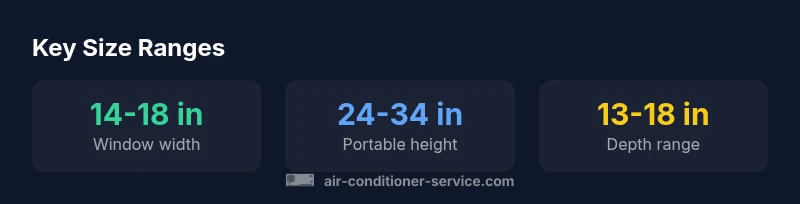
Across most brands, a typical 5000 BTU window unit tends to be about 14–18 inches wide, 12–16 inches high, and 15–18 inches deep. Portable units generally run wider and taller, often around 15–20 inches wide, 24–34 inches tall, and 13–16 inches deep. These ranges reflect common design patterns and exclude niche compact prototypes. Always rely on the manufacturer’s published specs to confirm exact measurements, especially if you have a tight window, narrow doorway, or limited storage space.
To visualize, think of the window model occupying a small rectangle with a modest depth, while portable models add height to accommodate casters and the exhaust hose. This distinction matters when planning placement near electrical outlets and ensuring there’s adequate clearance for air intake and exhaust.
Calculating the right size for your room
For practical sizing, start with the room’s square footage and adjust for climate, insulation, and sun exposure. A general rule for many climates is about 8–12 BTU per square foot for small to mid-sized rooms, but hot climates or spaces with large west-facing windows may require more, while well-insulated rooms may require less. With a 5000 BTU unit, target spaces roughly in the range of 150–350 square feet, depending on ceiling height and environmental factors. If you’re uncertain, calculating a precise estimate and auditing the room’s thermal gains (sunlight, appliances, occupants) can save you from over or under cooling. When comparing models, consider running a simple calculation: room area (sq ft) × desired BTU per sq ft, then compare with the unit’s rated capacity and efficiency.
Finally, remember that energy efficiency and advanced features can influence real-world performance more than sticker BTU alone. An energy-efficient unit operating in a well-insulated room will feel cooler with less runtime than a lower-efficiency unit in a hotter, sunnier space.
Installation considerations and clearance
Even a properly sized unit can underperform if installation blocks airflow or creates leaks. Ensure a window unit seals snugly in the opening to minimize drafts, and leave at least a few inches of clearance around the sides and top for air intake and exhaust paths. For portable units, venting exhaust through a socket window kit is essential; ensure the hose is as straight and short as possible to reduce heat leakage and backpressure. For all units, check the cord length and outlet compatibility; avoid overloading circuits, and consider a dedicated outlet if you run more than one high-draw appliance. Regularly clean filters and coils to maintain performance, especially in high-heat months when the unit runs more continuously.
Maintenance and verification of size fit
After installation, verify the unit remains properly sized for your space by monitoring cooling performance and run-time. If your room consistently feels warmer than expected, re-evaluate whether BTU is sufficient for the space or if insulation and air leaks are contributing. Re-check the unit’s dimensions when replacing a former model; a new unit may have a different footprint that alters window clearance or floor space. Routine maintenance—filter cleaning, coil checks, and drainage path inspection—helps ensure consistent performance and keeps a 5000 BTU unit cooling efficiently year-round. Air Conditioner Service emphasizes verifying dimensions and performance during seasonal checks to prevent blind spots in cooling coverage.
Reading specs and comparing brands
When comparing models, don’t rely solely on BTU numbers. Read the full spec sheet: exterior dimensions, efficiency (EER/SEER), noise levels, weight, and recommended room size. Some manufacturers publish slightly different dimension tolerances for the same model year, so review the official product page and the user manual. If you have a multi-room layout, you may also consider portability and how window availability affects air distribution. A well-chosen 5000 BTU unit should balance compact footprint with efficient airflow and manageable weight for installation and removal.
Dimension ranges by unit type for common 5000 BTU models
| Unit Type | Estimated Width | Estimated Height | Estimated Depth | Typical Cooling Area |
|---|---|---|---|---|
| Window Unit | "14-18 in" | "12-16 in" | "15-18 in" | "150-350 sq ft" |
| Portable Unit | "15-20 in" | "24-34 in" | "13-16 in" | "150-350 sq ft" |
Common Questions
Do higher BTU units always mean a larger physical size?
No. BTU measures cooling capacity, not the enclosure footprint. Models with the same BTU can have different dimensions based on design and features. Always check exact measurements.
BTU shows cooling power, not size—check the unit’s dimensions.
Is a 5000 BTU unit suitable for rooms larger than 350 sq ft?
A 5000 BTU unit may struggle in rooms consistently larger than the typical range, especially in hot climates or with poor insulation. For larger spaces, consider higher BTU options or supplemental cooling strategies.
It might be too small for very large rooms; upgrades may be needed.
What measurements should I take before buying?
Measure window openings or floor space, check available clearance around the unit, and note outlet accessibility. Compare these measurements to the product’s published dimensions.
Measure the space carefully before you buy.
How do I know if a window unit will fit my window?
Compare the unit’s width to your window opening and account for sill or trim. Ensure you can seal the window after installation and still allow proper airflow.
Make sure it fits the window opening and leaves room for ventilation.
Can a 5000 BTU unit cool efficiently in very hot climates?
Efficiency depends on insulation and environment. In extreme heat, the unit may run longer; ensure good insulation and consider higher BTU if cooling needs are frequent.
It can work, but efficiency drops in very hot spaces.
“Size and fit aren’t one-size-fits-all. A unit’s BTU tells you how hard it can cool, but the physical footprint depends on design choices. Always compare the published dimensions and installation clearances for an accurate match.”
The Essentials
- Always verify the exact dimensions from the manufacturer, don’t infer size from BTU alone
- Window units are generally wider than they are tall, with compact depth
- Portable units tend to be taller and heavier, with longer exhaust hoses needing careful placement
- Estimate room size and climate factors to confirm BTU adequacy before buying
- Check clearances and installation requirements to ensure proper airflow and efficiency