Can You Use a Portable Air Conditioner in Rain? A Practical Guide
Learn how to safely operate a portable air conditioner during rain with expert tips on placement, electrical safety, drainage, and maintenance for rainy days.


Yes, you can operate a portable air conditioner during rainy weather if you prevent direct moisture from reaching the unit and power connections. Place the unit on a dry, level surface under cover when possible, use a grounded, GFCI-protected outlet, and avoid wet cords. If moisture is present, unplug and dry before use.
Can you safely use a portable air conditioner when it's raining?
Yes, you can operate a portable air conditioner during rainy weather, but you must prevent direct moisture from reaching the unit and power connections. According to Air Conditioner Service, the safety of running a portable AC in rain hinges on keeping water away from the unit's electrical components and power connections, and on using proper protective measures. The goal is to prevent shorts, electric shock, and corrosion while maintaining cooling performance. In practice, this means choosing a sheltered location whenever possible, using weatherproof power arrangements, and staying vigilant for signs of moisture intrusion. This article walks you through what to check before turning the unit on, how to position it, how to drain condensate safely, and what to do if the rain intensifies. By following these guidelines, homeowners and renters can stay comfortable without compromising safety. The guidance here aligns with generalized electrical safety principles and the best practices Air Conditioner Service has observed in rainy-day usage scenarios. The key is to balance convenience with caution and never dismiss moisture as a minor detail.
How portable AC units handle rain and moisture
Modern portable air conditioners are designed to handle humid environments, but rain introduces moisture risks that can affect electrical components, cords, and outlets. The core concept is simple: keep moisture away from the connection points while preserving the unit's cooling efficiency. The Air Conditioner Service team found that most rain-related problems stem from moisture intrusion at outlets or from water pooling near the unit. Choose an elevated, dry spot, protect the outlet with a weatherproof cover, and ensure the exhaust hose and condensate drain stay clear of water exposure. Regular checks during rainstorms help ensure the unit remains safe to operate and reduces the chance of electrical faults caused by damp conditions.
Electrical safety and rain: what to check before turning it on
Before powering up a portable AC in wet weather, verify that the outlet and plug are dry and intact. Use a grounded, GFCI-protected outlet to minimize shock risk, and avoid any shared or damaged circuits. Inspect the power cord for cuts or abrasion, and ensure the unit’s plug and socket show no signs of moisture. If you see moisture on any component, dry it thoroughly and wait until it is completely dry before reconnecting. Do not force connections or operate with exposed prongs. This precaution aligns with established electrical safety guidelines and is a core part of Air Conditioner Service's rainy-day recommendations.
Grounded outlets, GFCI, and outdoor-use risks
Rain increases the potential for water ingress at outdoor or semi-exposed outlets. A proper GFCI outlet detects ground faults quickly and shuts power off to prevent shock. If you cannot confirm that the outlet is GFCI-protected, do not use the unit outdoors and instead relocate to a fully protected indoor area. Never use an extension cord as a substitute for a damaged outlet; heavy-duty outdoor-rated cords are acceptable only if the unit's cord cannot reach a protected outlet and only for short-term, temporary use under supervision. Always keep connections dry and dry-wipe any moisture before plugging in the unit.
Placement ideas to minimize rain exposure
The safest approach is to place the portable AC in a location that minimizes direct rain exposure while still allowing for proper air intake and exhaust. A covered porch, carport, or garage doorway can provide shelter while maintaining airflow. Ensure the outdoor surfaces are non-slip and flat to prevent vibration or tipping. Maintain several inches of clearance around the unit for heat exhaust and condensate drainage. When asked can you use a portable air conditioner when it's raining, the answer is yes, but only with protective placement that keeps the unit and power connections dry and accessible for quick shutdown if needed.
Drainage and condensate management in wet weather
Condensate drainage remains critical in rainy weather, as moisture management prevents water from pooling around the base and seeping into electrical components. Verify that hoses are directed away from any water paths and that the drain area is free of debris. If you notice any leaks or moisture around the unit, power down, dry the area, and inspect the condensate pan for clogs or dampness. Using a dry, absorbent mat beneath the unit can help catch incidental drips and keep the surrounding area safer. Keeping the condensate drain clear supports efficient operation and reduces corrosion risks in damp conditions.
Power reliability: dealing with storms and outages
Storms can cause power fluctuations or outages that affect portable AC performance. If you experience flickering lights, unusual smells, or tripped breakers, unplug the unit and investigate the circuit before retrying. Have a plan for outages, including a designated safe shutdown procedure. If you must operate during long rainy periods, consider a backup power source or a dedicated circuit with weatherproof protection to minimize disruption and risk. The key is to avoid power-on conditions when the electrical system appears unstable.
Maintenance and pre-storm readiness checklist
Proactive maintenance significantly reduces rain-related risks. Clean or replace filters, inspect the power cord for wear, and ensure the exhaust vent is clear of obstructions. Check that weatherproof covers are functioning and that the outlet box remains dry even on drizzly days. Regular maintenance lowers the likelihood of moisture-induced malfunctions and keeps the unit performing efficiently during frequent rain. Air Conditioner Service recommends conducting seasonal checks to adapt to local climate patterns and rain intensity levels.
Common rain-related issues and how to troubleshoot
Common problems include moisture on the plug or outlet, tripped breakers, and reduced cooling efficiency due to damp conditions. If you notice a loss of power, unplug and re-seat the plug after it and the outlet are completely dry. If cooling drops off, inspect the filter and ensure the intake is not blocked by water or debris. For persistent issues, contact a qualified technician rather than attempting risky DIY fixes. This approach aligns with professional guidance and practical safety.
Final precautions and best practices for rainy days
When rain is in the forecast, perform a quick safety check: dry the outlet area, confirm GFCI protection, and verify that the unit is on a dry surface with adequate clearance. Never operate the unit with visible moisture on any electrical component, and unplug immediately if moisture is detected. By planning placement, drainage, and power safeguards in advance, you can enjoy comfort during wet weather without compromising safety. The Air Conditioner Service guidance emphasizes cautious operation and adherence to electrical safety standards.
Tools & Materials
- Grounded 3-prong outdoor outlet(Weather-protected and in good condition)
- Weatherproof extension cord (outdoor-rated, 12 AWG or thicker)(Use only if the unit cord cannot reach a proper outlet; avoid long runs)
- GFCI outlet or GFCI-protected circuit(Prefer outdoor-rated protection for damp environments)
- Voltage tester or multimeter(Check outlet voltage if you notice flickering lights)
- Weatherproof outlet cover or weatherproof box(Helps keep the receptacle dry when not in use)
- Non-slip mat(Prevents slipping on wet surfaces beneath the unit)
- Safety gear (gloves, safety glasses)(Wear when handling electrical connections near water)
Steps
Estimated time: 25-40 minutes
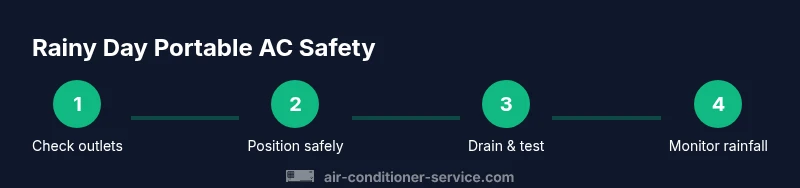
- 1
Inspect outlets and cords
Before turning the unit on, visually inspect the outlet, plug, and cord for moisture, damage, or corrosion. Test the outlet with a voltage tester if available to ensure it is dry and operating correctly. Do not use if moisture is present; address any issues first.
Tip: If you see dampness, dry thoroughly with a towel and wait a few minutes before testing again. - 2
Choose a dry, sheltered placement
Place the unit on a dry, level surface away from direct rain. Use a covered area such as a porch or doorway to reduce water exposure to the exhaust and condensate paths. Ensure airflow is not obstructed by nearby objects.
Tip: Elevate the unit slightly off the ground to prevent water pooling around the base. - 3
Set up power with protection
Connect to a grounded, GFCI-protected outlet. If a dedicated outdoor outlet is unavailable, use only an outdoor-rated extension cord and avoid daisy-chaining multiple cords. Keep the cord behind the unit and away from water paths.
Tip: Never plug into a wet receptacle or run cords through standing water. - 4
Check drainage and condensate
Inspect the condensate drain and tray for clogs and ensure the hose exits away from rain flow. Clear any debris from the drain path. Proper drainage prevents water from backflowing into the unit.
Tip: Place a towel or tray under the drain area to catch incidental drips. - 5
Perform a dry test run
Power on for a short period in dry conditions to confirm cooling operation without abnormal noises or smells. If you detect moisture, power down immediately and inspect all connections.
Tip: Stand by to shut off quickly if rain intensity increases. - 6
Monitor during rain
Continue to observe the setup during rain events. If you notice moisture on the unit, plug, or outlet, terminate use and dry the area. Do not leave the unit running during heavy downpours.
Tip: Have a plan to relocate the unit if rainfall becomes frequent. - 7
Post-rain inspection
After rain stops, unplug the unit, inspect the cord and plug for moisture or damage, and dry thoroughly before subsequent use. Recheck the drainage system and air intake vents.
Tip: Document any signs of wear for future maintenance. - 8
Clean and maintain
Clean the air intake and filter as recommended by the manufacturer. Inspect seals, gaskets, and the exhaust hose for wear. Regular maintenance reduces moisture-related risks and improves efficiency.
Tip: Schedule seasonal maintenance to align with local rainfall patterns. - 9
Plan for outages
Weather can cause outages; prepare a shutdown plan and keep a safe place for unplugging the unit. Have a backup plan for staying cool during long outages or power fluctuations.
Tip: Know where your main breaker is and how to switch off power safely. - 10
Document best practices
Keep notes on what worked best in your environment, including placement, timing, and any issues observed during rain. Use this record to refine your rainy-day setup next season.
Tip: Review notes annually and update safety procedures as needed.
Common Questions
Is it safe to run a portable air conditioner in the rain?
Yes, with precautions: shield the unit from direct moisture, keep electrical connections dry, and use GFCI protection. Do not operate if moisture is present on any component.
Yes, but only with proper moisture protection and GFCI safety; unplug if you see moisture.
Can I use an outdoor extension cord with a portable AC when it's raining?
Extension cords should be outdoor-rated and used only if the unit cannot reach a proper outlet. Avoid daisy-chaining cords and keep connections dry.
Only if needed, and with outdoor-rated cords, never in wet conditions.
What should I do if the unit or outlet gets wet?
Power down the unit, unplug, and dry all components thoroughly before attempting to reuse. Inspect for damage and consult a technician if unsure.
Unplug and dry first, then check for damage or call a pro if needed.
Does rain affect condensate drainage?
Rain does not inherently affect the condensate drain, but water near the drain path can backflow if blocked. Keep hoses clear and directed away from rain flow.
Drainage works as usual if hoses stay clear and dry.
Can I place a portable AC outdoors to cool a covered patio?
Only if the space is fully protected from direct rain and the unit can vent properly. Do not leave it exposed to rain or standing water.
Only with complete rain protection and proper venting.
What maintenance steps reduce rain-related risks?
Regularly inspect cables, clean or replace filters, and ensure drainage paths are unobstructed. Schedule annual checks to adapt to local rain patterns.
Keep up with cleaning and inspections, especially before rainy seasons.
Watch Video
The Essentials
- Keep the unit dry and away from direct rain.
- Use grounded, GFCI-protected outlets.
- Select protected placement and ensure drainage.
- Unplug promptly if moisture is detected.
- Air Conditioner Service's verdict: operate only with dry surroundings and proper GFCI protection.