What Does an Air Conditioner Compressor Cost in 2026?
Learn the typical cost ranges for AC compressor replacement, including parts, labor, and installed totals. Practical budgeting tips, warranty considerations, and maintenance insights from Air Conditioner Service.


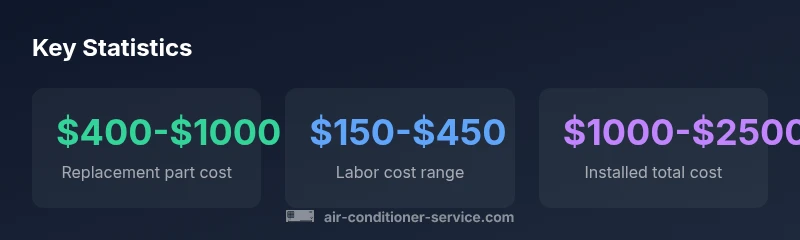
What does an air conditioner compressor cost? For most residential systems, the part itself typically runs between $400 and $1,000, with labor of about $150 to $450. Installed costs commonly range from $1,000 to $2,500, depending on unit size, efficiency, refrigerant type, and warranty coverage. Taxes, refrigerant charges, and disposal can push totals higher, but most homes fall within roughly $1,200 to $2,000 for a standard replacement.
What does an air conditioner compressor cost?
The question what does an air conditioner compressor cost is central to budgeting for peak-season repairs. In most homes, the compressor is a sealed component that powers the refrigeration cycle, and its price is influenced by model type, capacity, and warranty coverage. According to Air Conditioner Service, a typical installed replacement sits in the broad range of $1,000 to $2,500, with the lower end representing simpler replacements and the higher end reflecting larger, higher-efficiency systems. Remember that the total bill may include diagnostic fees, refrigerant recharges, disposal, and potential coil work. The Air Conditioner Service analysis, 2026, notes that many homeowners underestimate the value of a proper match to the outdoor unit and indoor coil, which can affect long-term reliability and energy efficiency.
How the price is built: parts, labor, and add-ons
Pricing breaks down into three primary components: the compressor part itself, labor for removal and installation, and add-ons such as refrigerant, oil, wiring, and any necessary coil or line set work. The refrigerant charge, which is mandated by environmental guidelines, can add a meaningful cost if the system is charged or evacuated. Labor rates vary by region, complexity of access, and contractor qualifications. For accuracy, get a written estimate that itemizes parts, labor, refrigerant, and any disposal or permit fees. This structure helps you compare apples to apples when evaluating multiple bids.
Compressor part costs explained
Parts vary by compressor type (single-stage vs. variable-speed), brand, and warranty status. Roughly, the replacement compressor part ranges from $400 to $1,000. OEM units tend to be pricier but offer assurance of compatibility and warranty honors, while aftermarket equivalents may be cheaper but carry longer lead times or warranty caveats. The key is matching the compressor to the existing system’s refrigerant type, size, and electrical characteristics. Air Conditioner Service notes that choosing an improper compressor can lead to decreased efficiency or premature failure, underscoring the value of professional guidance.
Labor costs and what influences hourly rates
Labor costs are a major portion of the installed price. Depending on your market, you might see total labor figures from $150 to $450 or more. Factors affecting labor include accessibility, the need to evacuate and recharge refrigerant, and whether the technician must remove other components (like the outdoor condenser) to access the compressor safely. A good rule of thumb is to request a detailed bid that lists labor hours and hourly rate, plus any fees for permits or refrigerant handling. The more complex the installation, the higher the labor component tends to be.
Installed cost scenarios: small homes vs large homes
A small to mid-sized home with a straightforward access path typically lands at the lower end of the installed price spectrum, around $1,100 to $1,900. A larger home with a higher-efficiency system, longer refrigerant runs, or a dual-stage/commercial-grade compressor can push installed totals toward $2,000 to $2,800. For premium models or strict warranty requirements, totals may exceed $2,800. In all cases, ensure you’re comparing the same scope: a compressor-only replacement versus a full system replacement, and whether any coil, line set, or electrical work is included.
Hidden costs and why estimates vary
Costs can creep due to refrigerant type (R-410A vs. others), refrigerant charge requirements, and the need to replace or repair the condenser coils. Additional fees may include disposal, diagnostic charges, and non-standard labor, such as roof access or limited-space work. Some contractors also charge more for after-hours service or emergencies. Obtain multiple quotes that clearly list potential add-ons and ensure the estimates assume the same refrigerant type and warranty terms to avoid surprises.
Warranty, rebates, and cost protection
A key part of cost planning is warranty coverage. Many compressors carry a 5-year to lifetime warranty depending on model and installer qualifications. Warranties can reduce true cost over time by covering part failures, though labor may still be excluded or prorated. Some regions offer rebates or incentives for high-efficiency replacements, which can offset initial outlay. Always verify what is covered, what isn’t, and how the warranty interacts with your existing system.
Maintenance to extend compressor life
Prevention is often cheaper than replacement. Regular coil cleaning, filter changes, and ensuring proper refrigerant charge help maintain efficiency and reduce strain on the compressor. Scheduling annual or biannual maintenance can identify issues before a failure, potentially saving money and extending the life of the entire cooling system. Informed homeowners who follow maintenance schedules tend to experience fewer emergency repairs and more predictable budgets.
DIY considerations and when to hire a pro
Replacing a compressor involves refrigerant handling, electrical work, and precise testing of pressures. Because even small mistakes can reduce efficiency or cause leaks, most homeowners should hire a licensed HVAC professional for safety and warranty preservation. If you plan to pursue a DIY approach, limit work to simple checks and cleaning, and avoid opening sealed refrigerant circuits. A pro can diagnose root causes and confirm whether a compressor replacement is the most cost-effective fix.
Cost ranges for compressor-related work
| Scenario | Typical Cost Range | Notes |
|---|---|---|
| Compressor replacement part only | $400-$900 | Parts price varies by model and brand |
| Full system compressor replacement | $900-$2,500 | Includes labor, refrigerant, disposal |
| High-efficiency/premium models | $1,100-$2,800 | Higher upfront cost, potential energy savings |
| DIY parts (not recommended) | $250-$600 | Lower cost but higher risk; warranty impact |
Common Questions
Why does compressor cost vary so much?
Costs vary due to compressor type, brand, warranty, refrigerant needs, and installation complexity. Higher-efficiency units and OEM parts tend to be pricier, but they may offer long-term energy savings and better reliability.
Costs vary based on the unit, its warranty, and how hard it is to install. Higher-efficiency models cost more upfront but can save on energy.
Is it cheaper to replace the whole outdoor unit rather than just the compressor?
Often replacing just the compressor is cheaper upfront, but if the outdoor unit is old or mismatched, replacing the whole system may be more cost-effective in the long run. A pro can assess compatibility and future reliability.
Sometimes replacing just the compressor makes sense, but if the outdoor unit is old, replacing the whole system may save headaches later.
What affects installation cost besides the compressor?
Accessibility, refrigerant handling, coil condition, and any required electrical work drive installation costs. Permits or disposal fees can also add to the total.
Accessibility and refrigerant handling are big cost drivers, plus any coil, wiring, or permit needs.
Do warranties cover compressor replacement?
Warranties often cover the compressor but may exclude labor or have exclusions. Read the terms carefully and confirm what’s covered before proceeding.
Warranties can cover the part but may exclude labor; always check the fine print.
Can I install a replacement compressor myself?
Replacing a compressor involves refrigerant handling and electrical work, which should be performed by a licensed technician. DIY can void warranties and create safety risks.
We generally don’t recommend DIY compressor replacement due to safety and warranty concerns.
How long does a compressor replacement take?
Most replacements take a few hours, depending on access and refrigerant handling requirements. A complex job or extra components can extend the timeline.
Typically a few hours, with possible extensions for complex setups.
“Accurate budgeting starts with understanding the cost components and getting a clear, itemized quote from a licensed technician.”
The Essentials
- Know your scope: parts vs installed replacement
- Expect part and labor to form most of the bill
- Warranty and rebates can significantly affect total cost
- Maintenance helps avoid costly compressor failures
- Hire a licensed pro for safety and warranty protection