Cost of Compressor for Air Conditioner: A Practical Guide
Understand what drives the cost of a compressor for air conditioners, typical price ranges, and how to estimate, compare quotes, and decide between repair and replacement. Practical guidance for homeowners and renters from Air Conditioner Service.


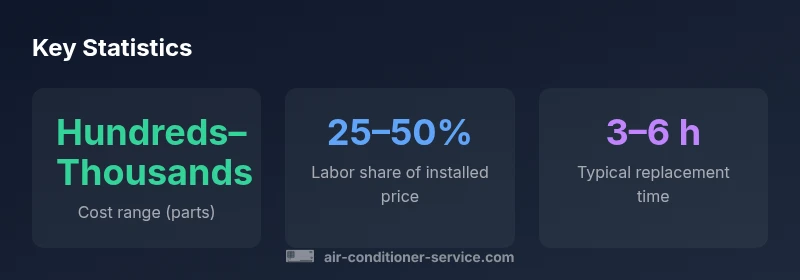
The cost of compressor for air conditioner varies widely by type, capacity, and whether you replace the part or the entire outdoor unit. For most residential systems, a replacement compressor is typically described in broad terms as costing hundreds to thousands of dollars, excluding labor and refrigerant. Labor charges and disposal fees can push total outlays higher, and regional differences matter.
What a compressor does and why it matters
The heart of an air conditioner is the compressor, which pressurizes refrigerant and circulates it through the system. When the compressor fails, cooling performance drops, energy use climbs, and the system can stall. For many homeowners evaluating the cost of compressor for air conditioner, the question is not only the price of the part but the total job: parts, refrigerant, labor, and any disposal fees. According to Air Conditioner Service, understanding how the compressor fits into the broader system helps you plan a repair that lasts. In modern split systems, the compressor works with the condenser, evaporator, expansion valve, and controlling electronics to remove heat from living spaces. The type and configuration of the compressor influence efficiency, noise, and reliability, which in turn affect long-term operating costs. While a failed compressor often triggers a decision to replace, many systems can be restored through a well-planned replacement strategy that minimizes downtime and keeps you comfortable. The cost of compressor for air conditioner is just one piece of a larger budget for maintaining a comfortable home, and it benefits from a clear plan.
Types of compressors and their cost implications
Compressors come in several main types used in residential AC: reciprocating (piston) compressors, scroll compressors, and rotary compressors. Each type differs in design, efficiency, noise, and price. Reciprocating units tend to be the least expensive upfront but may have higher maintenance needs, while scroll compressors offer higher efficiency and quieter operation at a higher initial cost. Rotary compressors are compact and economical for smaller units but may have limited longevity in some climates. The cost impact of choosing one type over another is felt in both the price of the unit and the installed cost. In addition to the compressor itself, you may encounter differences based on whether the system uses a single-stage or two-stage compression, which affects both cooling performance and energy usage over time. When homeowners or renters in 2026 assess the cost of compressor for air conditioner, they should weigh the up-front price against potential savings in energy bills and reduced wear on other components. The Air Conditioner Service team emphasizes getting a professional diagnosis to confirm which type is appropriate for your system and climate.
Key cost drivers for compressor replacement
Several factors determine the final out-of-pocket cost when you replace a compressor. The compressor’s age and brand influence the base price; OEM parts and aftermarket equivalents exist, with OEM usually carrying a premium but offering better compatibility. The refrigerant type and charge amount affect price, particularly if a refrigerant is no longer readily available or requires a special handling process. System size and SEER rating can push costs higher for larger homes or more efficient units. Accessibility matters; units installed in tight spaces or on multi-story homes require more labor time. Local labor rates differ widely, with urban areas typically charging more per hour than rural markets. Finally, whether you need additional work such as replacing capacitors, updating control boards, or replacing start relays can add to the bill. Air Conditioner Service recommends obtaining a written quote that itemizes parts, labor, refrigerant, and disposal so you can compare apples to apples. In many cases, a failed compressor signals the need for a full system check to ensure there are no other contributing issues such as a failing capacitor or a clogged refrigerant line that would raise the total cost if left unaddressed.
How to estimate and compare quotes
Begin with a diagnostic from a qualified HVAC technician to confirm the compressor is the root cause and not a related issue (like a capacitor or blocked refrigerant line). Request itemized quotes that separate parts, labor, refrigerant charges, and disposal. Compare the compressor price with the installed price, factor in warranty terms, and verify compatibility with your current system (especially the refrigerant type and the unit’s capacity). Ask about future maintenance costs and whether the replacement will involve new electrical components or controls. If you’re limited on budget, ask for guidance on whether a repair is feasible in your case or if a full replacement would provide a longer-term solution. Air Conditioner Service recommends collecting quotes from at least two reputable contractors and benchmarking them against your current system’s age, efficiency, and anticipated energy savings.
Repair vs replace: decision framework
A failing compressor is often a sign to evaluate the entire cooling system. If the unit is old, has multiple failed components, or the refrigerant type is outdated, replacement may be more cost-effective than piecemeal repairs. Repairing a compressor can be viable when the device is relatively new, has a good warranty, and there are no recurring issues with the electrical system. Consider the system’s overall energy efficiency and the potential savings from a modern, high-SEER compressor. Maintenance history, installed age, and expected lifetime should inform the decision. The final choice should balance upfront costs with long-term reliability and energy efficiency. The Air Conditioner Service team suggests performing a cost-of-ownership analysis that includes energy bills, maintenance, and potential downtime to determine the more economical path.
Maintenance and prevention to extend life
Routine maintenance reduces the risk of premature compressor failure. Schedule annual inspections, check refrigerant levels, clean or replace filters, ensure proper airflow, and verify electrical connections. A well-maintained system runs more efficiently and can delay expensive replacements. Be proactive about addressing unusual noises, vibrations, or temperature swings, which can indicate early-stage compressor issues. If you notice reduced cooling performance, schedule a diagnostic promptly to prevent further damage and to preserve system lifespan. Air Conditioner Service emphasizes consistent maintenance as a cost-saving strategy that minimizes surprises and extends the life of your compressor and overall AC system.
Financing options and warranty considerations
When budgeting for a compressor job, investigate warranty coverage for both parts and labor. Some manufacturers offer longer compressor warranties, while others provide limited coverage on labor and ancillary components. If your unit is under warranty, confirm what is included and whether service from an authorized technician affects eligibility. For out-of-pocket costs, look into financing options or promotional offers that HVAC contractors may provide. A longer-term payment plan can help spread the cost over time while you enjoy improved cooling efficiency and reliability. This approach can be especially helpful for homeowners with tight monthly budgets or those planning to upgrade to a higher-efficiency system in the near future.
Making sense of total cost over time
Initial price is only part of the story. A compressor replacement should be evaluated against expected energy savings, potential rebates, and the cost of future service. A newer, high-efficiency compressor can reduce electricity use, potentially offsetting part of the installation expense over several years. Consider the system’s age, the likelihood of other component failures, and your climate; in hotter regions, improved efficiency can yield more substantial savings. Always weigh the total cost of ownership over the life of the system rather than focusing solely on the upfront price. Air Conditioner Service recommends a long-term view when assessing whether to replace or repair.
Financing options and warranty considerations
When budgeting for a compressor job, investigate warranty coverage for both parts and labor. Some manufacturers offer longer compressor warranties, while others provide limited labor coverage. If your unit is under warranty, confirm what is included and whether service from an authorized technician affects eligibility. For out-of-pocket costs, explore financing options or special offers from HVAC contractors. A payment plan can help spread the cost while you benefit from better efficiency and reliability. This approach is particularly helpful for homeowners with tight monthly budgets or plans to upgrade in the near term.
Cost components of compressor replacement
| Aspect | Cost impact | Notes |
|---|---|---|
| Compressor unit price | Hundreds to thousands of dollars | Depends on type and capacity |
| Labor charges | Varies by region | Higher in urban areas; may include diagnostics |
| Refrigerant handling | Additional cost if charged or recovered | Related to refrigerant type and availability |
| Disposal and permits | Possible extra fees | Area-dependent requirements |
Common Questions
What factors influence the cost of a compressor for an air conditioner?
Several factors determine total cost: compressor type and brand, refrigerant type, system size, labor rates, and whether additional repairs are needed. OEM parts tend to be more expensive, but may offer better compatibility and warranty terms. Get an itemized quote to see how each element adds to the price.
Costs depend on compressor type, refrigerant, labor, and any extra repairs. Get an itemized quote to compare precisely.
Is it cheaper to replace just the compressor or the whole outdoor unit?
Replacing only the compressor can be cheaper upfront, but if the outdoor unit is old or has multiple failing parts, replacing the entire unit may offer better long-term reliability and energy efficiency. A professional assessment will indicate the most economical path.
Often a trade-off between upfront cost and long-term reliability; get a professional assessment.
How long does a compressor replacement take?
Most compressor replacements take several hours, typically around 3 to 6 hours, depending on access, system type, and whether refrigerant handling or additional repairs are required.
Most jobs take a few hours; your technician should provide an estimated window.
Does warranty cover compressor replacement?
Warranty coverage varies by brand and plan. Some warranties cover major components and some labor, while others offer limited or no coverage for failures. Check your specific warranty terms and whether service is performed by an authorized technician to keep coverage intact.
Warranties vary—check terms and ensure an authorized tech handles the work.
Can a failing compressor be repaired instead of replaced?
In many cases, a failing compressor cannot be repaired effectively, and replacing the compressor or the whole outdoor unit is preferred. If the system is relatively new and other components are healthy, repair may be possible, but it’s less common for a compressor issue.
Repairs can be possible in some cases, but replacements are often more dependable.
What should I ask a contractor when getting a quote?
Ask for an itemized quote that separates parts, labor, refrigerant, and disposal. Confirm compatibility with your system, warranty terms, and whether the quote covers subsequent maintenance. Request at least two quotes to compare options and timelines.
Get itemized quotes from multiple contractors and compare warranties.
“The compressor is the heart of your cooling system; understanding its cost drivers helps homeowners make informed decisions that protect comfort and value.”
The Essentials
- Ask for an itemized quote to compare costs clearly
- Consider total cost of ownership, not just the part price
- Factor in labor, refrigerant, and disposal fees
- Check warranty coverage and contractor qualifications
- Obtain multiple quotes to benchmark pricing