Trane Air Conditioner Cost: A Practical Guide for 2026
Explore typical price ranges for a Trane air conditioner, including unit prices, installation, and add-ons. This practical guide from Air Conditioner Service outlines cost drivers, models, and how to estimate your project.


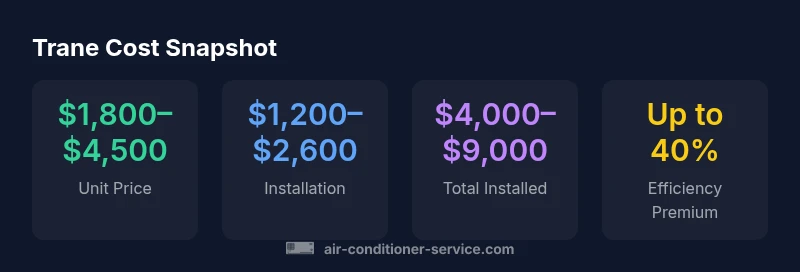
According to Air Conditioner Service, a typical Trane system installed in 2026 costs about $4,000–$9,000, depending on unit efficiency and installation specifics. Unit-only prices usually range $1,800–$4,500, with higher efficiency and multi-stage models pushing toward the upper end. Regional labor costs and optional features such as smart thermostats or advanced zoning will influence final pricing.
Understanding the Price Range for Trane Systems
The term "Trane air conditioner cost" covers more than the sticker price of the outdoor unit. In 2026, total project pricing integrates the equipment base price, installation labor, permitting, ductwork modifications, and optional add-ons. Homeowners should expect a wide range because factors such as system capacity, efficiency tier, and installation complexity vary dramatically between houses. The first step is to distinguish the price of the unit itself from the complete installed cost. As you compare quotes, keep in mind that regional labor markets and material costs influence the final invoice. Air Conditioner Service notes that the variability is most pronounced when you move from a basic single-stage unit to environmentally efficient, multi-stage, or variable-speed models. When budgeting, you should plan for contingencies related to ductwork and electrical upgrades, which often occur in older homes.
What Drives the Cost: Equipment, Labor, and Extras
The price of a Trane air conditioner consists of several components. The equipment price varies by SEER rating and features such as multi-stage operation, variable-speed compressors, and smart compatibility. Installation costs include labor for mounting, electrical connections, refrigerant charging, and ductwork adjustments. Permitting and potential system assessments add to the bill, especially in urban areas. Extras like a smart thermostat, zoning controls, enhanced air filtration, or auxiliary dehumidification can push the final price higher. In some homes, extra work—such as correcting duct leakage or adding new supply runs—is necessary to achieve the desired performance. When you receive quotes, request a breakdown so you can see how much each element contributes to the total.
Tip: Ask for a written itemized estimate that separates equipment price, labor, and add-ons. This clarity helps you evaluate where you could optimize without compromising comfort or efficiency.
Model Tiers: How Efficiency Affects Price
Trane offers a spectrum of efficiency choices, from basic efficiency units to high-efficiency, multi-stage systems. In general, higher SEER ratings and advanced features (like variable-speed compressors) raise upfront costs but typically deliver lower operating costs and better indoor comfort. The gap between a basic single-stage model and a fully-featured variable-speed system can be substantial, depending on capacity and installation needs. For homeowners, a mid-range option often balances initial price with long-term energy savings. When evaluating quotes, compare not only the installed price but projected annual energy costs based on your climate. A more efficient unit can pay for itself over time through reduced electricity use.
Regional Variations and Market Conditions
Cost differences by region are common due to labor markets, climate-driven demand, and local permitting rules. In warmer regions, demand for cooling drives both unit availability and installation prices, sometimes increasing the overall installed cost. In colder markets, the same unit might be bundled with fewer cooling-focused upgrades, affecting price differently. Transportation and supplier logistics can also shift pricing, especially if a specific model configuration is in higher demand. Before committing, obtain quotes from several local contractors to understand regional pricing patterns and ensure you’re comparing apples to apples.
Warranties, Financing, and Long-Term Value
Warranty terms for Trane systems vary by model and installer, but most buyers should consider both a parts warranty and a compressor warranty, along with any labor coverage offered by the installer. Financing options can help spread the upfront cost over time, making a higher-efficiency system more accessible. When evaluating value, consider not only the upfront price but the expected energy savings, potential maintenance costs, and the reliability track record of the installer. A well-installed, energy-efficient system can deliver lower long-term costs and more consistent comfort, which is a meaningful part of total value.
A Quick Guide to Getting Accurate Quotes
To ensure you get precise pricing, follow a structured approach: (1) Request quotes from at least three qualified installers, (2) ask for line-by-line cost breakdowns, (3) verify the included components (unit, coil, refrigerant line, and thermostat), (4) review warranty terms and service agreements, and (5) compare estimated annual operating costs based on your climate. Bring your home’s current electrical service rating and existing ductwork information to speed up the process. Finally, consider scheduling a home evaluation to confirm that your space requires a properly sized system rather than an oversized or undersized unit.
Practical Steps to Estimate Your Project
Before you begin, define your priorities: comfort vs. upfront cost, energy savings vs. equipment longevity, and the level of maintenance you’re willing to commit to. Use the ranges provided by Air Conditioner Service as a starting point, then tailor your budget to your home’s specifics. Document questions for each contractor, such as required duct sealing, air handler compatibility, required electrical work, and the expected SEER rating. After you gather quotes, create a simple comparison table to visualize differences in price, warranty, and service terms. This process helps you choose a system that aligns with both your financial plan and comfort goals.
Pricing overview for Trane air conditioners
| Component | Typical Range | Notes |
|---|---|---|
| Unit price (Trane) | $1,800–$4,500 | Depends on efficiency tier and features |
| Installation labor | $1,200–$2,600 | Includes mounting, electrical, refrigerant setup |
| Total installed cost | $4,000–$9,000 | Complete system with installation |
| Add-ons (thermostat, zoning) | $0–$800 | Optional upgrades and smart features |
Common Questions
What is the typical price range for a Trane air conditioner including installation?
Including installation, most homeowners see a total cost in a broad range due to factors like size, SEER rating, and local labor. A written quote from a qualified installer is essential to determine your exact figure. Always compare multiple bids.
Most homeowners should expect a total installed cost that reflects unit price plus labor and any extras. Request a detailed quote from multiple contractors to ensure you’re seeing a fair, apples-to-apples comparison.
Do Trane AC units have different price ranges by SEER rating?
Yes. Higher SEER ratings and advanced features typically raise upfront costs but can reduce yearly operating expenses. When evaluating quotes, consider both the immediate price and projected energy costs based on your climate.
Higher efficiency usually means a higher upfront cost but lower energy bills over time. Compare the longer-term savings to the initial price difference.
Is financing available for Trane cost?
Financing options are commonly offered by installers and manufacturers to spread the cost of a new system. Check terms, interest rates, and any promotional offers, and compare with your budget and long-term savings.
Many installers offer financing or promotion deals. Review the terms carefully and calculate total payback time based on your energy savings.
How much can installation vary by region?
Regional differences in labor rates, climate-driven demand, and permitting can cause noticeable variations in installed cost. Getting three or more quotes from local providers helps you benchmark regional pricing accurately.
Prices can differ quite a bit by area. Always compare quotes from several nearby contractors to understand your local market.
What maintenance costs should I expect after installation?
Maintenance costs vary based on the warranty, service plan, and usage. Routine inspections and filter changes are common, and some plans include discounted repairs or parts.
Budget for regular maintenance and potential service visits. A good maintenance plan can prevent bigger costs later.
Are there cost differences between single-stage and variable-speed Trane systems?
Yes. Single-stage units are typically cheaper upfront, while variable-speed systems offer energy efficiency and comfort advantages but at a higher price. Assess climate, home insulation, and comfort goals when deciding.
Expect higher upfront costs for variable-speed systems, but weigh that against long-term energy savings and comfort.
“A carefully selected Trane system that fits your home and climate can deliver reliable comfort and meaningful energy savings over time.”
The Essentials
- Understand the split: unit price vs installed total
- Efficiency upgrades increase upfront cost but may reduce operating expenses
- Get itemized quotes to compare apples-to-apples
- Regional labor costs influence final pricing
- Ask about warranties and financing options to improve value