Split Air Conditioner Price: A Practical 2026 Guide
Explore how split air conditioner price is formed, from unit size to installation. Compare costs, budgeting tips, and financing options for 2026 to help homeowners and renters make informed decisions.


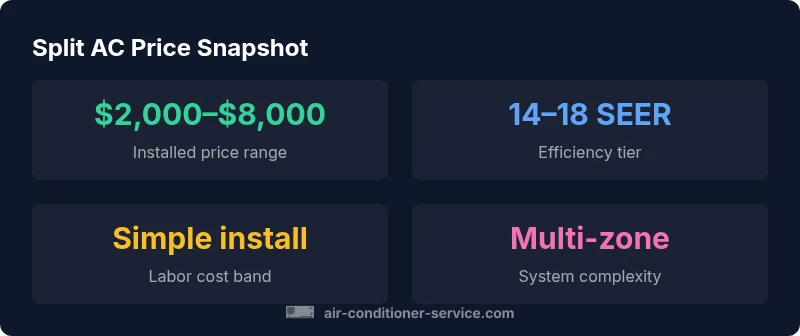
Air Conditioner Service Analysis, 2026 shows that the installed split air conditioner price varies widely by unit size, efficiency, and installation complexity. For a practical snapshot, expect a broad installed price range roughly from $2,000 to $8,000, with higher-end, multi-zone systems costing more depending on setup and warranties.
Price landscape for split systems
The split air conditioner price is a moving target, influenced by capacity, efficiency, brand, and installation. The term "split" refers to an outdoor compressor/condenser paired with an indoor evaporator. When homeowners search for price, many factors beyond the sticker price come into play. According to Air Conditioner Service, the price is driven by four core components: the cooling capacity (tons), the SEER efficiency, the type of indoor unit, and the complexity of the installation. A common way to frame the conversation is to break costs into three bands: entry-level/basic efficiency, mid-range, and premium/high-efficiency multi-zone configurations. Market fluctuations, regional labor rates, and installer prerequisites all color the final number you’ll pay. For most residences, the installed price falls within a broad band that reflects not just hardware but the labor, permits, and any ancillary work required for a safe, compliant installation.
Price drivers: capacity, efficiency, and features
Capacity translates to the cooling load a space requires. A larger unit (more tons) and higher efficiency (higher SEER) push upfront costs upward, but they also deliver greater long-term energy savings. When evaluating split systems, buyers should compare 1.0–1.5 ton units against 2.0–3.5 ton configurations to align price with actual needs. Efficiency, measured by SEER, typically increases price but reduces operating costs over time. Features such as multi-speed fans, smart thermostats, and wireless control add-ons also raise the sticker price. A practical approach is to map your budget to a target SEER range and then adjust based on the expected climate, occupancy patterns, and energy goals. Remember, higher efficiency may yield a faster payback in hot climates or homes with intermittent cooling needs.
Installation and labor: the unseen price drivers
Installation costs are a major portion of the total, sometimes more than the equipment itself. Factors include the distance between outdoor and indoor units, circuit capacity, refrigerant line length, and the need for new electrical outlets or a dedicated circuit. If your home has existing ductwork, you may avoid some costs, but new line sets, mounting hardware, and permits can add to the price. Labor availability and regional wage levels also influence totals. It’s common for installation to range from a few hundred dollars for a simple retrofit to several thousand dollars for challenging installs in multi-story homes. A transparent quote should itemize the hardware, labor, and any required electrical or structural work.
Regional and seasonal variations
Prices aren’t the same everywhere. Labor costs, permitting requirements, and even climate-driven demand affect final numbers. In some regions, installers bundle maintenance or extensions into the package; in others, these are separate add-ons. Seasonal demand, particularly during peak cooling months, can sway scheduling and pricing. If you’re budgeting, consider requesting quotes in the shoulder seasons when contractor availability is higher and pricing may be more favorable. Understanding regional norms helps avoid sticker shock and positions you to negotiate effectively.
Hidden costs to factor into your budget
Beyond the unit and installation, several hidden costs can surprise buyers. Permit fees, electrical upgrades, or a new breaker panel may be required for safe operation. Refrigerant charge and testing ensure proper performance but can add to the bill if leaks are found. Some systems require condensate drainage solutions or anti-vibration accessories. Maintenance plans or extended warranties can add upfront fees but reduce future out-of-pocket costs. Build a contingency into your budget (typically 5–10%) to accommodate unexpected items uncovered during installation and inspection.
Financing, warranties, and long-term value
If upfront cash is a barrier, many homeowners explore financing options. Compare interest rates, loan terms, and any promotional offers from manufacturers or installers. Extended warranties or maintenance plans can provide peace of mind but may increase total cost. When evaluating value, look beyond the initial price to energy savings, reliability, and service availability in your area. A well-chosen split system can lower utility bills for years, especially in climates with significant cooling demand.
How to estimate your price: a practical checklist
Create a simple estimator based on your space and goals:
- Confirm cooling load (tons) based on room size and insulation.
- Select a target SEER range aligned with energy goals and budget.
- Decide on the number of indoor units and zones needed.
- Factor in installation constraints, line length, and electrical work.
- Gather at least three written quotes with itemized costs.
- Compare total installed price, not just the sticker price.
- Review warranty and maintenance terms before deciding.
A structured checklist helps you compare apples to apples and avoid surprise costs at installation day.
Budgeting strategies and buying timeline
Plan a buying timeline that accounts for seasonal demand and lead times. If your cooling needs are urgent, prioritize quotes that clearly spell out costs and contingencies. For those with flexibility, schedule in the shoulder seasons to secure favorable pricing and shorter lead times. Budget for potential upgrades, such as higher SEER units or multi-zone configurations, that can deliver long-term savings. Finally, maintain a file of all quotes, warranties, and service agreements so you can revisit decisions if your priorities shift.
Key cost drivers for split system price
| Factor | Impact on Price | Typical Range | Notes |
|---|---|---|---|
| Unit size / capacity | High | "$1,800–$4,500" | Pricing scales with tonnage; larger spaces need bigger units |
| SEER/efficiency | Moderate to high | "$2,500–$12,000" | Higher efficiency raises upfront cost but lowers operating costs |
| Installation complexity | High | "$350–$4,000" | Line length, mounting height, and electrical work drive labor |
| Brand/warranty options | Moderate | "$100–$2,000" | Extended warranties or service plans can add to price |
Common Questions
What are the main factors that affect split air conditioner price?
The main factors are unit size, SEER rating, installation complexity, and warranties. Regional labor costs and permitting requirements also influence the final price. Obtain multiple quotes to compare apples-to-apples.
The price mainly depends on size, efficiency, install complexity, and warranty options. Get several quotes to compare.
Is a higher SEER rating always more expensive upfront?
Generally, higher SEER units cost more upfront, but they save more on energy bills over time. Evaluate payback period based on your climate and usage.
Yes, higher SEER costs more upfront, but energy savings can offset the cost over time.
Do installation costs vary by region?
Yes. Labor rates, permitting, and local codes influence installation pricing. Request a detailed, written estimate that breaks out labor and material costs.
Region matters for installation costs; get a written estimate.
How long does installation typically take?
Most split system installations take half a day to a full day, depending on space, accessibility, and electrical work. Your installer will confirm a timeline in the quote.
Most installs take 4–8 hours.
Should I finance a split system purchase?
Financing is common. Compare interest rates, terms, and total cost over the life of the loan. Some installers offer promotional financing or bundled maintenance.
Financing is common; compare terms.
Are there maintenance costs that affect lifetime price?
Annual tune-ups, filter changes, and occasional refrigerant checks contribute to lifetime cost. Budget for seasonal maintenance to preserve efficiency and extend system life.
Maintenance costs matter for long-term price.
“Pricing for split systems is not a fixed sticker price; it’s a function of capacity, efficiency, and installation complexity. A clear, itemized installer quote is essential to avoid surprises.”
The Essentials
- Define cooling needs before shopping
- Expect price ranges based on size and efficiency
- Account for installation labor and electrical work
- Get multiple written quotes to compare totals
- Consider financing and warranty options for overall value