Mini Split Cost Guide for 2026: What to Expect and How to Save
A practical, data-driven guide to mini split cost, covering installed price ranges, price drivers, and strategies to save. Based on Air Conditioner Service Analysis, 2026.


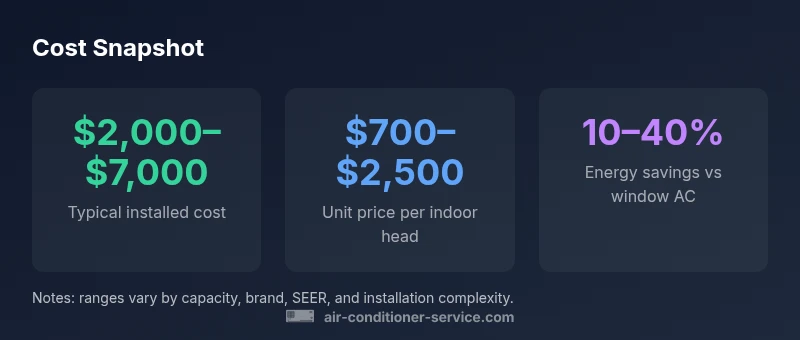
According to Air Conditioner Service, the installed cost for a typical mini split AC ranges from about $2,000 to $7,000, depending on the number of indoor zones, unit capacity, and installation complexity. Air Conditioner Service Analysis, 2026 shows price variation by brand and efficiency, with energy savings potentially offsetting higher upfront costs over time.
Understanding mini split cost drivers
Mini split cost is driven by equipment choices and site conditions. The outdoor condenser, the number of indoor air handlers, refrigerant piping length, and the quality of installation all influence price. In 2026, a typical residential install includes the outdoor unit, one or more wall-mounted indoor heads, a line set, and electrical work. The ductless design means labor is concentrated on the outdoor unit and each indoor head, which together determine the final price. According to Air Conditioner Service, the total installed price should consider not only the initial unit price but also labor, refrigerant costs, and potential permit fees. Local labor markets and contractor availability can swing prices by thousands of dollars. To keep costs predictable, homeowners should specify the number of zones, preferred efficiency level (SEER), and whether any existing electrical upgrades are needed. With clear priorities, you can compare apples to apples across brands and installers.
Capacity, zones, and pricing
Capacity is measured in BTUs and affects both unit size and price. Each additional indoor head usually adds a separate price point for the head, line set, and installation. More zones offer greater comfort but also raise upfront costs. When budgeting, consider whether you need one central zone or multiple rooms with individual control. The number of zones also influences refrigerant charge and the complexity of electrical work. In general, plan for a system that can cover the intended area with a margin for peak loads. This helps avoid the temptation to oversize or undersize, which can inflate costs or reduce efficiency over time.
Efficiency and brands: how SEER and inverter affect price
Efficiency matters as much as capacity. High-SEER and inverter-driven compressors cost more upfront but deliver lower operating costs. When comparing brands, factor in warranty terms, service networks, and expected maintenance. Inverters provide smoother operation and better part-load efficiency, which can lower electric bills—often making higher upfront investments worthwhile over the life of the system. For many homeowners, a mid-range SEER with reliable brand support strikes a balance between purchase price and long-term savings. Air Conditioner Service notes that consumer rebates and energy incentives often apply to higher-efficiency models, improving payback.
Installation considerations: permits, labor, and warranties
Installation quality drives both price and reliability. Depending on your locality, you may need electrical permits, panel upgrades, or inspections, which add to the cost. Labor costs vary by region and contractor experience. A quality installer will verify inline with local codes, test the system thoroughly, and provide a warranty on workmanship in addition to the manufacturer's warranty. Expect a written quote that itemizes equipment, labor, permit fees, and any obstructions or specialty requirements (like additional drainage or support brackets). Scheduling an on-site assessment before purchasing can prevent surprises and identify hidden costs up front.
Operating costs and long-term savings
Beyond the upfront price, mini splits offer ongoing energy savings compared with many window or portable units. Lower running costs come from inverter-driven compressors and efficient heat exchangers. The total cost of ownership includes maintenance, refrigerant top-offs (if needed), and potential repairs. In most cases, energy savings can help offset the higher initial cost within several years, depending on usage patterns, climate, and electricity rates. Air Conditioner Service projects that homes in hot climates or with frequent cooling needs realize the most substantial savings over time.
Financing, incentives, and warranties
If upfront payment is a barrier, explore financing options offered by manufacturers or local installers, as well as utility rebates or state incentives for energy-efficient upgrades. Compare total cost of ownership, not just the sticker price. Confirm warranty terms for both parts and labor, and understand what is covered if an outdoor unit fails or if refrigerant becomes an issue. A good installer will help you navigate these options and ensure you meet any program requirements when applying for rebates.
Mini split cost vs alternatives: central AC vs window units
Compared with central air systems, mini splits usually require less ductwork, which can lower both materials and installation costs. Window units are cheaper upfront but lack the energy efficiency, zoning control, and quiet operation of ductless models. For some homes, a single-zone mini split offers a practical, scalable alternative to retrofit central cooling. When evaluating options, consider occupancy, existing ductwork, and plans for future expansions. Your total cost of ownership and comfort level should guide the final decision.
Practical buying checklist
- Determine the number of zones and target cooling area.
- Choose a reasonable SEER range and reputable brands.
- Get written quotes from multiple licensed installers.
- Confirm warranty terms and check for rebates or incentives.
- Plan for potential electrical upgrades and permits.
- Ask about service plans and expected maintenance needs.
Key cost factors and typical ranges for mini split installations
| Aspect | Typical Range | Notes |
|---|---|---|
| Unit price per indoor head | $700–$2,500 | Brand/SEER dependent |
| Total installed cost (2-head to 3-head) | $2,000–$7,000 | Capacity and complexity vary |
| Installation time per zone | 4–12 hours | Labor variability by region |
| Permits and inspections | $150–$500 | Local requirements may differ |
Common Questions
What is a typical cost range for mini split installations in 2026?
Costs vary by zones, capacity, and installation complexity. A typical installed range takes into account equipment, labor, permits, and potential changes to electrical work. You should expect a broad range that reflects local labor markets and the number of indoor heads.
Costs vary by zones, capacity, and installation complexity. Expect a broad range depending on your setup.
Do I need permits for a mini split installation?
Most jurisdictions require electrical permits or inspections for outdoor condensers and new wiring. Your installer can help determine local requirements and include permit fees in the formal quote.
Electrical permits are often required; your installer can confirm local rules.
What factors most influence price?
Key drivers include the number of zones, unit capacity, SEER rating, brand availability, and installation challenges like line-set routing and electrical upgrades.
Zones, capacity, and efficiency ratings most influence price.
Are there incentives for high-efficiency mini splits?
Yes, many utilities and governments offer rebates for energy-efficient systems, especially for higher SEER ratings. Availability varies by region and program rules.
rebates are often available for efficient models; check local programs.
How does mini split cost compare to central AC?
Mini splits typically cost less for cooling a few rooms without ductwork, but a central system may be cheaper for whole-house cooling if ductwork is already in place. Long-term energy costs depend on usage and climate.
For partial homes, mini splits can be cheaper to install; for whole houses, central may be better depending on existing ductwork.
“A well-planned mini split installation balances upfront cost with long-term energy savings, especially when you pair it with the right SEER rating and knowledgeable local installers.”
The Essentials
- Investigate total cost of ownership, not just upfront price
- Clarify number of zones and efficiency targets before quoting
- Get multiple quotes and compare warranty terms
- Energy savings can offset higher upfront costs over time