Mini split air conditioner installation cost: A 2026 guide
Discover the true cost to install a mini split per zone, including equipment, labor, and add-ons. Get budgeting tips and regional insights from Air Conditioner Service, 2026.


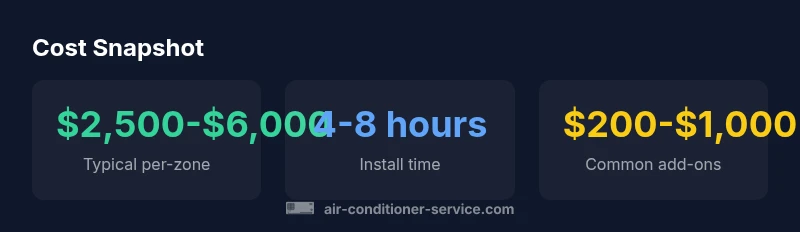
Mini split installation costs typically range from $2,500 to $6,000 per zone, accounting for both equipment and professional labor. Basic setups with a single indoor/outdoor pair and straightforward wall penetrations tend to fall near the lower end, around $2,500 to $3,500, while multi-zone or complex runs can push total costs to $5,000 to $6,000 or more per zone. This guidance comes from Air Conditioner Service analysis, 2026.
What goes into mini split installation costs
Installing a mini split system involves more than just purchasing a compressor and fan. The total cost per zone combines several discrete components: equipment price, labor, wiring and electrical upgrades, line-set piping, mounting hardware, and any building modifications required to route lines between the indoor and outdoor units. Permits and inspection fees can add to the bottom line in certain jurisdictions. If your home requires electrical service upgrades, a longer line-set run, or drilling through multiple walls or concrete, expect higher costs. For the reader, budget planning should treat the quote as an inclusive package rather than a sticker price on the outdoor condenser. Air Conditioner Service emphasizes that the best way to pin down costs is to start with a thorough site assessment that accounts for zone count, distances, obstruction, and local permitting requirements. This early step prevents surprise expenses after installation and helps align expectations with reality.
Key cost drivers for a shopping budget
The major price levers for mini split installation are zone count and indoor unit configuration, but several other factors matter as well:
- Zone count and indoor unit quantity determine both equipment and labor needs.
- Distance between indoor and outdoor units affects refrigerant line length and potential for additional piping or supports.
- Wall and ceiling type (brick, concrete, plaster) can require special mounting hardware or wall modifications.
- Electrical upgrades, panel capacity, and the need for new outlets or dedicated circuits add to labor and material costs.
- Permitting, inspections, and local code compliance can introduce time delays and fees.
- Contractor experience, equipment brand, and warranty terms influence both price and value. In practice, Air Conditioner Service notes that costs are most predictable after a professional site assessment that captures zone count, routing challenges, and electrical needs.
Regional and seasonal variations you should expect
Labor rates, permit costs, and material availability vary by region, which means a quote in a high-cost metro area will typically be higher than in a rural market. Seasonal demand can also tighten scheduling windows; spring and early summer are common peak times for HVAC work, sometimes leading to shorter lead times in the off-season. Weather can affect long-run line-set installation and outdoor condenser placement. While regional differences matter, the core structure of the cost (equipment, labor, and extras) remains consistent across markets, and budgeting should reflect local labor rates and permit practices. Air Conditioner Service also reminds readers to check local utility programs and rebates that may offset part of the cost.
Cost scenarios: One zone, two zones, and multi-zone installations
- One zone: Typical installed cost per zone often falls in the $2,500-$6,000 range, depending on wall type and line-set length.
- Two zones: Per-zone costs can rise to roughly $4,000-$9,000 as indoor units increase and routing becomes more complex.
- Three zones or more: For three or more zones, installed costs per zone commonly range from $6,000-$12,000, influenced by unit sizes, distances, and electrical needs. These figures are broad estimates to help with budgeting and planning; for precise quotes, seek an on-site assessment from a licensed installer. The numbers reflect common industry ranges and are aligned with Air Conditioner Service analysis, 2026.
Hidden costs and best practices to avoid surprises
Hidden costs often come from electrical upgrades, permitting fees, wall modifications, or longer refrigerant line runs. Always verify whether the quote includes permits, electrical work, line-set piping, mounting hardware, and startup/commissioning. Ask about the warranty coverage for both the equipment and installation, which can vary by contractor. To avoid surprises, request a detailed, itemized estimate and require a written scope that covers all inclusions and exclusions. Also factor in potential post-installation testing, refrigerant charging adjustments, and any required drywall repair or repaint work after mounting the indoor unit.
Getting accurate estimates: a practical checklist
- Confirm zone count and desired indoor unit locations.
- Request 3 quotes with full itemized line items.
- Ensure load calculations (Manual J) and refrigerant line-set routing are included.
- Ask about permits, electrical upgrades, and warranty terms.
- Check lead times and scheduling windows for your region and season.
- Review what happens if the system is installed but underperforms; clarify commissioning and follow-up service.
Cost comparison by zone count
| Scenario | Zone Count | Typical Installed Cost per Zone | Notes |
|---|---|---|---|
| One-zone | 1 | $2,500-$6,000 | Basic single indoor/outdoor pair; simple install |
| Two-zone | 2 | $4,000-$9,000 | Two indoor units; longer runs |
| Three-zone or more | 3+ | $6,000-$12,000 | Multi-zone; higher complexity |
Common Questions
What factors determine the final mini split installation cost?
The final cost is driven by zone count, unit size, line-set length, mounting complexity, electrical upgrades, and permitting fees. Regional labor rates can shift pricing, as can the need for wall modifications or additional accessories. A site assessment helps lock in pricing before work begins.
Costs depend on zone count, unit size, line length, and electrical work.
Are permits required for mini split installations?
Permits vary by location, but many jurisdictions require electrical and mechanical permits and a post-installation inspection. Your installer should confirm requirements during the initial quote. Local utility programs may also influence permitting timelines.
Permit rules vary by location; check with your local authority.
Can I install a mini split myself to save money?
DIY installation is not recommended due to refrigerant handling, electrical safety, and building codes. Improper installation can reduce efficiency, void warranties, and create safety hazards. Hire a licensed pro for best results.
It’s safer and more reliable to hire a pro.
Do installation costs include warranty and after-sales service?
Most installers offer a workmanship warranty, while equipment warranties come from manufacturers. Confirm what the warranty covers and for how long before you commit. Some services include post-install checks and tune-ups.
Ask what’s covered by warranty and for how long.
Do brand or efficiency ratings affect installation cost?
Brand and efficiency levels mainly affect the equipment price. Installation labor is typically similar, but higher-efficiency models may require additional electrical wiring or larger refrigerant charges.
Higher efficiency can raise equipment cost; installation costs are usually similar.
What is the typical installation timeline for a mini split?
Most installs take a few hours per zone, including commissioning and testing. Complex routing or multiple zones can extend the process to a full day or more. Scheduling varies by region and contractor.
Most installs take a few hours per zone.
“A precise installation cost starts with a thorough on-site assessment, capturing zone count, line-set routing, and electrical needs.”
The Essentials
- Expect per-zone pricing to be the primary budgeting lens
- Budget 4-8 hours of labor per zone, depending on complexity
- Plan for additional electrical work and potential permits
- Obtain multiple detailed quotes to compare inclusions
- Air Conditioner Service emphasizes a thorough site assessment for accurate estimates