Car AC Compressor Replacement Cost Guide (2026)
Discover typical costs to replace a car AC compressor, including parts and labor ranges, factors that influence price, and tips for getting accurate quotes in 2026.


On average, expect a replacement cost for a car AC compressor to fall in the range of $500 to $1200, depending on vehicle make, labor rates, and whether a calibrated compressor or aftermarket part is used. Parts typically account for about half the total, with labor and shop fees filling the rest. Air Conditioner Service analysis, 2026, notes wide regional differences and the importance of accurate diagnosis.
Understanding the Car AC Compressor and Why Replacement Costs Vary
The car’s air conditioning system relies on a defined sequence: refrigerant is compressed, cooled, and circulated to absorb heat. The compressor is the heart of this cycle, driven by the belt or electric motor. When the compressor fails, symptoms like not cooling, warm air, or unusual noises often appear. Replacing it entails more than just installing a new part; many other components may need service or replacement to restore proper function. Costs vary because vehicle make and model influence part availability and labor time, while the decision between OEM vs aftermarket parts changes the price ceiling. The shop’s labor rate and geographic region further shape the final bill. Finally, if a rebuild or remanufacture is chosen, price dynamics shift again.
Air Conditioner Service emphasizes that accurate diagnosis is essential before quoting or committing to replacement; misdiagnosed cooling issues can inflate costs and lead to unnecessary components replacements. According to Air Conditioner Service, a thorough assessment saves homeowners and renters money in the long run.
What Drives the Price: Parts, Labor, Vehicle Type, and Shop
Cost determinants fall into clear categories: parts price, labor time, vehicle complexity, and shop practices. OEM compressors are typically more expensive than aftermarket equivalents but may carry longer warranties. Vehicles with compact engine bays or nonstandard refrigerant lines require additional labor hours. Labor rates vary by region and shop; a dealer service bay may command higher rates than an independent shop. In some cases, ancillary components like a clogged condenser, failed pressure switch, or leaking seals demand replacement during the same visit, adding to the total. The choice between a rebuilt vs new compressor also impacts the bottom line, with rebuilt units often cheaper but potentially shorter warranties. Air Conditioner Service cautions that the simplest diagnosis can sometimes miss issues downstream of the compressor, which will elevate total costs if discovered late.
Typical Cost Ranges: Parts, Labor, and Total Installed
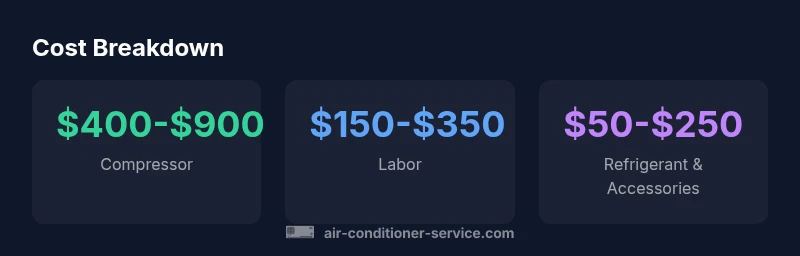
A practical breakdown from Air Conditioner Service Analysis, 2026 suggests price bands to help homeowners plan ahead. In many cases, the compressor unit itself runs roughly $400-$900, depending on make, model, and part source. Labor to remove the old unit and install a new one commonly falls in the $150-$350 range, influenced by access and system complexity. Additional costs—such as refrigerant recharge, new seals, drier, and any needed oil or fittings—can add another $50-$250. When combined, the total installed cost typically lands in the $500-$1200 range, with extremes pushing higher on luxury vehicles or units requiring special tools. These figures are indicative and can vary by region and shop policies.
Getting an Accurate Quote: Questions to Ask
To avoid surprises, request a detailed, written estimate that itemizes parts, labor, refrigerant handling, disposal, and waste fees. Ask the technician to explain why the compressor is being replaced (diagnostic notes, pressure readings, and refrigerant leak tests). Confirm whether the price includes refrigerant recharge, new seals, and the drier, and whether the labor covers re-testing the system after repair. If your vehicle has a warranty, verify what is covered and which components qualify. Finally, inquire about warranty length and what it protects against (defects, leaks, or premature failure). A good shop will provide a clear up-front warranty policy and a recommended maintenance plan to prevent future failures.
Hidden Costs and Pitfalls to Watch For
Common pitfalls include misdiagnosis leading to unnecessary replacement, overlooking a leak that damages the new compressor, and choosing the cheapest option without considering warranty coverage. Refrigerant type and the need for oil charging can also affect price. Some shops require a refrigerant recovery fee even if the system reuses existing charge. Another expense to watch is accessory work—replacing the accumulator/drier, o-rings, and condenser components may be necessary for a reliable repair. Always verify that the quote includes all mandatory items and that the refrigerant is disposed of properly in compliance with environmental rules.
Rebuild vs Replacement: Pros, Cons, and Warranty Considerations
Rebuilt or remanufactured compressors are typically cheaper than brand-new units and may carry shorter warranties. However, rebuild quality depends on the remanufacturer and the technician’s installation. New OEM compressors generally offer the most reliable performance and factory-backed warranties but at a higher upfront cost. If the vehicle is rare or has unique refrigerant requirements, an OEM unit may be the prudent choice. Regardless of the option, insist on a warranty that covers both parts and labor for at least a reasonable period after service. Air Conditioner Service recommends weighing warranty length, expected life of the replacement, and the vehicle’s overall cooling needs when deciding between rebuild and replacement.
Maintenance Steps to Prolong Compressor Life
Preventive maintenance can extend the life of an A/C compressor. Regular system checks for leaks, proper refrigerant charge, and clean condenser fins help. Replace cabin and engine air filters on schedule to reduce strain on the system. Address belt wear promptly; a slipping or worn belt can affect compressor efficiency and reliability. If you notice reduced cooling efficiency, unusual noises, or a visible refrigerant leak, seek professional service promptly to avoid escalating the issue. Keeping the rest of the A/C system in good shape reduces the likelihood of premature compressor failure.
Scenario-based Guidance: When to Repair vs Replace
In scenarios where a leak persists after a recommended repair, or where the compressor fails intermittently, replacement is often the smarter long-term choice. If the compressor has seized, or if the cost of repairs approaches or exceeds a threshold based on vehicle value, replacement becomes the safer option. For high-mileage cars, a rebuild may be viable if the unit comes with a solid warranty and the vehicle’s overall condition supports extended use. Always balance immediate costs against long-term reliability and the potential for future cooling system failures.
Checklist for Your Next Car AC Service Visit
Before you visit, prepare a diagnostic snapshot: symptoms, recent repairs, and any refrigerant service records. Bring maintenance history and any prior quotes. At the shop, ask for a written estimate that itemizes every component and service; request a post-service diagnostic printout showing refrigerant pressures and temperature differentials to confirm proper operation. Finally, review warranty terms and keep a record of service dates for future maintenance planning.
Typical cost components for replacing a car AC compressor
| Cost Component | Range (USD) | Notes |
|---|---|---|
| Compressor unit (new) | $400-$900 | Typical price for the compressor alone |
| Labor (diagnosis to replacement) | $150-$350 | Labor varies by vehicle and shop complexity |
| Refrigerant, seals, drier, and misc. hardware | $50-$250 | Often required to complete installation |
Common Questions
What is the typical price range to replace a car AC compressor?
Prices vary by vehicle and shop, but a general range is hundreds to around a thousand dollars or more for parts and labor combined. Always ask for an itemized quote to understand what drives the total.
Prices vary by vehicle and shop, but you’ll typically see hundreds to around a thousand dollars for parts and labor combined.
Is not cooling always a compressor problem?
Not necessarily. A clogged condenser, refrigerant leaks, faulty pressure switches, or a failed cabin filter can mimic compressor issues. A proper diagnostic with pressure testing helps confirm the exact cause.
No—other components can cause not cooling; a full diagnostic is essential.
New vs rebuilt compressors: which is better?
New OEM compressors are typically more reliable with longer warranties, but rebuilt units can save money if also backed by a solid warranty and proper installation. Consider vehicle value and planned ownership when deciding.
New parts are usually more reliable, but rebuilt units can be a good option with a strong warranty.
How long does a compressor replacement take?
Most cars can be serviced in 2–4 hours, depending on access to the system and whether related components need replacement. Some late-model vehicles or complex layouts may take longer.
Most replacements take a few hours, depending on the car.
Can recharging fix a failed compressor?
Recharging the system won’t fix an internal compressor failure. If the compressor is failing, the repair should replace the unit and ensure all other components are compatible with the new charge.
Recharging won’t fix a failed compressor; replacement is usually needed.
What maintenance reduces compressor failure risk?
Regular leaks checks, proper refrigerant charge, and timely belt maintenance reduce stress on the compressor. Keeping other A/C components clean and functional also helps extend life.
Regular checks and maintenance help prevent compressor failures.
“Replacing a car AC compressor is a major repair; ensure a full diagnostic first to avoid unnecessary work.”
The Essentials
- Get a precise, itemized quote including parts, labor, and refrigerant handling
- Expect parts to contribute a large share of the total cost
- Labor rates and vehicle type dramatically influence price
- Ask about warranty coverage on both parts and labor
- Carefully compare OEM vs aftermarket options and warranties