Carrier Air Conditioner Cost: Installation Guide 2026
A practical, data-driven guide to carrier air conditioner cost, including installed price ranges, factors affecting pricing, rebates, and budgeting tips for homeowners and renters.


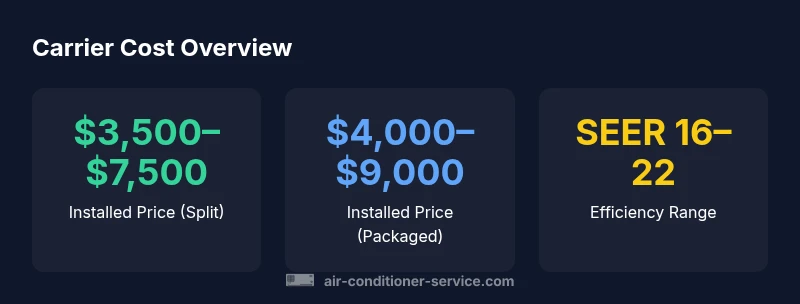
Carrier air conditioner cost typically ranges from $3,500 to $7,500 installed, depending on model, SEER rating, and labor. Split-system installs are usually toward the lower end, while high-efficiency or packaged units push the price higher. Air Conditioner Service Analysis, 2026 shows rebates and financing can affect total outlay. Expect regional and contractor differences, and factor in permits and potential ductwork updates.
Understanding the Baseline: What You Pay for a Carrier Air Conditioner
The carrier air conditioner cost you see in quotes includes the equipment plus professional installation, permits, and basic setup. For most homes, installed prices fall within a broad band that reflects system type, efficiency, and labor. Keep in mind that the price you actually pay can vary by region, contractor, and the specifics of your home. According to Air Conditioner Service, the installed cost for a typical Carrier split-system or packaged unit generally ranges across several thousands of dollars. When homeowners ask about the carrier air conditioner cost, they want to know the full installed price, not just the equipment sticker price. The difference between a bare price and a complete job includes ductwork, electrical upgrades, refrigerant charging, and trim work. If your home has existing ductwork in good condition, installation may be cheaper; if you need new ducts, the price increases accordingly. In regions with higher labor costs or stricter building codes, you’ll see higher quotes. The key takeaway is to consider the total installed cost rather than the upfront price of the condenser or coil alone. This holistic view helps homeowners plan budgets and avoid sticker shock when the truck rolls up. By framing the cost this way, you’re aligning expectations with the realities of a Carrier system installation.
Carrier Series and Cost Ranges: Split vs Packaged vs Ducted
Carrier offers a range of configurations, with price swings driven by size, efficiency, and installation complexity. Split systems typically cost less up-front than packaged or ducted solutions, but higher-efficiency models can narrow or widen that gap depending on climate and home size. When sizing a system, you’ll encounter single-stage, two-stage, and inverter-driven compressors; each step up adds upfront cost but reduces operating costs during peak use. In practice, Carrier models with SEER ratings in the mid-to-high range deliver greater energy savings over their lifetime, which can offset higher initial costs. Air Conditioner Service analysis notes that rebates and financing options can further influence the total outlay. The bottom line: for a given home, the carrier air conditioner cost is a function of equipment choice, installation requirements, and available incentives. In many markets, homeowners see a meaningful return on investment when selecting a unit with energy-efficient performance, provided there is quality installation and proper sizing.
Installation Variables That Move the Price
Several variables can move the price of a Carrier installation beyond the base price of the equipment. Ductwork condition, whether existing ducts require cleaning, sealing, or resizing, is a common price driver. Electrical upgrades, new circuit breakers, or a dedicated outside disconnect may be required for larger or higher-efficiency units. Permits and inspections can add time and cost, especially in regions with strict building codes. Labor costs vary by region and contractor experience. Accessibility of the outdoor unit and indoor air handler affects installation duration and labor. Finally, disposal fees for old equipment and refrigerant handling charges can contribute to the total. By understanding these factors, homeowners can request detailed itemized quotes that separate equipment cost, labor, ductwork, and permits, making it easier to compare apples-to-apples and avoid surprise charges.
Operating Costs and Efficiency Impact
Operating costs are driven by efficiency (SEER rating) and local energy rates. Higher SEER models typically consume less electricity for the same cooling output, yielding long-term savings that can offset the higher upfront price, particularly in hot climates or where electricity rates are high. In addition to efficiency, the price per year of ownership depends on maintenance, refrigerant costs, and the system’s age. Carrier units with advanced features like smart thermostats and variable-speed compressors may require more sophisticated diagnostics if service is needed, potentially influencing service costs. Air Conditioner Service analysis indicates the long-term financial value of a more efficient system is highly climate- and usage-dependent, but well-chosen equipment paired with professional installation usually delivers a favorable payback over 5–10 years. Homeowners should also consider the potential for rebates, tax incentives, and utility programs that can reduce net cost.
Financing, Warranties, and Rebates
Financing can make a big difference in affordability by spreading the installed cost over time. Look for promotional APRs or zero-interest terms offered by manufacturers, retailers, or installers. Warranties vary by model and installer; most Carrier systems include a manufacturer warranty on the compressor and other components, plus a workmanship warranty from the installer. Rebates and incentives can significantly cut the upfront price, but the availability and amount depend on local programs and utility company offerings. Before committing, obtain written estimates that specify the equipment cost, installation labor, permits, ductwork, and any incidental fees. Compare warranty coverage and transferability, as these factors affect long-term value and resale considerations.
Budgeting Tips and Getting the Best Value
A practical budgeting approach is to estimate a mid-range installed price and then add a contingency for ductwork and electrical upgrades. Request multiple, itemized quotes from licensed installers and verify their credentials. Ask about the expected SEER and variable-speed options, and assess long-term energy savings versus upfront costs. Investigate rebates, financing terms, and potential utility programs in your area. Finally, consider scheduling the installation during shoulder seasons to minimize price hikes and ensure timely service. A careful planning phase can yield a Carrier system that balances upfront price, operating costs, and reliability.
Common Pitfalls and How to Avoid Extra Costs
Avoid choosing the lowest bidder without verifying credentials and references. Poor sizing or incorrect refrigerant charge can lead to inefficiencies and future service costs that erase any initial savings. Don’t overlook ductwork issues or improper insulation, which can undermine cooling performance. Ensure the installer provides an on-site measurement, load calculation, and a written installation plan. Finally, be aware of add-on charges for old equipment disposal, permit fees, and disposal rebates that may not be included in core quotes. By recognizing these potential pitfalls, homeowners can protect against unexpected costs and secure a smoother installation experience.
Carrier installation cost scenarios
| Scenario | Typical Cost Range (USD) | Key Considerations |
|---|---|---|
| New installation (split system) | $3,500–$7,500 | Includes equipment, labor, and basic ductwork adjustments |
| Replacement (existing ductwork) | $4,000–$9,000 | May require duct changes or upgrades |
| High-efficiency upgrade (SEER 16–22) | $5,000–$11,000 | Higher upfront, potential energy savings |
| Ductwork and ventilation improvements | $1,500–$5,000 | Dependent on duct condition and location |
Common Questions
What factors affect carrier air conditioner cost?
Several variables determine the total installed price, including system type (split vs packaged), SEER rating, ductwork condition, electrical upgrades, permits, and regional labor rates. Understanding these factors helps you compare quotes accurately and avoid surprises.
Costs depend on the unit, efficiency, and installation specifics; compare quotes that break out equipment, labor, and ductwork.
Is it cheaper to replace an old unit rather than repair it?
In many cases, replacement is more cost-effective than frequent repairs, especially for older systems with declining efficiency. New units typically deliver better energy efficiency and longer-term reliability, reducing maintenance costs over time.
If repairs pile up, replacing the unit can be a better long-term value.
Do rebates or incentives apply to Carrier units?
Yes, many regions offer rebates, tax incentives, or utility programs for high-efficiency Carrier models. Availability varies by location and project details, but shopping for rebates can substantially reduce the net cost.
Look for local rebates and financing options to lower the upfront price.
How long does installation typically take?
Most Carrier installations take from one to two days, depending on ductwork, electrical upgrades, and permit processing. A detailed pre-job survey helps set realistic timelines and avoids delays.
Expect about 1–2 days for a standard install with some variations.
Can I finance a Carrier air conditioner installation?
Financing options are commonly available through manufacturers, installers, and utility partnerships. Terms vary, so compare interest rates, payback periods, and any promotional offers to maximize value.
Yes, financing can make installing a Carrier unit more affordable upfront.
What maintenance costs should I expect after installation?
Ongoing costs include periodic servicing, filter changes, refrigerant checks, and potential coil cleaning. Well-maintained, high-efficiency systems typically incur lower energy costs and fewer major repairs over time.
Budget for annual maintenance to keep the system efficient and reliable.
“Carrier cost is a function of size, efficiency, and installation complexity; proper sizing and professional installation protect long-term value.”
The Essentials
- Budget for installed price, not just equipment
- Balance upfront cost with long-term energy savings
- Include ductwork, permits, and electrical upgrades in planning
- Explore rebates and financing early
- Choose a licensed installer with proper sizing