Air Conditioner Price 1.5 Ton: 2026 Practical Guide
Explore realistic price ranges for a 1.5-ton air conditioner, installation costs, and how to compare quotes. Practical budgeting tips from Air Conditioner Service for homeowners and renters.


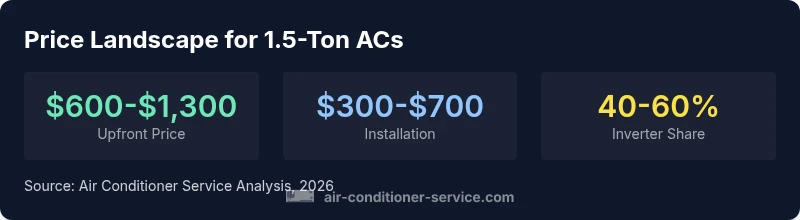
For a new 1.5-ton split air conditioner, expect a price range of roughly $600 to $1,300 before installation. Inverter models and higher SEER ratings tend to land toward the upper end, while basic non-inverter versions sit lower. Installation, extended warranties, and service plans also affect the final bill.
Why the 1.5-ton size matters for price and comfort
Choosing a 1.5-ton air conditioner is a practical starting point for many homes in temperate to warm climates. The size of the unit influences both the upfront cost and the long-term energy bill. A unit that is too large for a space wastes electricity and may cycle briefly, reducing comfort and humidity control. A unit that is too small struggles in peak heat, spurting higher energy use as it runs longer to reach set temperatures. Price-wise, the core driver is capacity plus efficiency: larger capacity with higher SEER and inverter technology costs more, but can save more on operating costs over time. According to Air Conditioner Service, homeowners often balance initial price with projected energy savings when choosing between inverter and non-inverter models. This balance explains why a 1.5-ton model ranges so widely in cost—from basic, non-inverter units to premium, inverter-driven systems with advanced humidity control and smart features.
What drives the upfront price of a 1.5-ton AC
The largest levers in price are (1) the type of compressor (inverter vs fixed-speed), (2) SEER rating and energy efficiency, (3) brand and features (wifi connectivity, zoning, humidity control), and (4) installation complexity. Inverter compressors adjust speed to match cooling demand, which improves efficiency at a higher upfront cost. Higher SEER ratings can reduce operating costs over the life of the system, but the initial investment rises accordingly. Brand reputation, warranty length, and bundled service plans also push price up or down. Local labor rates and permit requirements influence installation charges, while the need for duct modifications or upgrades can add significant extras.
Hidden costs you should plan for
Installation is rarely the only upfront expense. Expect to budget for: (a) electrical work or new breakers, (b) ductwork modifications or cleaning if the system is replacing an older setup, (c) new thermostats or smart controls, (d) refrigerant charges and line set replacements if needed, (e) refrigerant leak testing and pressure checks, and (f) permit fees where required. Warranties rarely cover all service calls, so budget for optional extended warranties or maintenance plans. By asking for a detailed, itemized quote, you can compare apples to apples across competing contractors and avoid surprise charges later.
Price tiers: basic vs inverter premium
Price tiers generally map to performance and efficiency. Basic, non-inverter, 1.5-ton units typically sit in the lower portion of the price range. Mid-range models balance price with better energy performance and comfort features. Premium inverter units with high SEER ratings and smart features bring the top end of the price spectrum. When evaluating bids, consider long-term energy savings and potential rebates, not just the sticker price. Air Conditioner Service notes that although premium models cost more upfront, energy bills can be meaningfully lower over time in many homes.
How to compare quotes and what to look for
When you receive quotes, compare not only the price but also the included components: outdoor unit sizing, indoor coil type, refrigerant type, installation scope, warranty terms, and service intervals. Look for a clearly defined scope of work that lists electrical work, duct adjustments, and any needed permits. Ask for a separate line item for refrigerant or line-set replacements if the unit is being installed in an older home. Require written estimates with a consistent basis, such as the same SEER level and inverter status. This helps reveal hidden costs and ensures you’re evaluating true costs across suppliers.
Practical budgeting guide and example scenarios
Scenario A: You live in a moderate climate and choose a basic 1.5-ton non-inverter unit with standard installation. Expected total out-the-door cost might fall in the lower half of the range, with modest annual energy costs due to moderate efficiency. Scenario B: In a hot climate with long cooling seasons, you opt for a mid-range inverter with SEER 16-18 and smart controls. The upfront price climbs, but annual energy savings can be meaningful over the system’s life. Scenario C: You want top performance in a large living space and choose a premium inverter 1.5-ton with SEER 20-22 and enhanced humidity control. The out-the-door price sits at the high end, but potential rebates and long-term energy savings can justify the investment.
Approximate total price ranges by model type (before tax and permitting)
| Model Type | Upfront Price Range (USD) | Installation Cost (USD) |
|---|---|---|
| Standard 1.5-ton non-inverter | 600-900 | 300-500 |
| Inverter 1.5-ton SEER 16-18 | 900-1200 | 350-650 |
| Premium inverter 1.5-ton SEER 20-22 | 1100-1300 | 600-700 |
Common Questions
What does 1.5-ton refer to in air conditioning?
A 1.5-ton rating measures the cooling capacity of an AC unit, roughly equivalent to 18,000 British Thermal Units per hour. It indicates how much heat the system can remove in an hour. Selection depends on room size, insulation, and climate. Always match tonnage to the space to avoid over- or under-cooling.
A 1.5-ton unit cools about 18,000 BTUs per hour and should fit the room size and insulation for efficient comfort.
Are inverter AC units more expensive upfront?
Yes, inverter-driven units typically cost more at purchase, but they deliver better energy efficiency and comfort. The higher upfront price can be offset over time by lower electricity bills, especially in hot climates or with longer cooling seasons.
Inverter units cost more upfront, but save energy and improve comfort over time.
Do I need to replace ductwork when upgrading to a 1.5-ton system?
Ducts may need inspection and potential sealing or size adjustments, especially in older homes. Poor duct performance can negate efficiency gains. A contractor should evaluate duct leakage, routing, and airflow as part of the quote.
Ductwork might need inspection and possible upgrades for best performance.
How long does installation typically take?
Most 1.5-ton installations take one day to a full weekend depending on system type, existing wiring, and whether ducts require modifications. A thorough site assessment helps set realistic timelines and avoids rushed work.
Most installs take 1 day to a weekend, depending on setup.
Are financing options available for a new 1.5-ton AC?
Many contractors offer financing or promotional plans. If not, third-party financing or credit cards with 0% APR for a period may be available. Always factor interest costs into your total budget and compare offers.
Many contractors offer financing or 0% APR promos with careful budgeting.
How do seasonal promotions affect price?
Prices commonly dip during shoulder seasons when demand is lower. Promotions can include discounted installation, extended warranties, or bundled services. Timing your purchase can yield meaningful savings.
Prices often drop in shoulder seasons with promos and bundles.
“A well-chosen 1.5-ton system can balance comfort, efficiency, and cost when installers provide clear, itemized quotes and explain long-term energy savings.”
The Essentials
- Consider both upfront price and long-term energy costs
- Inverter models offer energy savings but higher upfront costs
- Get itemized quotes to spot hidden installation fees
- Factor in ductwork, wiring, and thermostat upgrades
- Check for regional rebates and warranties