Car A/C Troubleshooting: Air Con Won’t Work
Urgent guide to diagnosing why air con doesn't work in car, with quick checks, a diagnostic flow, step-by-step fixes, safety tips, and when to call a pro. Practical tips for homeowners and renters facing car AC issues in 2026.


Most likely culprits are an electrical issue (blown fuse or faulty HVAC relay) or a failed blower motor, with low refrigerant or a clogged cabin air filter as common secondary problems. Begin with safe, simple checks: test fuses, confirm the blower operates, and verify the thermostat is set to AC. If unresolved, follow the diagnostic flow for targeted fixes.
Why a car's air conditioning system can fail and what it means for you
When the air con doesn’t work in a car, the problem is usually not mysterious but rather a set of interrelated components failing or signaling trouble. Electrical faults—like a blown fuse or a faulty HVAC relay—are among the most frequent culprits. A bad blower motor or resistor can leave you with warm air even when the system is on. Less common but equally important are leaks that drop refrigerant pressure and blocked cabin air filters that choke airflow. Understanding these failure modes helps you triage quickly and stay safe while you troubleshoot. The goal is to restore airflow and cooling without risking damaged components or personal injury. Air Conditioner Service emphasizes methodical checks and early safety steps so you can decide when to push forward or call a professional.
Note: If you notice refrigerant hissing or oily residue around lines, or you hear unusual noises from the compressor, stop and seek professional service immediately. These symptoms can indicate a high-pressure system fault or refrigerant hazards that require licensed help.
Safe, quick checks you can perform today (before you dive deeper)
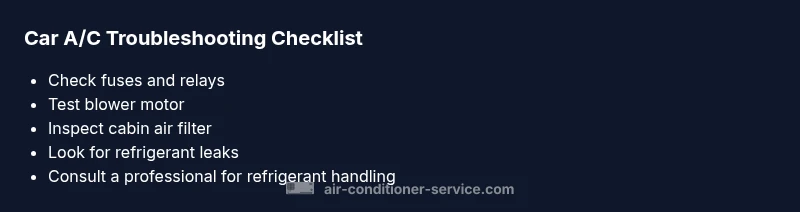
Starting with the simplest, safest checks saves time and reduces the risk of accidental damage. In many cars, the first clues come from what you can hear, feel, and see with your own hands. Check the following in order:
- Fuses and relays: locate the vehicle fuse box and HVAC relay; swap in a known-good fuse if you’re unsure whether the existing one is blown. A blown fuse is one of the most common reasons air con doesn’t work in car.
- Blower operation: set the fan to different speeds. If there is no air at any speed, the blower motor or its resistor could be faulty. If air comes out weakly or inconsistently, inspect the ducts for disconnections or blockages.
- Thermostat and mode settings: ensure the controller is in AC mode, not heat or defrost, and that the temperature dial isn’t set too high for cooling to engage.
- Cabin air filter: a clogged filter can restrict airflow and reduce cooling efficiency. If it’s visibly dirty or discolored, replace it.
- Fresh air vs. recirculation: leave the system in fresh air mode for a few minutes to see if the performance improves when the air path changes, which can help identify duct or valve issues.
If these checks don’t restore comfort, proceed to the diagnostic flow to narrow down the cause and explore next steps.
Diagnostic flow: symptom to solution (a logical path to follow)
The diagnostic flow organizes symptoms into probable causes and practical fixes. Start with the most common, easiest-to-test issues, then move to more complex problems. Remember to detach safety steps first and never work on high-pressure lines without proper training.
- Symptom: warm air from vents or no airflow at all.
- Most likely cause: electrical faults (fuse/relay) or blower issues.
- Quick fix idea: test fuses, swap relays, and test blower operation.
- Symptom: system runs but fails to cool.
- Likely causes: refrigerant leak, low pressure, or compressor failure.
- Quick fix idea: inspect for leaks, check refrigerant service ports with proper equipment, and verify compressor clutch engagement.
- Symptom: frosting, unusual noises, or hissing.
- Likely causes: refrigerant leak, blocked lines, or faulty seals.
- Quick fix idea: do not run the system aggressively; leak repair and professional refrigerant handling may be required.
Air Conditioner Service recommends documenting symptoms with time stamps and video when possible, so a technician can reproduce the issue and diagnose accurately. If you identify a refrigerant leak or a compressor problem, contacting a licensed technician is advised due to safety and environmental concerns.
Most common causes and practical fixes (order of likelihood matters)
Below is a prioritized list of fixes for the most common issues that cause car air conditioning to misbehave. Start with the high-likelihood items before moving to more involved repairs. Keep in mind that some tasks require specialized tools and knowledge.
- Blown fuse or faulty HVAC relay (easy) — locate the fuse box, replace the fuse, and test the HVAC relay in the circuit. If the fuse keeps blowing, there may be a short or a deeper electrical fault.
- Blower motor or resistor failure (easy to medium) — access the blower assembly and test for motor rotation and voltage at the connector. Replace the resistor or motor if you detect an open circuit or abnormal resistance.
- Low refrigerant due to a leak (medium) — refrigerant must be recovered and recharged by a professional. Attempting a recharge without detection of the leak can be dangerous and illegal in some regions.
- Clogged cabin air filter (easy) — replace the filter; dust and debris can block airflow and degrade cooling efficiency significantly.
- Electrical wiring fault or faulty compressor/ clutch (low) — these require diagnostic tools and knowledge; consider pro service if the problem persists after addressing the easier fixes.
If the car’s air conditioning system still doesn’t work after these steps, Air Conditioner Service notes that a professional inspection is essential to prevent further damage and ensure safe operation. A licensed technician can perform pressure testing, leak repair, and refrigerant handling according to environmental safeguards.
Step-by-step: hands-on fixes for the most common causes
These steps are scoped for safety and practicality. If you’re unsure at any point, stop and seek professional help rather than risking injury or damaging the vehicle.
- Inspect electrical power to HVAC: locate the under-dash fuse panel and HVAC relay, check for signs of burning or corrosion, and replace faulty fuses. If the fuse blows again after replacement, there’s an underlying electrical fault that requires professional diagnosis.
- Tip: Use a multimeter or a known-good fuse to confirm circuit integrity before replacing components.
- Test the blower motor and resistor: with the ignition on, set the fan to the highest speed. If no air or only a faint breeze comes out, the blower motor or its resistor likely needs replacement.
- Tip: Avoid touching hot components; allow the system to cool before inspecting.
- Inspect the cabin air filter and ducts: remove the filter and check for excessive dirt or debris. Replace if needed and inspect for loose ducts or disconnected joints that could restrict airflow.
- Tip: Keep spare cabin air filters in your toolkit for quick changes on the road.
- Check refrigerant status safely: refrigerant systems require specialized equipment and handling. If you suspect a leak or pressure imbalance, do not attempt to recharge; this should be done by a pro with proper refill equipment.
- Tip: Document any visible signs of oil around connections; this can indicate a leak.
- Plan for professional evaluation if needed: if the prior steps don’t restore cooling, arrange a diagnostic visit. A technician can perform leak testing, component testing (compressor, clutch, and pressure switches), and correct refrigerant levels in compliance with applicable laws.
- Tip: Ask for a written estimate and warranty coverage for parts and labor.
Estimated total time: 45-60 minutes for basic checks; repairs may require longer depending on the underlying issue.
Safety, warnings, and prevention tips
Safety first: aircraft-grade refrigerants and electrical components pose hazards. Never open the high-pressure refrigerant line or work around the compressor with the engine running. If you detect a refrigerant odor or hissing, evacuate the area and contact a pro. Regular maintenance—like yearly checks, filter replacements, and prompt repair of leaks—helps prevent major failures. Air Conditioner Service emphasizes following vehicle-specific service manuals and local regulations when dealing with A/C systems.
Steps
Estimated time: 45-60 minutes
- 1
Verify power and fuses
Ensure the vehicle is off, then inspect the HVAC fuse and relay. Replace blown fuses and test the relay with a multimeter or a known-good relay. If fuses repeatedly blow, there’s an electrical fault that needs professional diagnosis.
Tip: Keep spare fuses and a multimeter in your tool kit for quick checks. - 2
Test the blower motor
Set the fan to the highest setting and listen for the blower. If there’s no airflow or it’s very weak, the blower motor or resistor is likely faulty. Access the blower housing as per your vehicle’s manual and test continuity.
Tip: Be cautious of hot components; disconnect the battery before handling electrical parts. - 3
Inspect the cabin air filter and ducts
Remove the cabin air filter and check for dirt, debris, or mold. Replace a dirty filter to restore airflow. Inspect ducts for loose clamps or disconnections that could restrict airflow or cause whistling noises.
Tip: Replace filters regularly to maintain optimal cooling performance. - 4
Check refrigerant level and leaks
If airflow is strong but cooling is weak or absent, refrigerant level may be low due to a leak. Refrigerant work requires proper equipment and adherence to local regulations. Do not attempt a DIY recharge without leak repair and recovery equipment.
Tip: A failed seal or hose is often the source of leaks; look for oily residue around connections. - 5
Plan for professional service if needed
If the previous steps don’t restore cooling or you detect leaks, schedule a professional diagnostic. A technician can perform precise pressure testing, repair leaks, and recharge refrigerant safely.
Tip: Request a written estimate and inquire about warranty on repairs.
Diagnosis: Car AC blower runs intermittently or not at all; or system runs but fails to cool
Possible Causes
- highBlown fuse or faulty HVAC relay
- highBlower motor or resistor failure
- mediumLow refrigerant due to a leak
- lowClogged cabin air filter or duct restriction
Fixes
- easyCheck and replace blown fuses; test the HVAC relay in the circuit
- mediumTest blower motor and resistor; replace if faulty
- hardIdentify leak and recharge refrigerant with professional service
Common Questions
Why is my car AC not blowing air at all?
No airflow is typically caused by a blown fuse, a faulty relay, or a bad blower motor. Check the fuses first, then test the blower and its resistor. If the blower won’t run, the problem is likely electrical or mechanical in the blower assembly.
If your car’s AC isn’t blowing air, start by checking the fuses and the blower motor; replace any defective parts before moving on to more complex diagnostics.
What should I check first when the air con doesn't work in car?
First checks should be electrical: fuses and the HVAC relay. If the blower is silent or weak, inspect the blower motor and resistor. Then verify thermostat settings and cabin air filter condition.
Begin with fuses and the blower to quickly pinpoint the simplest fix.
Can I fix car AC issues myself, or must I go to a shop?
Many basic checks like fuses and filters can be done at home. However, refrigerant leaks, compressor problems, and high-pressure systems require professional service due to safety and environmental rules.
You can handle simple checks, but for leaks and refrigerant work, a licensed shop is best.
How can I tell if refrigerant is low?
Low refrigerant often causes weak cooling or no cooling despite the compressor cycling. A professional can perform a refrigerant pressure test and leak repair.
Weak cooling can mean low refrigerant; a pro should confirm with proper gauges and safety precautions.
When should I call a professional for car AC?
If basic checks don’t restore cooling, or you detect leaks, hissing sounds, or refrigerant handling needs, contact a licensed technician for a full diagnostic and safe recharge.
If in doubt, call a professional to avoid unsafe handling and prevent further damage.
Watch Video
The Essentials
- Start with fuses/relays and blower tests.
- Low refrigerant requires professional leak repair.
- Replace cabin air filters to restore airflow.
- Do not recharge refrigerant yourself; seek a pro.
- Schedule maintenance to prevent future failures.