How Much Noise Does an Air Conditioner Make?
Explore typical decibel ranges for window, portable, and central air conditioners, how to measure noise at home, and practical steps to reduce disruption without sacrificing cooling.


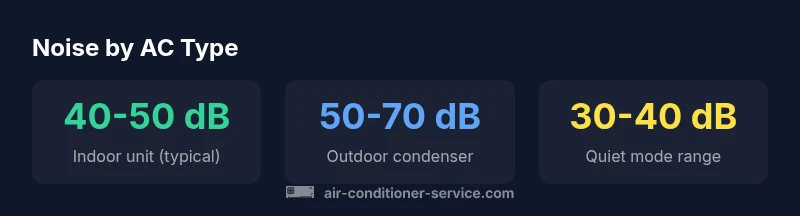
Air conditioners vary by type and speed, but most homes fall within a practical range. Indoor units typically produce 40-50 dB, while outdoor condensers run around 50-70 dB. In quiet or energy-saving modes, levels can drop further, and improper installation or worn components can raise noise.
Why Noise Levels Vary Across AC Types
Noise from air conditioners depends on design, installation, and how you use the system. In a typical home, the indoor air handler is responsible for most of the audible noise, while the outdoor condenser contributes a steady hum or clatter depending on its state. Modern systems strive to minimize sound through improved fan designs, stiffer housings, and vibration isolation, but the exact level still depends on model, location, and maintenance. According to Air Conditioner Service, the relationship between performance and sound is a balancing act: higher efficiency can shift some acoustic energy into different frequency ranges, and a poorly mounted unit can amplify vibration. By understanding this relationship, homeowners can set realistic expectations and identify when noise indicates a problem.
Several factors influence perceived loudness, including the distance from the unit, room acoustics, and background noise. A bedroom with soft furnishings will often seem quieter than an open living space with hard floors. The decibel scale is logarithmic, which means a small numerical change can feel substantial; a shift from 50 dB to 55 dB sounds like a noticeable increase, even though it is only a five-decibel difference. This context helps when you compare different systems or look at quiet-mode specifications.
When you log maintenance visits or read product specs, a few consistent terms emerge: sound power level (the total energy emitted by the unit), sound pressure level (what you actually hear at a distance), and vibration-induced noise (often from loose components or mounting). Distinguishing these helps homeowners pinpoint remedies, whether it’s selecting a quieter model, improving mounting, or scheduling a tune-up. Air Conditioner Service emphasizes that best-in-class installations leverage isolation mounts and duct design to minimize transmitted sound without compromising cooling performance.
Typical Noise Ranges by System Type
Noise levels vary widely by system type and installation. The following ranges reflect common residential configurations and practice, not every model will fit perfectly:
- Window units: 45-60 dB indoors; outdoor noise is often less audible at typical room distances due to enclosure and surrounding structures.
- Portable ACs: 50-60 dB indoors; outdoor components are generally similar but sometimes contribute more depending on the exhaust setup.
- Split-system central AC (indoor unit): 35-50 dB indoors; outdoor condenser: 50-70 dB, depending on compressor speed and system load.
- Mini-split ductless: Indoor units can run as quiet as 25-40 dB; outdoor condenser usually 40-65 dB, depending on model and fan speed.
- Full central systems with traditional ductwork: indoor air handlers produce moderate noise (around 40-50 dB) while the outdoor condenser can reach 60-75 dB on higher stages.
Keep in mind that these ranges assume proper installation and routine maintenance. If you notice deviations, it could indicate vibration issues, loose panels, or component wear that merit a service check. Air Conditioner Service suggests using a decibel meter at a typical listening position to compare your measurements against these ranges, providing a practical benchmark rather than an abstract spec.
Different rooms and house layouts can alter how loud the unit sounds inside. For example, a noise source behind a wall or in a large, echo-prone space can appear louder than the same unit in a compact, carpeted bedroom. Understanding your own space helps you choose the right system and placement to minimize audible disruption.
How to Measure Noise at Home
Measuring noise at home is simple if you have the right approach. Start by choosing a representative listening position – for most bedrooms or living rooms, about 3 to 6 feet from the outdoor unit or from the indoor unit’s front panel. Use a smartphone decibel app or a dedicated sound level meter to log several readings at different operating speeds (cooling, fan-only, and quiet/eco modes). Take readings after the system has run for a few minutes to reach steady-state noise. Record at least three measurements and note the ambient background noise level, then compare to the unit’s published ranges. If your measurements consistently exceed the typical ranges by more than a few decibels, consider inspection for loose parts, mounting, or duct resonances.
For owners of multi-zone or ducted systems, measure at multiple rooms to assess if certain zones are disproportionately louder. Adjusting dampers, improving insulation, or relocating the outdoor unit (if feasible) can help reduce localized spikes in sound. If you’re relying on a sound meter for compliance or safety reasons, calibrate the device according to the manufacturer’s instructions, and repeat measurements after any adjustments. Regular checks during the cooling season build a reliable picture of your home’s acoustic profile and guide maintenance decisions.
A practical tip: document your findings with photos or a short audio recording. This not only helps when you consult a technician but also enables you to compare before-and-after results after maintenance or installation changes. Pair your measurements with a simple note on the unit’s condition, such as bearing wear or loose panels, to create a clear service history that supports quieter operation over time.
Factors That Drive Noise Levels
Noise levels are driven by a mix of design choices and operational conditions. Understanding these factors helps you diagnose why a unit sounds louder than expected and what you can do about it without replacing the system:
- Compressor and fan design: High-efficiency models may use variable-speed compressors and multi-speed fans, which can alter the audible spectrum. A higher-speed setting often increases noise but improves cooling at peak loads; conversely, lower speeds tend to lower noise but may reduce cooling capacity during hot days.
- Mounting and vibration isolation: Loose panels, unsecured mounting brackets, or poor vibration isolation amplify noise. Anti-vibration pads under outdoor units and rubber grommets on indoor fans can dramatically reduce transmitted sound.
- Ductwork and air leaks: In ducted systems, leaks, poorly sealed joints, or undersized ducts increase air velocity, producing whistling or whooshing sounds. Proper sealing and sized ducts help stabilize pressure and quiet operation.
- Maintenance state: Worn bearings, dirty fan blades, or a dirty condenser coil create imbalance and turbulence that raise noise. Regular cleaning and component checks are essential to maintain quiet operation.
- Install location and clearances: Outdoor units too close to windows, walls, or within confined enclosures can trap sound and bounce it back into living spaces. Adequate clearance around the unit and thoughtful landscaping can dampen perceived noise.
Air Conditioner Service emphasizes that while you can mitigate many noise drivers with simple steps, some effects stem from the fundamental design and component quality. A well-chosen unit with thoughtful installation tends to stay quieter across typical operating conditions than a bargain model installed without regard to acoustics.
Practical Tips to Reduce Noise Without Replacing the Unit
If you’re aiming for quieter cooling without a full replacement, implement these practical steps in order of impact:
- Improve mounting and vibration isolation: Install anti-vibration pads under the outdoor unit and ensure indoor units are firmly mounted. Check for loose panels and fasteners and tighten them as needed.
- Optimize installation clearances: Ensure at least 12-24 inches of space on the sides of outdoor units and maintain a gap above and around the condenser to promote airflow and reduce resonance.
- Manage airflow and ducts: Inspect ductwork for loose joints, leaks, and obstructions. Seal leaks with appropriate tapes or mastic and replace worn seals. Add insulation to reduce noise transmitted through ducts.
- Use sound-dampening accessories: Consider a sound enclosure or acoustic shield if the outdoor unit is near a bedroom window, or add landscaping elements that absorb sound (evergreen shrubs, lattices with mass, etc.).
- Schedule regular maintenance: Clean condenser fins, check fan motors, and lubricate moving parts if the manufacturer recommends it. A well-maintained unit runs smoother and quieter.
- Adjust operation during sleeping hours: If your system allows, program a lower fan speed or energy-saving mode at night when ambient temperatures permit. This can significantly reduce nighttime noise without compromising comfort.
Remember that changes should be evaluated in context. A quieter unit that delivers insufficient cooling is not a win. Balance noise reduction with performance goals, and consider professional advice for substantial modifications or if you notice new vibrations, rattles, or buzzing sounds that persist after basic maintenance.
When Noise Signals a Problem – Signs to Call a Pro
Noise is a common side effect of normal operation, but certain sounds signal a problem that warrants professional attention. Quick recognition helps prevent more extensive damage and potential safety concerns:
- Rattling or clanking: Often indicates loose panels, loose mounting hardware, or foreign objects contacting the fan blades.
- Buzzing or grinding: Could point to worn bearings in the compressor, maladjusted motors, or loose components inside the unit.
- Squealing or high-pitched whine: May be caused by belt wear, misaligned pulleys, or duct leakage that creates whistling noises.
- Droning hum that changes with speed: Could reflect electrical issues, refrigerant flow irregularities, or a failing outdoor fan.
- Excessive vibration: If the entire unit or the indoor air handler vibrates against the wall or floor, check mounting and support structures.
If you notice persistent abnormal sounds, schedule a service call. A trained technician can safely diagnose vibration sources, inspect electrical connections, test refrigerant pressures, and verify that ductwork and sound isolation are correctly installed. Addressing noise early often avoids more costly repairs later and preserves comfort in your home. Air Conditioner Service recommends documenting when the noises occur and under what conditions to help the technician reproduce the issue accurately.
Case Studies: Real-World Scenarios
- Case A: A medium-sized window unit in a bedroom started emitting a consistent metallic rattle after one season. A technician found a loose mounting screw inside the outer cabinet and a small piece of debris lodged near the fan blade. After securing the panel and clearing the debris, the unit ran within typical noise ranges again and achieved better airflow.
- Case B: A central split-system home air conditioner produced a louder hum during high heat. Inspection revealed worn outdoor fan bearings and a slightly bent mounting bracket. Replacement of bearings and tightening of the bracket reduced the noise by roughly a third, and adding vibration isolation pads further decreased resonance in adjacent living spaces.
These cases illustrate how noise can stem from simple, immediate causes or from aging hardware. They also show that maintaining safe operation and comfort sometimes means targeted fixes rather than full system replacement. Air Conditioner Service notes that keeping a service log with dates, noises heard, and actions taken helps track improvements over time.
Quick Maintenance Checklist for Quieter Operation
- Inspect and tighten all mounting hardware on indoor and outdoor units.
- Clean or replace air filters and check for blockages in intake/exhaust paths.
- Clear debris around the outdoor unit and ensure at least 12 inches of clearance on each side.
- Examine duct joints for leaks; seal and insulate where needed.
- Schedule seasonal maintenance to keep fans, bearings, and motors in good condition.
- Consider professional vibration isolation upgrades if noise persists after basic maintenance.
Noise ranges by common residential AC configurations
| System Type | Typical Indoor Noise (dB) | Typical Outdoor Noise (dB) | Notes |
|---|---|---|---|
| Window unit | 45-60 | N/A | Portable and easy to install |
| Portable AC | 50-60 | N/A | Exhaust noise can add to indoor sound |
| Split central (indoor unit) | 35-50 | 50-70 | Common in homes; good efficiency |
| Mini-split ductless | 25-45 | 40-65 | Quieter indoor; outdoor varies |
| Central with outdoor suite | 40-50 | 60-75 | Depends on outdoor unit size |
Common Questions
What is considered a normal noise level for a typical home AC?
Normal noise varies by system type, but most indoor units run in the 40-50 dB range and outdoor condensers in the 50-70 dB range. Significantly higher readings merit inspection for installation or component wear.
Most home systems run quietly around 40 to 70 decibels depending on location and type; if it seems louder, it’s worth a check.
Why is my window AC louder at night?
Louder nighttime noises often result from reduced ambient noise, making unit sounds more noticeable, air leaks around the window, or mounting vibrations. Check seals, secure mounting, and consider a night-mode setting if available.
Night noises are often more noticeable because the world is quieter; check seals and mounting and use any quiet mode.
Do all ACs get louder with time?
Not all, but many do as components wear or ducts accumulate debris. Regular maintenance reduces this risk and can restore previous noise levels.
Some get louder as parts wear; maintenance can stop that trend.
Can I reduce noise by changing thermostat settings?
Yes. Using lower fan speeds or energy-saving modes can cut noise, especially if the system is oversized or the outdoor unit cycles on frequently. Balance cooling needs with comfort.
Try lower fan speeds or eco modes to cut noise while staying comfortable.
What maintenance tasks most affect noise?
Tightening panels, cleaning or replacing filters, lubricating moving parts as recommended, and inspecting for duct leaks have immediate noise-reduction impact.
Tighten, clean, and inspect—these are the low-hanging fixes for noise.
When should I call a professional for noise issues?
If you hear grinding, banging, persistent rattles, or the noise changes with settings despite basic maintenance, a technician should diagnose the source safely.
Call a pro if unusual noises persist after basic checks.
“Regular maintenance and proper installation are the most reliable ways to minimize noise without sacrificing comfort.”
The Essentials
- Know typical indoor vs outdoor noise ranges for your system
- Measure with a device and compare to published ranges
- Tighten mounting and seal ducts to reduce noise
- Maintenance dramatically reduces abnormal sounds
- Call a pro if unusual noises persist