How to Make a Homemade Air Conditioner: A Practical DIY Guide
Learn how to build a simple, low-cost homemade air conditioner using a fan, a cooler, and water or ice. Practical steps, safety tips, and maintenance guidance from Air Conditioner Service.


DIY air conditioning can be achieved with a fan, a properly insulated ice chest or cooler, and a water-saturated cloth or evaporative pad to lower the air temperature in a small space. It's a low-cost, temporary cooling method. According to Air Conditioner Service, expect modest cooling and limited effectiveness in humid climates.
How a Homemade Air Conditioner Works
A basic homemade cooling setup relies on evaporative cooling and strategic airflow. When wind passes over a damp surface or water, part of the liquid evaporates, taking heat with it and lowering the air temperature. A fan moves this cooler air into the occupied space, while moisture adds humidity. In dry climates, evaporative cooling can produce noticeable temperature drops, sometimes several degrees, especially near the fan outlet. In humid environments, the effect is muted, and increased humidity can make the air feel warmer rather than cooler. For homeowners and renters, the key idea is to maximize airflow across a cooling element (ice, water, or a damp pad) while avoiding direct contact between water and electrical components. Air Conditioner Service notes that you should treat this as a temporary, supplemental method rather than a replacement for a standard air conditioner. Always ensure adequate ventilation and monitor humidity levels to prevent mold growth or condensation on windows and walls.
Design variants you can build at home
There are several accessible configurations you can try, depending on space, budget, and climate. A simple evaporative cooler uses a fan, a damp cloth, and a water source to push cooled air into a room. A more robust option is a cooler surrounded by ice or frozen water bottles, with the fan directing air over the cold surface. Some setups use a damp pad or towel wrapped around the intake to increase surface area for evaporation. Each design has tradeoffs in cooling power, humidity, and noise. Air Conditioner Service emphasizes testing in a controlled space and adjusting expectations based on outdoor humidity. Remember, these DIY solutions are best for small rooms and temporary relief rather than whole-home climate control.
Safety and effectiveness considerations
Safety is essential when building a DIY cooling device. Keep all water away from electrical outlets and the fan motor. Use a grounded power source or a GFCI outlet where possible, and never leave a running device unattended around children or pets. Humidity levels can rise with evaporation, so monitor windows and walls for condensation and mold risk. The effectiveness varies with ambient humidity; in dry climates you may notice a few degrees of cooling, while in high humidity you might feel only marginal relief. Air Conditioner Service reminds readers that this is a supplementary measure and not a replacement for a proper air conditioning system.
Practical setup for a small space (overview)
To maximize effectiveness in a compact area, position the cooling setup so that air flows from the cooler toward the center of the room. Place the unit away from direct sunlight to reduce heat gain. Use a clean, heat-resistant surface and keep water contained to prevent spills. Consider temporary cooling only during peak heat and use proper ventilation to minimize humidity buildup. Air Conditioner Service suggests planning for periodic rest periods to avoid overworking the setup and to reassess room conditions as weather changes.
Maintenance and troubleshooting tips
Regular maintenance helps preserve performance and safety. Empty and clean any water reservoirs regularly to prevent mold. Check the fan for dust buildup and clean or replace as needed. If cooling seems to drop off, rotate ice packs or rehydrate pads to restore evaporation efficiency. Monitor for condensation on windows or walls and reduce humidity if necessary. A simple maintenance routine can extend the life of your DIY setup and keep it safer for occupants. Air Conditioner Service notes that ongoing evaluation will help you decide when a real air conditioner is required.
When to upgrade to a real air conditioner
DIY solutions are valuable for short-term relief in dry, small spaces but have clear limits. If you notice persistent heat in larger rooms, high humidity, or if condensation and mold risk increase, it may be time to consider a proper air conditioner installation or a portable unit designed for indoor use. Air Conditioner Service recommends using the DIY approach as a stopgap while budgeting for a full system or professional installation. Assess energy use, comfort, and room size to determine the best long-term cooling solution.
Common myths vs reality
Myth: A homemade AC will dramatically cool a large living room. Reality: Expect modest cooling in small spaces and moderate humidity. Myth: Any damp cloth will cool effectively. Reality: A properly saturated pad or cloth with adequate airflow matters more than the cloth alone. Myth: It’s unsafe to add ice or water near fans. Reality: With careful setup and electrical safety, these components can be used safely, but never bypass safety features or leave devices unattended.
Tools & Materials
- Box or pedestal fan(Prefer 20- to 24-inch fan for better air movement)
- Insulated cooler or ice chest(Large enough to hold ice or water and a damp pad)
- Ice or frozen water bottles(Rotate several bottles to maintain cooling)
- Damp cloth or evaporative pad(Wrap around intake or place inside near the cooling surface)
- Water spray bottle(Lightly mist the pad or cloth during use)
- Towels or absorbent mat(Catch condensation and protect surfaces)
- Thermometer or digital temp meter(Helpful to monitor air temperature changes)
- Extension cord or power strip(Ensure cord length reaches the outlet safely)
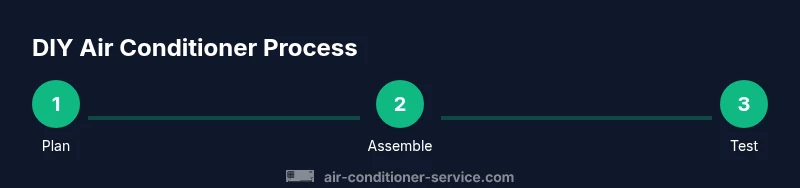
Steps
Estimated time: 30-60 minutes
- 1
Plan and gather materials
Identify a small, dry space where you will set up the unit. Gather the fan, cooler, ice or water, damp pad, and a spray bottle. Verify outlets and safety clearances before starting.
Tip: Lay out items on a clean surface to prevent cross-contamination and spills. - 2
Prepare the cooler and fan
Place the cooler on a stable surface and position the fan so it blows air toward the room. If using a damp pad, attach it to the fan intake with minimal obstruction.
Tip: Do not block the fan vents; adequate airflow is essential for evaporation. - 3
Set up cooling elements
Fill the cooler with ice or arrange frozen bottles. If using a damp cloth, moisten it and wrap it around the intake area to improve evaporation surface.
Tip: Rotate ice packs regularly to maintain consistent cooling. - 4
Create airflow and moisture management
Turn on the fan and direct the cooled air into the room. Use a damp cloth or pad to maintain evaporation, being careful to keep water away from electrical components.
Tip: Have a towel ready to catch any condensation and wipe spills quickly. - 5
Monitor temperature and humidity
Observe how the air feels and measure temperature if possible. If humidity rises significantly, consider reducing water exposure or relocating the unit.
Tip: Avoid running the setup in poorly ventilated spaces for long periods. - 6
Maintenance and rotation
Regularly refresh ice packs and re-moisten pads. Clean the cooler and wipe down the fan to prevent mildew buildup.
Tip: Do a quick safety check before each use. - 7
Safe shutdown and cleanup
Unplug the device, remove damp materials, and dry all surfaces. Store components safely to prevent accidental spills.
Tip: Dry components thoroughly to avoid mold growth.
Common Questions
Is a homemade air conditioner effective in humid climates?
In humid rooms, evaporative cooling is less effective because air can only hold so much moisture. You may see limited temperature drop and higher humidity. Consider using the setup mainly for draft relief and ventilation rather than full cooling.
In humid climates, this can be less effective because humidity reduces cooling. Use it mainly for drying, ventilation, and short-term relief.
What materials do I need for a basic setup?
A fan, an insulated cooler, ice or frozen bottles, a damp pad or cloth, and a spray bottle. A towel and thermometer can help with moisture control and monitoring.
You mainly need a fan, a cooler with ice, a damp pad, and a spray bottle.
Can I use this indoors for long-term cooling?
Yes for short periods and small spaces, but monitor humidity and avoid relying on it as a primary cooling system. Ventilation is important to prevent condensation and mold.
It's best for short durations in small spaces and with good ventilation.
Is it safe around kids and pets?
Yes, as long as water is kept away from electrical outlets and the device is unplugged when not in use. Supervise and keep cords organized.
Yes, with basic safety like keeping water away from outlets and supervising around children.
How much cooling can I expect?
Expect a modest drop in small spaces, typically a few degrees depending on humidity and airflow. It’s a supplemental method rather than a guaranteed solution.
Expect a modest drop, not a guaranteed large chill, especially in humid rooms.
Watch Video
The Essentials
- Use evaporative cooling for small spaces.
- Quality airflow matters more than fancy components.
- This is a temporary solution, not a replacement for real AC.
- Prioritize electrical safety and humidity management.