Can You Use Your AC During Thunderstorms? A Practical Guide
Learn whether it's safe to run your air conditioner in a thunderstorm, including risks, precautions, and maintenance tips from Air Conditioner Service.


During a thunderstorm, you can operate your AC under the right protections, but safety comes first. This guide explains when you should power down, how to shield your system from surges and moisture, and how to resume cooling confidently after a storm. can you use air conditioner during thunderstorm
Can You Use Your AC During a Thunderstorm? A Safety-Centric View
The question can you use air conditioner during thunderstorm is common among homeowners who want comfort without compromising safety. The short answer is that you can, but only if your home’s electrical system is protected and you follow clear safety rules. The Air Conditioner Service Team emphasizes that storm-related surges, power outages, and moisture can damage components if you simply leave the system running. According to Air Conditioner Service Team, preparedness matters more than bravado. If the storm is severe or nearby, the safest option is to power down and unplug, then inspect the unit after the weather passes. This article explains how to weigh risks, what precautions to take, and how to resume operation with confidence. By understanding the mechanics of surges and moisture, you can protect both your family and your equipment while staying comfortable during a temporary outage.
Thunderstorm Lightning Risks and Electrical Safety for AC
Thunderstorms introduce several hazards for household electrical systems. Power surges, arcing, and moisture ingress can damage outdoor condenser coils, control boards, and wiring. The main risk to your air conditioner during a storm is a transient surge when lightning strikes or power lines sway and flicker. Even if you do not lose power, voltage spikes can degrade components over time. Proper protection reduces these risks: a whole-house surge protector, weatherproof outlet covers for outdoor units, and ensuring your electrical panel has up-to-date breakers and proper grounding. Air Conditioner Service notes that surge protection is a critical line of defense, and that equipment rated for surge environments lasts longer. Always avoid touching electrical panels during rain, and never bypass protective devices to test a stressed system. Safety first is not just a slogan—it saves money and reduces repair downtime.
When It Is Safer to Run Your AC During Storms
Operating an AC during a thunderstorm can be practical in certain circumstances, but only under safe conditions. If your home has a modern electrical system with a functioning whole-house surge protector, a grounded outlet, and a properly installed outdoor unit with rain shelter and decent clearance, you might continue to use the system for brief comfort breaks. However, never rely on a modified extension cord or ungrounded outlet during a storm. Air Conditioner Service emphasizes avoiding any assumptions about the storm’s reach—if you hear heavy thunder, see frequent lightning, or smell ozone near electrical devices, pause and shut down. If the indoor environment becomes uncomfortable due to loss of power, switch to battery-powered fans or other non-electrical cooling options until the storm passes. The key is to weigh risk versus reward and to err on the side of safety.
Pre-Storm Readiness and Immediate Steps
Before a storm, inspect safety measures and prepare to act quickly. Confirm that the main electrical panel is accessible, testing shows no obvious faults. Ensure surge protection is installed (or at least use a heavy-duty surge-protected outlet). Keep a flashlight on hand in case the power flickers. Clear the area around the outdoor condenser so water from rain cannot pool near electrical connections. If you must interact with the outdoor unit, wear dry clothes and use insulated gloves. During a storm, switch the thermostat to a comfortable but non-ventilating setting, which reduces cycling and load during surges. Remember: do not touch wet metal parts and do not attempt to start or service an energized system.
Post-Storm Inspection and Moisture Checks
Once the rain ends, wait a few minutes, then carefully check the outdoor unit for moisture, debris, or standing water. Look for signs of damage, such as burnt smells, buzzing, or scorch marks. If water entered the outdoor unit, dry the area with towels and allow time for components to air-dry before reconnecting power. Check the air filter and indoor components for dampness. If any electronics show abnormal operation (weird noises, intermittent cooling, or error codes), shut off power and call a licensed technician. The faster you catch moisture problems, the less risk you face of corrosion, mold, or refrigerant leaks. Air Conditioner Service recommends a post-storm safety check as part of routine maintenance.
Common Myths About Thunderstorms and Air Conditioners
Myth: Lightning will strike your AC directly every storm. Reality: direct strikes are rare, but surges from nearby strikes can still damage equipment. Myth: Unplugging during a storm is overkill—running constantly is safer. Reality: constant load plus wet conditions increases shock risk; unplugging is safer. Myth: Outdoor units are always built to tolerate storms. Reality: many units are built to resist rain, but not to survive surges without protection. By debunking these myths, homeowners can approach storm season with a plan rather than fear, using protection and proper procedures.
Tools & Materials
- Non-contact voltage tester(Check outlets and plugs before handling AC equipment during a storm)
- Surge protector (whole-home or heavy-duty outlet)(Limit transient surges during storms)
- Grounded outdoor weatherproof outlet cover(Keep connections dry if plugging in/outdoor unit after storm)
- Flashlight or headlamp(Power outages are common in storms)
- Insulated gloves(Useful if you must handle energized components in dry conditions)
- Damp cloths or towels(Dry surfaces to prevent moisture transfer)
Steps
Estimated time: 20-30 minutes
- 1
Power down the system
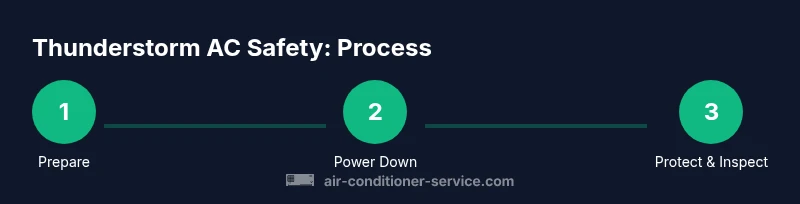
Shut off the thermostat, switch off the outdoor unit’s breaker if accessible, and unplug the power cord if possible. This reduces surge exposure and protects control boards from unexpected voltage spikes. Ensure the main breaker is not easily re-energized by others during the storm.
Tip: Lock out and tag the breaker to prevent accidental re-energizing during the storm. - 2
Check for moisture and water exposure
Inspect the outdoor unit, wiring, and surrounding area for visible moisture or water pooling. If you see standing water or wet connections, do not plug in or energize the unit until it has dried and been inspected.
Tip: If you must move near the outdoor unit, wear dry gloves and keep feet dry. - 3
Verify protection and grounding
Confirm surge protection is in place and undamaged. Check that outdoor outlets are properly grounded and that weatherproof covers are secured. Do not bypass protective devices even if the storm seems mild.
Tip: Replace any damaged surge protector immediately to maintain protection. - 4
Assess indoor comfort alternatives
If the indoor environment becomes uncomfortable, use battery-powered fans and close blinds to reduce heat gain. Avoid running additional high-load appliances that could respond to a surge or loss of power.
Tip: Keep doors and windows closed to maximize passive cooling while power is down. - 5
Post-storm restart plan
After the storm, wait a few minutes before restoring power. Recheck all connections, ensure no moisture remains, and gradually power the system back on from the main breaker. Observe for any unusual noises or odors during startup.
Tip: If you notice any burning smell or buzzing, shut down and call a professional immediately. - 6
Know when to call a professional
If you’re unsure about the integrity of wiring, breakers, or refrigerant lines, contact a licensed HVAC technician. Storm-related damage can lead to expensive refrigerant leaks or electrical fires if misdiagnosed.
Tip: Document issues with photos and notes to share with the technician.
Common Questions
Can you safely run an air conditioner during a thunderstorm?
It can be safe under proper protection, but there are risks from surges and moisture. Always prioritize safety, and use surge protection and a dry environment. If in doubt, wait until the storm passes.
You can, but only with protections in place. If you’re unsure, wait until the storm passes.
Is lightning a direct threat to the AC unit?
Direct lightning strikes to home HVAC systems are rare, but nearby strikes can cause damaging surges. Grounding and surge protection greatly reduce risk.
Direct hits are unlikely, but surges from nearby strikes are real risks.
Should I unplug the outdoor unit before a storm?
If you can safely access the outlet and adapter, unplugging reduces surge exposure. If access is unsafe, rely on a proper surge protector and shut down through the main panel.
Unplug if safe; otherwise rely on protection and shut down through the main panel.
What about surge protectors for the AC?
A dedicated surge protector or a whole-house surge protection system helps safeguard both outdoor and indoor components from voltage spikes during storms.
Use a surge protector to shield your AC from spikes.
What signs mean I should call a pro after a storm?
If you notice burning smells, buzzing noises, sparks, water intrusion, or refrigerant leaks, stop and contact a licensed HVAC technician.
Call a pro if you notice burning smells, buzzing, or water near the unit.
Are there safety alternatives during a storm?
Yes. Use battery-powered fans, stay hydrated, and close blinds; these reduce indoor heat while you wait for power stability.
Try fans and shade until power is restored safely.
Watch Video
The Essentials
- Power down during storms to reduce surge risk
- Use surge protection and proper grounding
- Inspect after storms for moisture and damage
- Avoid touching energized electrical components
- When in doubt, call a professional