Can You Plug an Air Conditioner Into an Extension Cord? Safety Guide
Discover the safety risks of powering an air conditioner with an extension cord, when it might be temporarily acceptable, and how to install a dedicated circuit for reliable, long-term operation.


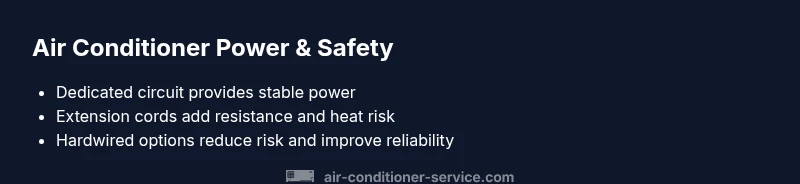
No. In most cases, an air conditioner should never be powered from an extension cord. AC units demand a stable, dedicated power source to prevent overheating, voltage drop, and fire hazards. The safest approach is a properly wired outlet or hardwired connection on a dedicated circuit, installed by a licensed electrician. This aligns with Air Conditioner Service’s safety recommendations for reliable cooling and home protection.
Can you plug an air conditioner into an extension cord? Practical reality
If you’re tempted to power a cooling unit with an extension cord, the instinct is understandable—but it’s not a reliable or safe long-term solution. Air conditioners draw significant power, and the startup surges can cause voltage dips that an extension cord is ill-equipped to handle. According to Air Conditioner Service, the safest and most dependable approach is a properly wired outlet on a dedicated circuit. For homeowners and renters, this isn’t just about convenience; it’s about protecting your home from overheating, nuisance trips, and the risk of fire. A dedicated circuit provides stable voltage delivery and reduces the chance of damage to the unit, the outlet, and your home’s wiring.
How air conditioners draw power and why extension cords are risky
Air conditioners demand more current than many household appliances, especially during startup. Extending the circuit with a cord adds resistance and potential heat buildup along the length of the cord. This can lead to voltage drop at the unit, causing the compressor and fan to work harder, generate extra heat, and stress connections. Repeated starts and sustained load can degrade insulation and outlets, elevating fire risk. Even cords that seem sturdy may fail over time with outdoor exposure or physical damage. The practical takeaway is simple: extension cords are intended for temporary, low-load devices, not for permanent cooling equipment.
What to check on your unit and outlet before plugging in
Before you attempt any connection, gather essential checks. Look at the unit’s label for the recommended circuit or amperage rating, and verify the outlet is on a dedicated circuit not shared with other high-draw devices. Inspect any extension cord you’d consider using: it should be undamaged, rated for outdoor use if used outside, and never used as a long-term power source. Avoid power strips or daisy-chaining cords with a portable AC. If you must attempt a temporary test, keep it brief and use the most robust cord available, but plan for a proper installation as soon as possible.
Safer alternatives: dedicated circuits, hardwiring, and professional installation
The safest path is to install a dedicated outlet or hardwire the AC unit to a properly rated circuit. Steps include: (1) have a licensed electrician assess your panel and wiring, (2) install a dedicated receptacle close to the unit location with appropriate protection (GFCI where required), and (3) ensure the circuit is sized to support the unit’s cooling needs year-round. For renters or smaller units, consider relocating to a location that already has a suitable outlet or seek building management approval for a dedicated circuit upgrade.
Temporary testing: cautious, short-term testing only
In an extreme emergency, a brief test on a short, heavy-duty extension cord may be considered to verify basic operability. If you pursue this route, use a cord rated for heavy outdoor use, keep the run as short as possible, and never leave the unit unattended. This is a stopgap measure and not a substitute for a permanent, code-compliant installation. The goal is to avoid damage and ensure safe operation while you arrange a proper setup.
Planning for permanent installation: codes, permits, and best practices
Permanent installation typically requires a dedicated circuit and a properly installed receptacle that matches the unit’s electrical demands. Local electrical codes may require permits and inspections for new wiring or dedicated circuits. A licensed electrician can determine the correct wire gauge, breaker size, and protection needed for your climate zone and home wiring. Adhering to code reduces fire risk, improves efficiency, and protects both your unit and your property.
Outdoor and portable considerations
Outdoor units must be protected from moisture and temperature extremes. Use weather-rated equipment, ensure cords are kept dry and off the ground, and avoid exposing cords to lawn equipment, foot traffic, or vehicles. Even if a cord is rated for outdoor use, it should still be a temporary measure. For long-term cooling reliability and safety, prioritize a permanent, code-compliant installation over any extension cord.
Comparison of installation approaches for air conditioners
| Option | Safety Suitability | Typical Installation Needs | Best Practice |
|---|---|---|---|
| Dedicated circuit outlet | Safe and reliable | Requires electrical wiring on its own circuit | Best practice for all AC units |
| Extension cord (not recommended) | High risk for heat and voltage drop | Temporary test only, not for sustained use | Avoid for normal operation |
| Hardwired connection | Generally safe for permanent installs | Professional wiring with proper disconnects | Common for permanent setups |
Common Questions
Is it ever safe to plug an air conditioner into an extension cord?
Generally not safe. AC units demand stable power and can draw surge currents that extension cords aren’t designed to handle. Use a dedicated circuit or professional installation.
Usually not safe. A dedicated circuit is the right choice for any air conditioner.
Can I use a power strip or multiple extension cords to power my AC?
No. Power strips are not meant for high‑draw appliances like air conditioners and can overheat or fail, creating a fire risk.
Avoid power strips; they aren’t safe for air conditioners.
How can I verify my outlet is on a dedicated circuit?
Check your panel to see if the circuit feeding the outlet is dedicated to a single appliance. If unsure, have an electrician test the circuit for you.
Have a professional confirm the circuit is dedicated.
Are there safer temporary solutions if no outlet is available?
A temporary solution is not ideal; if you must, limit usage and pursue a permanent, code-compliant installation as soon as possible.
Temporary setups are only a short-term fix; plan for proper wiring.
What signs indicate a dangerous setup with an extension cord and AC?
Frequent tripped breakers, warm or melted plugs, scorch marks, or a burning smell indicate a hazardous setup and require immediate professional inspection.
If you smell burning or see heat, shut off power and call a pro.
Who should I hire for permanent installation?
Hire a licensed electrician or HVAC contractor to install a dedicated circuit and receptacle tailored to your unit’s needs.
A licensed professional is best for a safe, compliant install.
“A dedicated circuit is essential for air conditioners. Extension cords may seem convenient but they introduce risks that can outweigh any quick fix.”
The Essentials
- Avoid long-term use of extension cords for air conditioners
- Opt for a dedicated circuit or hardwired connection
- Consult a licensed electrician for safe installation
- Consider code-compliant installations for future reliability
- Extend caution to outdoor units with weather-rated equipment