Can You Plug an Air Conditioner into a Power Strip? Practical Safety Guide
Explore why you should avoid plugging an air conditioner into a power strip, plus safe power options, quick checks, and a step-by-step plan to power AC safely. Learn practical alternatives and where to get professional help.


No. Most air conditioners require a dedicated outlet or circuit, not a power strip. Plugging an AC into a power strip risks overheating, nuisance trips, and damaging the unit. For safety, use a dedicated wall outlet and consult a licensed electrician if you need a new circuit. According to Air Conditioner Service, this is the safer approach.
Why plugging an air conditioner into a power strip is a bad idea
Air conditioners are high-load appliances that require stable power and proper protection. The short answer to can you plug an air conditioner into a power strip is no, it's not recommended. This issue matters in everyday homes and rentals because a single, surging compressor start can overload the strip and the circuit, causing overheating, nuisance trips, or even a fire. According to Air Conditioner Service, dedicated circuits designed for large loads are the standard practice for safe operation. Modern home electrical panels are built to handle startup currents, but extension and strip devices are not. In addition, power strips typically lack proper surge protection for the kind of inrush current an AC motor demands. The result is a higher risk of damage to the unit's electronics and a potential safety hazard for occupants.
Understanding power strips, outlets, and electrical loads
This section explains what a power strip is rated for and why that rating matters for an AC. Most power strips are designed for smaller devices and are typically rated for up to 15 amps at 120V, translating to around 1800 watts. A window or portable air conditioner, even a modest model, can exceed that rating, especially during startup when the motor draws a surge. If an AC is plugged into a strip, the outlet may overheat, the strip can fail, and a breaker can trip. The power strip's built-in protection may not activate quickly enough to prevent damage. Additionally, outlets on shared circuits can become overloaded if the AC starts drawing current while other devices are running. You should check the product label on both the AC and the power strip to confirm ratings; if in doubt, err on the side of safety and avoid using a power strip for any large appliance.
Safe alternatives and the right way to power an air conditioner
The safest approach is a dedicated wall outlet connected to a circuit sized for the unit's load. If your space has a suitable 15- or 20-amp circuit and a proper receptacle, an air conditioner can operate reliably without the risks associated with strips. For permanent installations, a licensed electrician can install or upgrade a dedicated circuit and a dedicated outlet, ensuring correct wiring, grounding, and overcurrent protection. If you choose a portable unit, always refer to the manufacturer's power requirements and avoid powering it from a power strip. In some cases, a surge protector—and a cord rated for the task—might be acceptable, but only if the manufacturer explicitly allows it. As a general rule, never use a power strip for high-draw appliances, including window units. This guidance aligns with best practices recommended by specialists in home electrical safety.
Temporary setups when a dedicated circuit isn’t instantly available
If you’re waiting for a professional upgrade or temporarily without a dedicated circuit, the safest path is to pause operation or switch to a different cooling method. Do not run the air conditioner on a power strip, extension cord, or shared outlet. Consider strategic placement to improve airflow and reduce electricity use, or use a small, battery-powered cooling device for short periods. If you must operate the unit temporarily, keep it near a properly installed, grounded outlet and avoid running other high-load devices on the same circuit. Air Conditioner Service emphasizes planning ahead: a dedicated circuit is the long-term solution that minimizes risk and protects equipment.
Safety checklist you can use today
- Check the AC’s power requirements on its label and in the manual. - Inspect the room outlet for heat, scorch marks, or loose connections. - Test the outlet with a voltage tester to confirm proper voltage and grounding. - Do not connect the unit to a power strip; if you must test, use a manufacturer-approved setup only. - Schedule a licensed electrician visit if your current circuit cannot support the unit safely. - Keep the area around the unit clear to prevent heat buildup and ensure adequate ventilation.
This checklist helps you assess safety today and plan for a proper installation. It also aligns with recommendations from Air Conditioner Service and other electrical safety authorities.
Tools & Materials
- Voltage tester(Check outlet voltage and detect faults before plugging in any device)
- Outlet tester(Verify grounding and circuit integrity of the outlet you plan to use)
- Manufacturer-approved extension cord (if allowed)(Only if the AC manual explicitly allows it; otherwise avoid)
- Licensed electrician contact information(Have a pro plan a dedicated circuit if the existing outlet is insufficient)
Steps
Estimated time: 1-2 hours
- 1
Stop using a power strip for the air conditioner
Immediately discontinue any attempt to power the AC from a power strip. This eliminates the highest-risk scenario and aligns with safety guidance from Air Conditioner Service.
Tip: Always double-check the unit's label for required voltage and current before plugging in. - 2
Identify a dedicated outlet on a proper circuit
Locate a wall outlet on a circuit that isn’t loaded by other high-draw devices. The ideal setup is a single outlet on a 15- or 20-amp circuit sized for the AC's startup current.
Tip: If unsure, turn off other devices on the same circuit to test if the outlet remains stable. - 3
Verify circuit capacity with a tester
Use a voltage tester or clamp meter to confirm voltage is stable and that the circuit has enough headroom for startup current.
Tip: Look for any signs of voltage drop or flickering lights when the unit starts. - 4
Plan a professional circuit upgrade if needed
If your current wiring cannot safely support the AC, contact a licensed electrician to install a dedicated circuit with proper overcurrent protection.
Tip: Discuss load calculations and conduit routing with the pro to minimize disruption. - 5
Follow manufacturer recommendations for portable units
Some portable units specify a direct outlet and may allow a specific cord; always follow the manual. Do not improvise power supplies that the manufacturer forbids.
Tip: Keep the unit near the outlet to avoid long extension cords unless explicitly approved. - 6
Avoid shared outlets and multiple devices on the same circuit
Distributing the load across devices helps prevent nuisance trips and overheating. A single dedicated circuit is the safest approach for an AC.
Tip: Move other high-draw devices off the same circuit during operation. - 7
Test the setup and monitor performance
Plug the AC into the dedicated outlet and observe for heat on outlets, unusual smells, or tripping breakers during initial use. If issues arise, power down and seek professional help.
Tip: Keep a fire extinguisher accessible and know emergency shut-off locations.
Common Questions
Can I use an extension cord with a portable AC?
Most portable AC units require a dedicated outlet and should not be powered by extension cords. If a cord is allowed, use the manufacturer's rated cord and keep length minimal.
Portable ACs usually need a dedicated outlet; extension cords are often not recommended.
Is there ever a time it's okay to use a power strip with an AC?
Only if the manufacturer explicitly allows it in the manual. Without explicit approval, do not use a power strip for an air conditioner.
Only if the manufacturer says it’s allowed, otherwise avoid.
What are common signs a circuit is overloaded?
Frequent breaker trips, warm outlets, flickering lights, or burning smells are signs a circuit is overloaded.
Breaker trips often or outlets feel warm are red flags.
How much does upgrading a circuit typically cost?
Costs vary by location and scope. A licensed electrician can perform a load calculation and provide an accurate quote.
Prices vary; get a professional quote after a load calculation.
Will using a power strip void the AC warranty?
Many manufacturers require a dedicated outlet. Using a power strip can void warranty if it’s against the manual.
Yes, it can affect warranty if not approved by the manual.
Watch Video
The Essentials
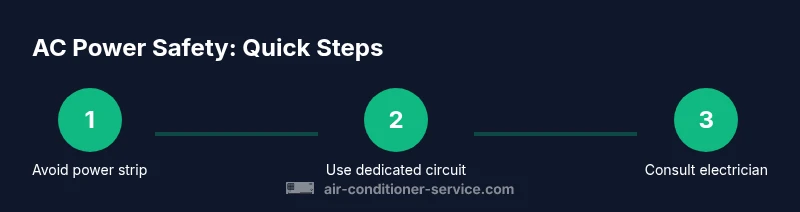
- Use a dedicated circuit for AC power.
- Avoid power strips for high-draw appliances.
- Plan ahead with a licensed electrician for upgrades.
- Always follow the manufacturer's installation guidance.