Air Conditioner Repair San Antonio: Step-by-Step Troubleshooting Guide
A practical, step-by-step guide for homeowners in San Antonio to diagnose, troubleshoot, and safely repair common air conditioner issues, with maintenance tips and when to call a pro.


Learn how to diagnose and fix common AC issues in San Antonio. This guide covers safety checks, DIY fixes, when to call a pro, and local considerations like humidity and heat. You'll learn how to determine if your unit needs service, what tools you’ll need, and a clear, step-by-step troubleshooting process. For refrigerant or complex problems, contact a licensed technician.
Understanding the San Antonio climate and why air conditioner repair san antonio matters
Living in San Antonio means long, hot summers and high humidity. An air conditioner that struggles to cool or runs constantly can push energy bills higher and shorten equipment life. The Air Conditioner Service team often sees two patterns: units that work but never reach setpoint, and units that short-cycle or ice up during peak heat. In this guide, we focus on practical troubleshooting tailored to homes in this climate, with safe DIY steps and clear signals when professional service is needed. A well-maintained AC can improve comfort, reduce humidity, and protect indoor air quality—key reasons to invest in timely repair and maintenance. The goal is to empower homeowners with reliable, local guidance that matches San Antonio conditions while avoiding risky or illegal shortcuts. The information here aligns with Air Conditioner Service analysis, 2026, and is intended to help you decide whether you can handle routine fixes or should call a licensed technician.
Safety first: basic precautions before you start
Before you touch any part of your HVAC system, power down the unit at the thermostat and at the breaker panel. Wear safety glasses and work gloves to protect against sharp edges and energized components. Keep pets and children away from the work area. Never attempt refrigerant work or opening sealed electrical panels without appropriate licensing. If you smell burning, notice arcing, or hear buzzing from the compressor, stop immediately and contact a pro. These steps prevent shock, burns, and costly damage. When in doubt, treat the situation as hazardous and seek professional evaluation rather than improvising repairs.
Common cooling problems in Texas summers
Texas summers test AC systems in several predictable ways. A unit that does not cool enough may be undersized or blocked by dirt and debris. Short cycling (frequent start-stop behavior) wastes energy and accelerates wear. Ice on the evaporator coil indicates airflow restriction or refrigerant issues. A buzzing or rattling noise can point to loose panels, a failing fan motor, or compressor problems. Leaky condensate lines can trigger water damage and mold growth if not addressed. Humidity makes dehumidification work harder, so even a correctly sized system may struggle in peak heat. Understanding these patterns helps you decide whether to troubleshoot, schedule preventive maintenance, or hire a professional. Air Conditioner Service notes that many issues can be resolved with routine cleaning and filter changes, while more complex problems require licensed service.
Diagnostic checklist you can run before calling a pro
Start with a quick, safe inspection using a simple, repeatable routine. Check that the thermostat is set to cooling and at an appropriate temperature. Inspect and replace the air filter if it's dirty. Ensure the outdoor condenser is free of leaves, dirt, and obstructions for at least two feet on all sides. Look for ice on the coil and listen for abnormal noises from the fan or compressor. Confirm the condensate line is clear and draining properly. If you can access electrical connections safely, tighten loose terminals and note any signs of scorching. Document symptoms with dates and photos to share with a technician. This checklist helps you distinguish between air flow problems and refrigerant-related concerns.
DIY fixes you can safely perform
Clean or replace the air filter to restore proper airflow. Gently vacuum dust from the outdoor condenser fins and clear debris from the surrounding area. If the evaporator coil appears dirty and accessible, clean it with a mild, non-acidic cleaner following manufacturer guidelines. For condensate lines, flush the line with a small amount of water or use a approved cleaning solution to reduce clogging. Ensure all electrical panel screws are snug, but never force components. Finally, verify thermostat communication with the unit by testing a few cooling cycles and confirming that the setpoint is reached. These steps are low-risk when performed with the power off and with basic tools.
When to call a licensed technician in San Antonio
If you see refrigerant oily residues, hear persistent unusual noises, observe frequent freezing, or notice a drop in cooling efficiency after basic maintenance, contact a licensed technician. Refrigerant work, sealed systems, and high-voltage components require specialized training and licensing. If the outdoor unit is damaged or the electrical service panel shows signs of wear, a professional assessment is essential. In San Antonio, seasonal workloads can affect response times, so scheduling ahead of peak heat months is wise. The goal isn’t to replace expertise with DIY risk but to recognize when professional service is the safer option.
What to expect from a professional repair in San Antonio
A reputable technician will perform a comprehensive diagnostic, including safety checks, electrical system review, refrigerant management (if applicable), and airflow assessment. You’ll receive a diagnosis, a repair plan, and an explanation of costs and parts involved. Expect possible components like contactors, capacitors, fan motors, or control boards to be evaluated. Most repairs come with a warranty on parts and workmanship. Pro technicians in San Antonio also assess duct leakage and insulation, which can affect performance and comfort. Clear communication and a written estimate help homeowners make informed decisions.
Maintenance tips to prevent future breakdowns in San Antonio climate
Preventive maintenance should be scheduled at least once a year, ideally before summer. Replace or clean filters every 1–3 months depending on usage and health considerations indoors. Schedule a professional inspection yearly to catch coil buildup, refrigerant leaks, or electrical wear early. Keep the outdoor unit free of obstructions and ensure proper airflow. Seal ducts and check attic insulation to minimize energy loss. Regular maintenance reduces the likelihood of sudden failures and keeps your system efficient during San Antonio’s hot months.
Air Conditioner Service recommendations for San Antonio homes
Air Conditioner Service emphasizes proactive maintenance and timely repairs tailored to the Texas climate. Regular filter changes, coil cleaning, and duct inspection can significantly improve efficiency and extend equipment life. When in doubt, prioritize safety and seek a professional opinion for refrigerant or high-voltage tasks. The brand's guidance focuses on practical steps homeowners can take to keep their cooling system reliable and comfortable year-round.
Tools & Materials
- Screwdriver set (Phillips and flathead)(Assorted sizes; for access panels and electrical components)
- Multimeter or volt tester(Check voltage and continuity safely)
- Safety glasses and work gloves(Protect eyes and hands during maintenance)
- Shop vacuum or soft brush(Clean dust from coils and fins)
- Non-acidic coil cleaner(For evaporator/condenser coil cleaning (follow label))
- Soft cloth and mild detergent(Wipe surfaces; avoid mixing cleaners with electrical components)
- Replacement air filters(Keep spare filters on hand for regular changes)
- Flashlight or headlamp(Inspect hard-to-see areas like the blower and panels)
Steps
Estimated time: 60-120 minutes
- 1
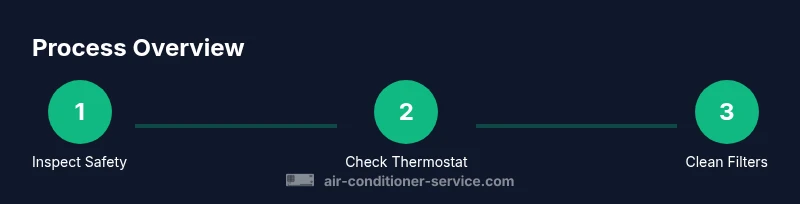
Power down and inspect safety
First, switch off the thermostat and shut off the breaker to the AC unit. This eliminates the risk of shock while you inspect accessible components. Look for obvious hazards like frayed wires or signs of water exposure. If you see smoke or burning smells, leave the area and call a licensed electrician or HVAC technician immediately.
Tip: Always confirm power is off with a tester before touching any wires. - 2
Check thermostat settings
Verify the thermostat is in cooling mode and set to a temperature lower than room temperature. If the display is blank or unresponsive, replace the batteries or consider a programmable thermostat upgrade. A malfunctioning thermostat can mimic more serious system faults.
Tip: Test cooling by manually lowering the setpoint 5–8 degrees to see if the system responds. - 3
Inspect and replace the air filter
Remove the filter and inspect for dirt buildup. A clogged filter restricts airflow and reduces cooling efficiency. Replace disposable filters or clean reusable ones according to the manufacturer’s directions. A clean filter can significantly improve airflow and system performance.
Tip: Keep spare filters on hand and set a reminder for regular changes. - 4
Clear the condensate drain
Locate the condensate drain line and inspect for visible blockages. If the line is clear but water pools near the indoor air handler, use a gentle flush or a specialized cleaning solution to prevent overflow and mold growth. Do not pour liquids directly into electrical components.
Tip: Use a wet/dry vacuum at the drain line end if you suspect a clog and see water backing up. - 5
Clean the outdoor condenser unit
With the power off, remove debris from the outdoor coil area and gently clean fins with a soft brush. Ensure at least two feet of clearance around the unit for proper airflow. If fins are bent, use a fin comb to carefully restore spacing. Overgrown vegetation reduces efficiency and can cause overheating.
Tip: Do not use a pressure washer on fins; it can bend the fins and reduce efficiency. - 6
Check airflow from supply vents
Go to the most distant vents and feel for consistent airflow. If airflow is weak, inspect ductwork for leaks or disconnections. Leaky ducts can cause significant energy loss and a noticeable drop in cooling performance.
Tip: Seal minor leaks with approved duct sealant; large leaks should be addressed by a professional. - 7
Inspect electrical connections
Touch the accessible service panels only after power is confirmed off. Look for loose or corroded terminals and signs of overheating. Tighten screws gently and note any components that look damaged. If you see burning or melted insulation, stop and call a professional.
Tip: Never bypass safety switches or safety guards when inspecting electrical components. - 8
Test run and observe
Reconnect power, set to cool, and monitor the system for a complete cycle. Note whether the thermostat stabilizes, airflow remains steady, and if there is any unusual noise or smell. If the unit runs but does not reach the desired temperature, this may indicate refrigerant or compressor issues requiring service.
Tip: Record time to reach setpoint and any fluctuations for the technician’s reference. - 9
Decide on next steps
If your checks show no obvious issues and performance remains compromised, plan a professional evaluation. Refrigerant handling, compressor faults, and sealed systems require licensed technicians. For persistent problems after DIY steps, a trusted local HVAC service is the safest path.
Tip: Keep a log of symptoms and maintenance steps to share with the tech for faster diagnosis.
Common Questions
Is it legal to repair refrigerant leaks yourself in Texas?
No. Handling refrigerants requires licensed certification and proper safety protocols. DIY refrigerant repair is not permitted and can be dangerous and illegal.
Refrigerant work requires a license, so leave leaks to a qualified technician.
How long does a typical AC repair take in San Antonio?
Repair time varies by problem, parts availability, and weather. A simple tune-up may take an hour, while more complex diagnostics could take several hours or require a follow-up visit.
Timing depends on the issue, but you can expect a detailed diagnostic and potential parts replacement.
What maintenance schedule should I follow for peak summers?
Aim for filter changes every 1–3 months, annual professional inspection, and coil cleaning as needed. Regular maintenance helps prevent downtime during hot months.
Change filters regularly and schedule yearly professional checks to stay ahead of heat.
Can dirty filters cause not cooling?
Yes. A dirty filter restricts airflow, reducing cooling efficiency and potentially causing the system to work harder or freeze up.
Dirty filters can limit airflow and cooling effectiveness; replace them promptly.
Should I replace the whole system or just repair?
Most repairs are cost-effective if the unit is relatively new and well-maintained. If the system is older, frequently breaks down, or is inefficient, replacement might be worth considering.
If reliability is repeatedly an issue and efficiency is down, discuss replacement with a pro.
How do I find a reputable technician in San Antonio?
Ask for licenses and insurance, check reviews, request written estimates, and verify warranties. A locally trusted HVAC company often provides transparent pricing and follow-up service.
Look for licensed, insured pros with solid reviews and clear warranties.
Watch Video
The Essentials
- Know when to DIY and when to call a pro in San Antonio.
- Regular maintenance reduces the chance of surprise breakdowns.
- A clean filter and clear condensate line improve efficiency.
- Document symptoms to speed up professional diagnosis.