Air Conditioner Exhaust Hose Replacement: A Practical Guide
Learn how to safely replace a portable AC exhaust hose with a clear, step-by-step process, essential tools, and safety tips from Air Conditioner Service.


This guide walks you through air conditioner exhaust hose replacement for portable units, from removing the old hose to installing a new one and sealing connections. You’ll learn what tools you need, how to measure for the correct hose, and safety steps to prevent leaks and overheating. Air Conditioner Service provides practical, step-by-step instructions for homeowners and renters.
Why this replacement matters and safety basics
Air conditioner exhaust hose replacement is essential for maintaining efficient cooling and preventing hot air from re-entering your living space. A worn or poorly sealed hose can cause leaks, reduce airflow, and raise energy use. According to Air Conditioner Service, using the correct hose diameter and window vent kit is critical for safe operation and avoiding moisture buildup. Prioritize a clean workspace, dry hands, and unplugging the unit before starting. This reduces the risk of electrical shock while you work with hoses and clamps.
Be mindful of fire safety and electrical safety: never force connections, and inspect for cracks or tears in the hose material. If you notice any fraying, replace the hose promptly. If the unit is located in a damp area, keep a dry towel handy to manage incidental condensation. A properly replaced hose keeps your portable AC running efficiently and extends its lifespan.
Tools & Materials
- Replacement exhaust hose (portable AC compatible)(Ensure the hose diameter matches your unit's outlet (commonly 5–7 inches) and length fits the window kit.)
- Window vent kit(Includes panels and stabilizers; verify compatibility with your window opening.)
- Foam weather stripping or gasket tape(Seal gaps around the window kit to prevent hot air leaks.)
- Duct tape or aluminum foil tape(Use for sealing joints and connections.)
- Screwdriver set (Phillips and flathead)(Loosen/tighten clamps and mounting hardware as needed.)
- Scissors or utility knife(Trim hose or foam as needed for a snug fit.)
- Measuring tape(Confirm hose length and window opening before cutting.)
- Cable ties or clamps(Secure the hose along walls or furniture to prevent snagging.)
- Safety gloves and eye protection(Personal protective equipment for handling tools and sharp edges.)
- Marker or pencil(Mark cut points or alignment positions for precision)
Steps
Estimated time: 60-90 minutes
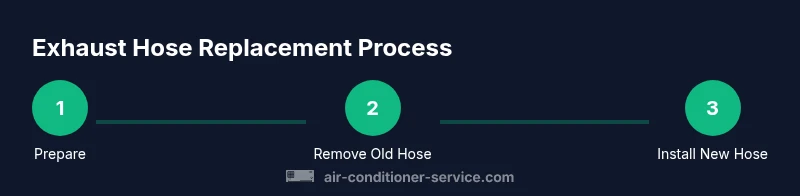
- 1
Power down and prep
Unplug the portable AC and move it to a clear workspace. Remove any objects nearby to prevent snagging, and inspect the area for standing water or moisture. This ensures you won’t accidentally hook a live cord while handling the hose.
Tip: Use a dry, stable surface and lay a drop cloth to minimize debris on the floor. - 2
Remove the old exhaust hose
Loosen clamps at the unit’s outlet and the window kit end. Gently tug the hose away from the unit, taking care not to damage the plastic outlet or window kit. If the hose is brittle, replace it immediately rather than attempting a repair.
Tip: If the hose resists, double-check clamps; forced removal can crack fittings. - 3
Inspect window kit and vent path
Check the window kit for cracks, gaps, or warping. Ensure the vent path leads directly outside without sharp bends that could restrict airflow. Replace any damaged components before proceeding.
Tip: A straight vent path minimizes exhaust resistance and improves cooling efficiency. - 4
Measure and trim the new hose
Measure the distance from the AC outlet to the exterior vent through the window. Cut the new hose to approximate length, leaving a few inches extra to accommodate minor adjustments. Avoid under- or over-long hoses, which can create leaks or kinks.
Tip: Cut slightly longer, then trim for a precise fit after test-fitting. - 5
Attach the new hose to the AC unit
Slide the hose onto the unit outlet and secure with a clamp. Ensure the connection is snug but not over-tightened, which could damage fittings. If your hose has multiple sections, align joints to maximize airflow.
Tip: Check for any visible gaps; a tight fit prevents leaks and loss of cooling power. - 6
Position and secure the window vent kit
Place the window kit in the window opening and align the hose outlet with the kit’s port. Secure the kit according to its instructions, using screws or brackets if provided. Make sure the kit vents directly to the outdoors.
Tip: Avoid compressing the hose against the window frame; give it a gentle, straight run. - 7
Seal joints and gaps
Apply foam weather stripping around the window kit, and use duct or foil tape at joints to seal any air leaks. Ensure both ends of the hose are firmly connected and sealed to prevent warm air recirculation.
Tip: Sealing is as important as the hose itself—poor seals defeat replacement efforts. - 8
Test airflow and check for leaks
Plug the unit back in and run a short cycle. Listen for air escape around joints and observe the exhaust path for any visible leaks. If leaks are found, re-tighten clamps and reseal the joints.
Tip: Run the unit at a low setting initially to confirm stable airflow. - 9
Final checks and cleanup
Confirm that the hose is fully extended (not kinked) and the window kit is securely fastened. Wipe down any condensation and store tools safely. Record the replacement date for future maintenance.
Tip: Maintain a simple maintenance log to track hose health over time. - 10
Maintenance plan
Create a quick maintenance plan: inspect the hose every 3–6 months, re-seal joints annually, and replace the hose every 5–7 years or as needed. Proactively replacing worn hoses prevents performance drops.
Tip: Pair hose checks with seasonal AC servicing for best results.
Common Questions
Do I need to replace the entire window kit if the hose is damaged?
If the hose end is damaged but the window kit is intact, you can often replace just the hose. If the kit shows cracks or warping, replacing the kit is advisable to ensure a proper seal and vent flow.
If the hose is damaged but the window kit is fine, you can usually swap the hose alone. If the kit is cracked, replace it to ensure a proper seal.
What diameter is standard for portable AC hoses?
Most portable AC hoses are between 5 and 7 inches in diameter. Check your unit’s specification plate or manual to confirm the exact size.
Most hoses are five to seven inches in diameter; check your model’s specs to be sure.
Can I reuse the original window kit with the new hose?
Yes, you can reuse the window kit if it’s undamaged and fits the new hose. Ensure a snug fit and seal before operation.
You can reuse the kit if it’s not damaged and fits the new hose, but make sure it seals well before use.
Is it safe to run the AC while replacing the hose?
For safety, unplug the unit during replacement. Once the hose is attached and sealed, you can power it back on and test.
Unplug the unit while you replace the hose. After it's sealed, power it on to test.
How do I know if the hose is too long or too short?
If the hose is too long, air may cool slowly and leak. Too short can cause tension at joints. Aim for a straight path with some slack for movement.
If it’s too long, airflow suffers; too short, joints pull tight. Keep it just right for a smooth path.
How often should I replace the exhaust hose?
Exhaust hoses generally last several years with proper care. Replace them if you notice cracks, leaks, or reduced cooling performance.
Hoses last several years with good care; replace if you see cracks or leaks or if cooling drops.
Watch Video
The Essentials
- Verify hose compatibility before purchase.
- Seal all joints to prevent leaks.
- Test operation for leaks and cooling performance.
- Secure the window kit to prevent detachment.
- Follow safety steps to avoid electrical hazards.