Is It Better to Get a Bigger Air Conditioner? A Practical Guide
Explore whether upgrading to a larger air conditioner is worth it. Learn how to size for comfort, energy efficiency, and long-term costs with practical steps, expert tips, and common pitfalls.


Is it better to get a bigger air conditioner? In most homes, no—oversized units waste energy and often impair humidity control. The smarter path is load-based sizing and choosing a correctly sized, efficient model that handles peak heat with steady comfort. This guide explains why and how to size for real-world conditions.
Why size matters: the basics
Is it better to get a bigger air conditioner? The short answer is often no for typical homes. According to Air Conditioner Service, proper sizing impacts time-to-comfort, humidity control, and long-term energy costs. A correctly sized unit matches the heat load of your space and avoids problems that come from oversizing or undersizing. A larger unit may cool the room quickly, but it can cycle on and off rapidly, leaving you with uneven temperatures and higher energy bills. It also struggles to dehumidify air effectively, which makes humidity feel clammy on hot days. By focusing on accurate sizing, you improve comfort, protect ductwork, and extend the life of the system. Understanding the implications helps homeowners and renters avoid overpaying upfront or running a unit at marginal efficiency. Air Conditioner Service analysis notes that load-based sizing, not just max capacity, generally yields the best balance of comfort and cost. In this guide, we’ll cover practical ways to estimate load, what to measure, and how to work with a pro to verify size using legitimate methods like Manual J.
Oversizing vs. undersizing: what happens
Oversizing a cooling system often leads to short cycling, where the unit turns on and off too quickly. This wastes energy, reduces dehumidification, and creates temperature swings that feel uncomfortable. Undersizing, on the other hand, can leave rooms stuffy and never reach the set temperature, forcing the system to run continuously and wear out sooner. Air Conditioner Service notes that oversizing leads to short cycling and humidity swings, while Air Conditioner Service Analysis, 2026 finds that properly sized units perform better in real homes, even at peak heat. The practical takeaway: the goal is to match load rather than chase the largest capacity. A well-sized system balances cooling capacity with dehumidification and efficiency over the long term.
How to size your space: practical methods
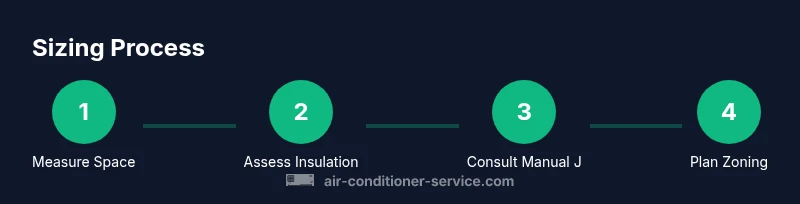
Sizing a space starts with accurate measurements and a clear understanding of insulation, shading, and air leakage. Start by measuring each room’s dimensions, ceiling height, and window areas. Document wall materials, insulation levels, and any known air leaks around doors and electrical boxes. Simple rough estimates can help, but for real comfort you should consider a formal load calculation such as Manual J, typically performed by a licensed HVAC technician. If you’re not ready to hire a pro, use a conservative rule-of-thumb as a placeholder, then verify with a professional. Tools like a laser measure and a sturdy tape measure make this step faster and more accurate. Remember, even small changes in insulation or window shading can shift the needed capacity.
When a bigger unit makes sense
There are scenarios where a larger unit may be appropriate: very large rooms or open-plan spaces with high heat gains, homes with poor insulation in attics or basements, or renovations that increase usable space. In these cases, a larger unit paired with proper zoning or well-designed ductwork may deliver comfortable cooling. However, avoid relying on size alone: verify duct capacity, refrigerant charge, and the unit’s efficiency ratings. The right move is to size for actual load and then verify that the system can deliver air evenly throughout the space.
Efficiency, humidity, and design trade-offs
Efficiency metrics like SEER and EER matter, but they don’t tell the whole story. A slightly larger unit that runs efficiently and dehumidifies effectively can outperform a giant but inefficient model. Humidity control is critical in warm climates; a correctly sized system maintains comfortable moisture levels without running constantly. In contrast, oversized systems tend to short-cycle, which reduces latent cooling and leaves the space damp or clammy. Air Conditioner Service emphasizes balancing cooling capacity with moisture removal and duct efficiency to achieve lasting comfort.
Getting help and common mistakes
Working with a qualified HVAC technician is the safest path for accurate sizing. Common mistakes include using rough room-by-room estimates, ignoring insulation quality, and assuming more BTUs always equal better comfort. Always check that the proposed unit’s capacity aligns with a verified load calculation, and confirm that ductwork can deliver the required airflow. A professional can also recommend zoning or multi-stage compressors to optimize performance without unnecessary oversizing. Finally, avoid buying based on a single feature (e.g., price or cooling speed)—look for a balance of capacity, efficiency, and comfort features.
Tools & Materials
- Tape measure(at least 25 feet; measure all rooms impacted)
- Laser distance measurer(optional for faster accuracy)
- Notebook or clipboard(record dimensions, window areas, insulation notes)
- Calculator(quickly estimate area and load factors)
- Pen or pencil(mark measurements clearly)
- Duct leakage tester (optional)(for advanced verification)
Steps
Estimated time: 60-120 minutes for measurements and planning; plus professional sizing when available
- 1
Measure space dimensions
Record length, width, and ceiling height for each cooled area. Note doorways, windows, and ceiling features that affect air distribution. Accurate room area helps estimate the cooling load and guides the sizing decision.
Tip: Use a laser distance measurer for consistency and faster data collection. - 2
Assess insulation and shading
Document insulation levels in walls and attic, window types, and shading from trees or overhangs. Poor insulation increases cooling load and reduces system efficiency.
Tip: Take photos of insulation gaps and window treatments for reference. - 3
Estimate loading with rules-of-thumb (temporary)
If you’re not using a professional, apply a conservative rule-of-thumb as a temporary estimate while planning. Remember, this is a rough guide and should be confirmed with a Manual J calculation later.
Tip: Avoid relying on room-by-room BTU guesses alone; aggregate the entire living space. - 4
Consult Manual J sizing with a pro
Ask an HVAC technician to perform a formal Manual J load calculation for accurate sizing. This step accounts for attic leakage, duct efficiency, and real climate data.
Tip: Request a full report showing calculated loads per zone and recommended equipment size. - 5
Compare capacity and efficiency, then plan zoning
When selecting units, compare cooling capacities (BTU) against the load results and check SEER/EER ratings. Consider zoning or multi-stage compressors for even comfort without oversizing.
Tip: Prefer units with advanced modulation to match loads more precisely. - 6
Plan installation and future needs
Assess ductwork capacity, refrigerant lines, and potential future space changes. Plan for expansions or renovations to ensure continued comfort without needing another oversized upgrade.
Tip: Audit duct design and consider air balancing for uniform cooling.
Common Questions
Is oversizing always bad for cooling speed?
Oversizing can cool a space quickly but often causes short cycling, humidity problems, and higher energy use. A properly sized unit provides steady comfort with better humidity control.
Oversizing may feel fast at first, but it creates humidity and energy issues. A correctly sized unit offers steady comfort and efficiency.
What is Manual J sizing and why does it matter?
Manual J is a comprehensive load calculation used by HVAC pros to determine the right cooling capacity for a home. It considers room-by-room heat gains, insulation, window types, and air leakage.
Manual J sizing is the standard method to accurately size your AC based on your home’s specifics.
Can I size my system myself without a pro?
You can estimate roughly, but a professional Manual J calculation is strongly recommended for accuracy and long-term comfort. DIY methods are prone to error.
DIY sizing is possible for rough planning, but a pro should verify the final size.
How does insulation affect sizing?
Better insulation reduces cooling load, so you may need a smaller unit than you’d expect. Areas with poor insulation require more capacity or improved envelope performance.
If insulation is poor, you’ll need more cooling power or better insulation to stay comfortable.
Is zoning worth it with a bigger home?
Zoning allows different rooms to be cooled independently, which can improve comfort and prevent oversizing by matching loads per area.
Zoning helps tailor cooling to different rooms and saves energy when used correctly.
What should I look for in an HVAC pro?
Seek a licensed contractor with experience in load calculations, duct design, and system balancing. Ask for a written Manual J report and references.
Choose a licensed contractor with Manual J experience and ask for a written plan.
Watch Video
The Essentials
- Size for load, not max capacity
- Proper insulation and shading reduce cooling needs
- Manual J sizing or professional input is essential
- Zoning can improve comfort without oversizing
- Efficient operation lowers long-term costs