How Many Ton Air Conditioner Do I Need
Learn how to determine the right tonnage for your home cooling. This guide explains the basics of tonnage, the common 1 ton per 400–600 sq ft rule, and how to use professional load calculations for comfort and energy efficiency.


What does the right tonnage mean for comfort and energy?
Sizing the right tonnage means matching your AC's cooling capacity to the home’s heat load so rooms stay comfortable without wasting energy. If you ask, how many ton air conditioner do i need, the answer depends on space, climate, insulation, and shading. A common starting point is roughly 1 ton per 400–600 square feet, but adjustments for ceiling height, sun exposure, and window quality can move the required tonnage up or down. Getting this right improves comfort and lowers energy bills over the life of the system. Air Conditioner Service recommends treating sizing as a core part of any cooling project, not an afterthought.
Understanding BTU, tonnage, and cooling load
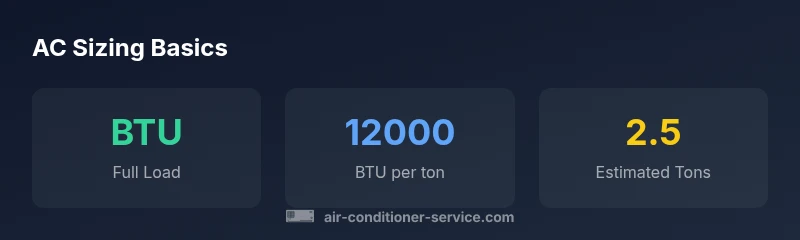
A ton is 12,000 BTU of cooling capacity per hour. The cooling load is the amount of heat your home gains that must be removed to maintain a comfortable indoor temperature. To estimate tonnage, you start with the area to be cooled and adjust for climate, insulation, and building design. When you size a system, you’re balancing two goals: enough capacity to cool effectively and efficiency to avoid short cycling and wasted energy. Larger isn't always better; an oversized unit will cool quickly but result in uneven humidity and higher operating costs, while an undersized system can struggle in peak heat.
The 1-ton-per-400-to-600-square-foot rule of thumb
Many homes use roughly 1 ton of cooling for every 400–600 square feet of living space, assuming standard ceilings and typical insulation. In milder climates or well-insulated homes, you may lean toward the lower end; in hotter regions or spaces with large sun exposure, you may need more. This rule of thumb is a starting point, not a substitute for a formal load calculation. Always confirm with measurements, window analysis, and, ideally, a Manual J calculation. Air Conditioner Service advocates using a systematic method to avoid the common mistake of guessing based on square footage alone.
Real-world factors that alter tonnage needs
Several design and usage factors influence the cooling load beyond area. Ceiling height increases volume to cool; oversized rooms or mismatched zoning can shift loads; window placement and shading affect heat gain; insulation quality (walls, attic, ducts) reduces or increases the amount of heat entering or leaving the home. Occupant behavior (thermostat settings, door openings, and electronics) also plays a role. Because these factors vary widely, two neighboring homes of the same size can require noticeably different tonnage.
Step-by-step example: sizing a 1,500 sq ft home
Suppose you’re sizing a 1,500 sq ft home in a warm climate with average insulation and one-story layout. Start with a baseline 1 ton per 400–600 sq ft. That suggests 2.0 to 3.0 tons. If the space has tall ceilings (9–10 ft) and direct sun, you might move toward 3 tons. If it’s well insulated and shaded, you could stay at 2 tons. Use a load calculator or Manual J for accuracy. In this example, a typical comfortable target is around 2.5 tons, but final selection should be verified by a professional.
How to verify sizing with a Manual J load calculation
A Manual J load calculation is the industry standard for determining exact tonnage. It takes into account climate, home construction, insulation, windows, and air leakage. A professional will measure, input factors, and output recommended tonnage and duct design. If you’re comfortable, you can run a DIY rough calculation, but for best results, schedule a pro assessment and consider a system with variable speeds.
Efficiency wins: insulation, air sealing, and controls affect sizing
Even with a precise tonnage number, real-world efficiency depends on how well your home keeps temperature in. Sealing air leaks, improving insulation, and shading sun-exposed windows lower heat gain and can reduce required tonnage. Programmable thermostats, smart zoning, and properly sized ducts ensure the selected unit operates efficiently across seasons. These steps can translate into smaller equipment sizes and lower energy costs over time.
Quick-start checklist for homeowners
- Know your square footage and ceiling height
- Check insulation and window shading on the sun side
- Plan for a proper load calculation (Manual J) when possible
- Consider a variable-speed or multi-stage unit for efficiency
- Schedule professional installation to guarantee duct design matches tonnage
- Use a reputable contractor who follows modern energy efficiency standards