Where Are Air Conditioner Filters: Find Their Locations
Discover common filter locations for central, window, and portable air conditioners. This guide explains how to identify, measure, and replace filters, with maintenance tips to keep cooling efficiency high in 2026.


By the end of this guide, you will locate the air conditioner filters in your home, whether in a central HVAC system, a packaged unit, or a window unit. Before you start, gather a replacement filter of the correct size, a flashlight, and a screwdriver if required. You’ll learn how to confirm filter type and replace it safely.
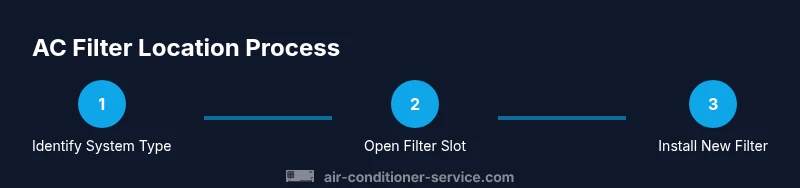
Quick Start: Identify Your System Type and Filter Housing
Before you can locate the filter, identify which type of AC you have: central split system, packaged unit, furnace-integrated system, or window and portable models. For central systems, the filter is usually in a return-air duct near the furnace or air handler. In many window units, the filter sits behind the front grille; in portable units, look on the side or behind a panel. Knowing the system type helps you target the right access point without disassembly. Air Conditioner Service notes that most home filters are rectangular and swap in and out easily, but sizes vary widely by model and configuration. If you rent, check your lease or contact the building manager for the exact filter size. If you’re unsure, start by locating the main service panel and a clearly labeled air intake slot—these are the most common starting points. Finally, grab a reference measurement or the owner’s manual to confirm the correct size before you buy a replacement.
Central HVAC: Locating the Return Air Filter
In most central air systems, the return air filter is located where the air is drawn back into the furnace or air handler. This is usually behind a grille in a utility closet, hallway, or near the indoor air handler itself. Open the grille carefully, looking for a rectangular filter frame that slides in and out. Check the frame arrows to confirm the direction of airflow (toward the blower). If you don’t see a filter, it might be tucked behind a panel or above the furnace cabinet. Use a flashlight to inspect dark corners and corners along the return duct. Remember: the filter must be easily accessible for regular replacement, so choose a location that you can reach without stepping on tools or furniture. Air Conditioner Service emphasizes verifying the correct orientation before removing the old filter.
Inside the Air Handler or Furnace Cabinet
Some systems hide the filter behind a service panel on the air handler or furnace cabinet. In this setup, you may need to remove a few screws with a screwdriver to access the filter slot. Once opened, observe the filter type, size, and orientation, then slide the old filter out straight to avoid bending the frame. Clean the housing with a dry cloth if you see dust piles or debris; a quick wipe helps improve airflow for the new filter. If you encounter wiring or tricky components, proceed slowly and avoid touching electrical contacts. After you remove the old filter, compare the size printed on the frame with the new filter to ensure a proper fit.
Window and Portable AC Units: Accessing The Filter
Window and portable units usually place the filter behind the front grille or on the back side panel. Remove the grille or panel by unscrewing or unlatching the cover, then slide the filter out as you would with a central system. Take note of the filter orientation (the airflow arrows should point in the direction of airflow into the unit). If your unit takes a thicker filter, you may need to gently tilt or angle the frame to clear the opening. After replacing, reattach the grille securely. Window and portable units often rely on the same filter dimensions, so keeping a small stash of common sizes can help you replace quickly.
Reading the Label and Sizing: What to Look For
Every filter frame has a size printed on the edge, typically in inches or millimeters (e.g., 16x20x1). The label also shows the MERV rating or equivalent, indicating filtration efficiency. When you buy a replacement, pick a filter that matches the frame size exactly; a loose fit can allow bypass and reduce filtration. If the label is worn, measure the height, width, and thickness with a ruler or tape measure, then verify against the replacement’s dimensions. If you’re unsure, bring the old filter to the store for a precise match. Air Conditioner Service recommends documenting your filter size in a home maintenance file for future reference.
After Replacing: Confirm Fit and Airflow
Once the new filter is in place, reassemble any panels and restore power. Check for airflow through the vent to ensure the filter is correctly seated and the arrows point toward the blower. If you notice reduced airflow or a whistling sound, double-check the seal around the filter and reseat it. Regular checks help prevent dust buildup, improve efficiency, and extend system life. Air Conditioner Service highlights the importance of regular maintenance as part of a proactive cooling strategy.
Common Mistakes and How to Avoid Them
Avoid inserting the filter the wrong way or using an ill-fitting size; both reduce filtration and can stress the blower. Don’t force a larger frame into a tight slot—measure first, then purchase the exact size. Don’t skip cleaning the housing; dust and debris impede airflow and trap more dirt. If you’re renting or unsure about access, contact the property manager or a technician before disassembly.
Maintenance Schedule: When to Check or Replace
Develop a simple maintenance cadence: inspect filters monthly during peak cooling months and replace when there is visible dust or reduced airflow. For households with pets or allergy concerns, consider more frequent checks. Record each replacement date to track your pattern and adjust as needed. Air Conditioner Service advises pairing filter changes with other seasonal checks, like coil cleaning and duct inspections, to maximize efficiency.
Tools & Materials
- Replacement air filter (correct size)(Know the exact size printed on the existing filter frame or label.)
- Flashlight(A small LED flashlight helps see the filter housing clearly.)
- Screwdriver (Phillips or flat-head as needed)(Some panels use screws; keep a screwdriver handy.)
- Measuring tape or ruler(For validating filter dimensions if the size isn’t printed on the frame.)
- Clean rag or brush(Light dusting of the housing after removing the old filter.)
Steps
Estimated time: 25-45 minutes
- 1
Identify system type and locator points
Determine whether you have a central HVAC system, a packaged unit, or a window/portable unit. This helps you target likely filter locations (return grille for central systems, front grille for window units).
Tip: If you’re unsure, consult the owner’s manual or your property manager before proceeding. - 2
Power off and access the panel
Turn off the cooling system at the thermostat and switch off the unit at the breaker if accessible. For central systems, locate and open the access panel or return grille where the filter lives.
Tip: Avoid forcing the panel open; some units have clips or screws. - 3
Remove the old filter
Slide the filter straight out of its slot to prevent bending the frame. Note the orientation arrows (airflow direction) on the frame.
Tip: Check that you don’t tilt or twist the frame as you remove it. - 4
Inspect and measure the frame
Read the size printed on the frame or measure height x width x thickness with a ruler to confirm appropriate replacement.
Tip: If in doubt, bring the old frame to the store for an exact match. - 5
Choose and install the new filter
Insert the new filter with arrows pointing in the direction of airflow toward the blower. Ensure it sits evenly in the slot and the frame is flush.
Tip: Do not press the filter beyond the slot limits. - 6
Reassemble and power on
Reattach any panels and restore power. Verify the unit starts normally and there is airflow at the vents.
Tip: Listen for unusual noises that could indicate misalignment. - 7
Check airflow and seal
Hold a piece of tissue near the return grille to feel airflow. If air isn’t moving evenly, reseat the filter and check seals around the grille.
Tip: A poor seal can bypass the filter and reduce efficiency. - 8
Record and monitor
Log the installation date and filter size in your home maintenance notes. Monitor airflow and plan the next replacement.
Tip: Keep a small calendar reminder for upcoming changes. - 9
Clean the housing periodically
Dust and debris accumulate in the housing; a quick wipe with a dry cloth improves performance and airflow.
Tip: Avoid using water inside the housing to prevent electrical issues.
Common Questions
How do I know which filter size to buy?
Check the size printed on the old filter frame or measure the slot with a ruler. Use the exact measurements to purchase a replacement that fits snugly.
Check the old filter for size or measure the slot, and buy the exact dimensions so it fits properly.
Can I wash a disposable filter?
Only wash filters that are labeled as washable. Most disposable filters should not be washed; replace them instead.
Only wash if the label says washable; otherwise replace the filter.
Where can I find the model number for my AC?
Model numbers are typically on the unit’s label near the filter housing or inside the access panel. If in doubt, check the user manual or manufacturer’s website.
Look for a label near the filter area or inside the cabinet; the manual can help.
What if I can’t locate the filter housing?
Consult the owner’s manual or contact the landlord/maintenance. A technician can identify the filter location for your specific model.
If you can’t find it, check the manual or ask a professional to locate it.
Is replacing the filter risky?
Replacement is generally safe if you power off first and insert the filter correctly. For electrical concerns, consult a professional.
As long as you power off and insert it correctly, replacing is usually safe.
How can I tell if airflow improved after replacing the filter?
You should notice improved airflow and cooling efficiency. If airflow remains weak, recheck the filter fit and seals.
Look for stronger airflow and better cooling after replacement.
Watch Video
The Essentials
- Identify your system type before searching.
- Replace filters with the correct size and orientation.
- Always power down before accessing the housing.
- Record replacement dates for maintenance consistency.
- Regular checks improve airflow and overall efficiency.