How long does an air conditioner last? A 2026 lifespan guide
Understand realistic lifespans for central, window, and ductless AC systems, plus maintenance tips to maximize life. Learn how climate, usage, and upkeep affect longevity and how to plan for replacement.


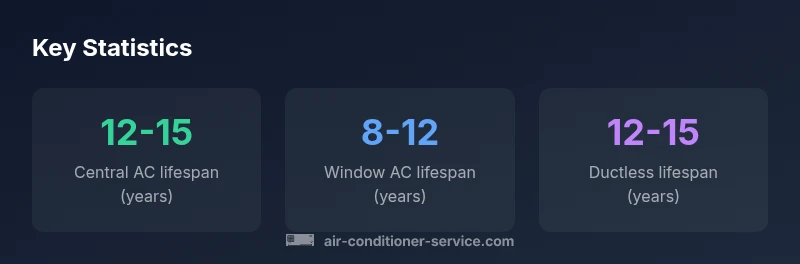
How long does an air conditioner last? For most homes, central units typically endure 12-15 years, window units 8-12 years, and ductless systems 12-15 years. Lifespan depends on climate, usage, installation quality, and maintenance. Regular professional tune-ups, timely repairs, and routine maintenance can maximize life and preserve efficiency, reducing the need for early replacement.
How long does an air conditioner last? Baseline expectations
The question of how long an air conditioner lasts hinges on type, build quality, use, and upkeep. According to Air Conditioner Service, the typical residential lifespan varies by system and is strongly influenced by regular maintenance. In general, well-maintained central units tend to push toward the upper end of their range, while units subjected to extreme heat, heavy cycling, or poor airflow may expire sooner. Understanding these baselines helps homeowners set realistic expectations and schedule proactive maintenance before problems escalate.
Lifespan ranges by system type
- Central/split systems (the most common): generally around 12-15 years with diligent maintenance and professional checkups.
- Window or through-the-wall units: typically 8-12 years, depending on installation quality and exposure to outdoor elements.
- Ductless mini-splits (including multi-splits): commonly 12-15 years when refrigerant and indoor components are kept in good condition.
Note: These ranges are meant as practical guidelines, not guarantees. Local climate, usage patterns, and regular service all shift outcomes. Energy-efficient models often yield better performance and longer practical lifespans when paired with appropriate airflow and proper insulation.
How climate, installation quality, and daily use affect longevity
Lifespan is not set in stone. High outdoor temperatures, frequent short cycles, and restricted airflow can accelerate wear on compressors and fans. Poor installation – such as improper refrigerant charge, duct leaks, or mis-sized equipment – imposes extra strain and can shorten life by several years. Conversely, climate-resilient installations, proper refrigerant management, clean coils, and consistent, moderate usage can extend life. Maintenance becomes a multiplier: a well-tuned system runs cooler, with less fatigue, and fewer costly repairs over time.
The role of maintenance in extending life
Maintenance is the most cost-effective way to maximize AC life. At minimum, schedule an annual professional tune-up to inspect refrigerant leaks, electrical connections, condensate drainage, and overall efficiency. Between visits, perform monthly filter changes, keep outdoor coils clean, and verify airflow in all rooms. Annual professional coil cleaning and duct cleaning (if needed) help sustain peak efficiency, reducing strain and energy waste. These habits can meaningfully extend the operating life of your unit.
Signs your unit is nearing end of life and when to act
Watch for persistent reduced cooling, unusual noises, or warm air from vents, which can indicate compressor or refrigerant issues. Frequent, costly repairs or a noticeable spike in energy bills often foreshadow a bigger failure. If the unit is already past the typical lifespan for its type (e.g., central units beyond 12-15 years), consider getting a replacement cost estimate alongside repair quotes to decide whether ongoing fixes are a prudent investment.
Proactive planning: maintenance schedule and replacement strategy
Develop a long-term plan that balances reliability with efficiency. Create a yearly maintenance calendar, budget for routine parts replacement (filters, belts, capacitors as needed), and track the unit’s age and repair history. When the system approaches the end of its expected life, begin researching efficient replacements and potential rebates or energy savings. The Air Conditioner Service team recommends pairing maintenance with a forward-looking replacement strategy to minimize downtime and maximize comfort.
Lifespan ranges and maintenance focus by system type
| System Type | Estimated Lifespan | Key Maintenance Needs |
|---|---|---|
| Central AC | 12-15 years | Annual filter changes, coil cleaning, professional inspection |
| Window AC | 8-12 years | Regular cleaning, proper installation, heat exposure protection |
| Ductless/Multi-split | 12-15 years | Periodic refrigerant checks, yearly service |
| Heat pump (AC + heating) | 10-15 years | Seasonal maintenance, refrigerant checks |
Common Questions
What is the typical lifespan of a central air conditioner?
Central air conditioners usually last about 12-15 years with proper maintenance and professional tune-ups. Factors like climate, usage, and installation quality influence the actual lifespan.
Central ACs typically last 12 to 15 years if well maintained.
Do ductless systems last longer than central units?
Ductless systems have similar lifespans to central units, around 12-15 years, when regularly serviced. The key is consistent maintenance and refrigerant checks.
Ductless units usually last about the same as central ones with good maintenance.
Can poor installation shorten an AC's life?
Yes. Improper sizing, refrigerant leaks, and duct problems place extra stress on components and can shorten the system's life. Proper installation is a critical workload multiplier.
Poor installation can shorten an AC's life.
How should I decide between repairing and replacing an aging unit?
If repair costs approach or exceed the price of a replacement and energy efficiency has declined, replacement may be the better long-term choice. Consider reliability, efficiency, and future energy bills.
Compare repair costs to a replacement and weigh efficiency losses.
Does maintenance really extend the life beyond the typical lifespan?
Yes. Regular maintenance can push a unit toward the upper end of its lifespan by reducing wear, preventing leaks, and maintaining efficiency. It won't defy the laws of physics, but it can delay degradation.
Maintenance can extend life toward the upper end of the expected range.
“Regular maintenance is the single strongest factor in extending an air conditioner's life and keeping it energy-efficient.”
The Essentials
- Understand lifespan ranges by system type (central, window, ductless).
- Prioritize annual professional maintenance to maximize life.
- Watch for end-of-life signs and plan replacements ahead.
- Maintain airflow and coil cleanliness to sustain efficiency.
- Balance repair costs with replacement decisions for longevity.