Air Conditioner Recharge: A Practical How-To Guide
A comprehensive, safety-focused guide to understanding air conditioner recharge, signs it’s needed, the professional process, costs, and how to choose a qualified technician.


An air conditioner recharge is a service performed by a licensed HVAC technician after locating and repairing refrigerant leaks. It involves evacuating the system, restoring proper pressure, and charging with the correct refrigerant amount to the manufacturer’s specifications. DIY recharge is unsafe and often illegal.
Why an air conditioner recharge may be needed
Air conditioner recharge refers to restoring the correct refrigerant level after leaks have been repaired and the system has been evacuated. It is not a universal remedy for every cooling issue. The goal is to bring the system back to its manufacturer-specified charge so the compressor, evaporator, and condenser can operate efficiently. According to Air Conditioner Service, refrigerant handling requires specialized equipment and training to protect you, your home, and the environment. A proper recharge also depends on repairing the leak, testing for future leaks, and confirming correct superheat and subcooling readings. Without attention to leaks, a recharge will be temporary at best and could lead to continued energy waste and potential compressor damage. If you notice warm rooms, unusual noises, or ice on the evaporator coil, schedule a professional inspection rather than trying to top off the charge yourself.
Signs your system might need a recharge
The most obvious signs are reduced cooling performance, longer cycles, and rising energy bills that don’t align with your usage. You may also observe a cold air intermittently blowing or hear a faint hissing from the outdoor unit, which can indicate a refrigerant leak. Visible oil residue around connections is another clue. In many cases, homeowners notice ice formation on the indoor coil or warmer air despite the thermostat setting being correct. It’s important to distinguish low airflow or dirty filters from refrigerant issues; a pro will measure pressures and temperatures to determine whether the charge is correct. Air Conditioner Service analysis emphasizes that testing and leak detection should precede any recharge to prevent repeating the problem and voiding the warranty. R-410A and other modern refrigerants require specific charging procedures and tools, so consult a licensed technician for accuracy and safety.
What a licensed technician does before recharging
Before recharging, a licensed technician will verify the refrigerant type, inspect for leaks, and confirm that the equipment is safe to operate. They will power down the system, isolate electrical sources, and document the current pressures on both the high and low sides. A leak test is performed using electronic detectors or dye methods. If a leak is found, the technician will outline repair options and expected outcomes. The evacuation and recovery process must be done to meet environmental and safety standards. The technician will also check for any non-refrigerant causes of poor cooling, such as a faulty capacitor, dirty coils, or a blocked condensate drain, so the recharge addresses the root problem.
The recharge steps explained (high-level overview)
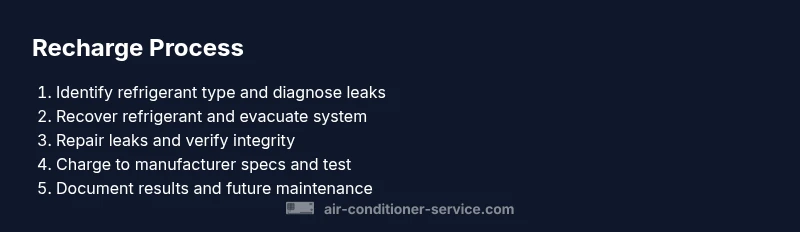
After leaks are repaired and the system is evacuated, the charge is restored to the manufacturer’s specification. The technician will use a calibrated charging scale and manifold gauges to bring the system to the exact level, then perform functional testing. The process typically includes verifying superheat and subcooling, checking for proper pressure differentials, and confirming thermostat performance. Finally, a full functional test confirms cooling capacity, airflow, and thermostat response. This stage is where most issues surface if the wrong refrigerant amount was used or the leak returns soon after recharge, underscoring the importance of post-charge testing and leak verification.
Safety, legality, and environmental considerations
Refrigerant handling involves chemical hazards, pressure risks, and environmental regulations. In many jurisdictions, only licensed technicians may purchase and handle refrigerants, and improper charging can contaminate the system or release harmful gases. The EPA and other agencies emphasize leak prevention and recovery to minimize ozone-depleting or greenhouse gases emissions. The technician will capture vapor and ensure it does not escape into the atmosphere; recovered refrigerant is processed and recycled per guidelines. Homeowners should never attempt to bypass safety steps or use DIY charging kits. The good news is that with professional help, a recharge can be safe, compliant, and effective in restoring cooling performance.
Costs, warranties, and aftercare
Costs for a recharge vary with refrigerant type, leak repair requirements, and regional labor rates. Expect that the total expense includes leak repair, recovery, evacuation, recharge, and post-charge testing. Some warranties require that any recharge be performed by a licensed technician to maintain coverage. Aftercare involves monitoring cooling performance, cleaning or replacing air filters, and scheduling periodic inspections to detect small leaks before they become significant. Keeping maintenance records can help protect your warranty and track service history for your unit.
How to choose a reputable HVAC professional
Start by checking licenses and insurance, then review customer feedback and technician certifications. Ask for a written estimate that includes leak detection, expected charge, and any anticipated repairs. Request a detailed explanation of the testing steps and the refrigerant type to be used. A trusted pro will provide a transparent plan, explain environmental safeguards, and offer maintenance recommendations to reduce future recharge needs. Our brand, Air Conditioner Service, recommends interviewing multiple companies and verifying local regulatory compliance before authorizing work.
DIY myths vs realities and what to ask your tech
Do not attempt to recharge refrigerant yourself; the consequences include injury and illegal activity in many locations. Real recharge requires trained personnel and the right equipment. If a tech suggests simply topping off the charge without leak repair, that is a red flag. Instead, ask questions about leak detection methods, evacuation procedures, and the expected refrigerant type. Ensure they will verify both superheat and subcooling and provide a post-service performance check. A thoughtful customer approach ensures you get a long-lasting repair rather than a quick fix.
Preparing for service appointment and what to expect after recharge
Make a list of symptoms and timing; note thermostat behavior and energy use. On the day of service, clear access to the outdoor unit and indoor air handler, and remove any obstructions around the unit. Expect the technician to shut off power and use protective gear; plan to stay out of the work area during the procedure. After recharge, the tech will test airflow, measure pressures, and confirm performance. You should receive a service report detailing the refrigerant type, charge amount, leak status, and recommendations for future maintenance.
Tools & Materials
- HVAC manifold gauge set(For monitoring high- and low-side pressures during charging)
- Refrigerant recovery machine(Safely recover refrigerant before recharge)
- Vacuum pump(Remove moisture after leak repair)
- Refrigerant scale(Measure exact charge weight)
- Leak detector (electronic or dye)(Locate leaks and verify repair)
- Correct refrigerant type (e.g., R-410A)(Match your system’s specification)
- PPE (gloves, goggles, long sleeves)(Safety first)
- Sealant/patch materials for minor leaks(Only if advised by pro)
- Service manual or manufacturer spec sheet(Charge specifications and procedures)
Steps
Estimated time: 2-4 hours
- 1
Schedule and prepare safety measures
Arrange the appointment with a licensed technician and clear access to the outdoor unit and indoor air handler. Gather model information, thermostat settings, and any prior service records. Confirm the refrigerant type and warranty implications so you know what to expect. This pre-check helps prevent delays on the day of service.
Tip: Ask for a written estimate and a printed scope of work before any work starts. - 2
Identify refrigerant type and anticipated charge
The technician confirms the exact refrigerant type required by your unit and notes the expected charge range from the manufacturer spec. This ensures the correct refrigerant is used and helps prevent overfill or underfill. If a dye test is planned, confirm locations and timelines with the tech.
Tip: Request the exact charge specification in weight or volume and the target superheat/subcooling values. - 3
Power down and isolate electrical sources
The system is powered off to prevent accidental startup during service. The technician isolates circuits and locks out power where applicable, reducing electrical hazards while refrigerant work is performed.
Tip: Never bypass power shutoff; confirm the unit cannot be started remotely or by a timer. - 4
Recover refrigerant from the system
Using a recovery machine, the technician removes refrigerant from the system and stores it according to environmental regulations. This step prevents refrigerant release and sets the stage for a safe evacuation.
Tip: Do not vent refrigerant to the atmosphere; this is illegal and harmful to the environment. - 5
Evacuate the system and remove moisture
A vacuum pump is used to evacuate the system to remove moisture and noncondensable gases. A deep vacuum helps ensure the system accepts the new refrigerant properly and reduces future corrosion or contamination.
Tip: Hold the vacuum for at least 15-30 minutes to verify no leaks and stable pressure. - 6
Repair leaks or confirm leak-free status
If leaks are detected, the technician will discuss repair options and perform necessary fixes before recharging. Dye tests or electronic detectors may be used to verify the repaired sites.
Tip: Leak repair should be completed and verified before charging to avoid rapid loss of refrigerant. - 7
Recharge to manufacturer specifications
The system is charged using the precise weight and procedure specified by the equipment manufacturer. The technician uses a charging scale and gauges to reach the exact charge, then monitors pressures and temperatures during the process.
Tip: Record the exact charge and initial test results for future service references. - 8
Test operation and verify performance
The system is restarted and tested for proper cooling, airflow, and thermostat response. Superheat and subcooling values are checked to ensure optimal performance and to detect any lingering issues.
Tip: Run the system through a full temperature cycle and verify comfortable indoor air distribution. - 9
Document results and provide maintenance plan
A service report is issued detailing refrigerant type, charge amount, leak status, and recommendations for future maintenance or follow-up checks. This creates a clear trail for warranty and future service needs.
Tip: Keep the report with your home records and set reminders for periodic inspections.
Common Questions
Is an air conditioner recharge safe to do myself?
No. Handling refrigerants requires training, certification, and proper equipment. DIY charging can be dangerous and may be illegal in your area. Hire a licensed HVAC technician for refrigerant recovery, evacuation, and charging.
No. Refrigerant charging should be handled by a licensed HVAC technician due to safety and regulatory requirements.
What refrigerants are used in recharge?
The refrigerant used must match your unit’s specification, typically R-410A for newer systems. Using the wrong refrigerant can damage components and void warranties.
Use the refrigerant specified by the manufacturer; newer systems commonly use R-410A.
How long does a recharge typically take?
A recharge can take a few hours depending on leak repair needs, evacuation, and post-charge testing. Scheduling with a technician allows for adequate time to perform all safety steps.
It usually takes a few hours, depending on leaks and repairs.
How much does a recharge cost?
Costs vary based on refrigerant type, leak repair requirements, and regional rates. A professional will provide a written estimate after inspection.
Prices vary, but you’ll get a written estimate after inspection.
What are common signs of refrigerant leaks?
Signs include reduced cooling, longer cycles, hissing sounds, oily residue at connections, and ice buildup on coils. A leak should be confirmed with testing before charging.
Look for reduced cooling, strange noises, oily spots, and ice on the coil.
Will a recharge fix other cooling problems?
Not always. A recharge addresses refrigerant charge but does not repair failures in the blower, capacitor, or dirty coils. A technician will assess root causes.
A recharge fixes the refrigerant issue, but not other component failures.
Watch Video
The Essentials
- Hire a licensed pro for refrigerant charging.
- Repair leaks before charging to prevent repeat issues.
- Charge exactly to the manufacturer’s specification.
- Verify post-charge performance with testing and documentation.