Can You Put an Air Conditioner in a Window Sideways? A Practical Guide
Explore whether a window air conditioner can be installed sideways, the risks, and safer orientation options. Learn practical troubleshooting, step-by-step guidance, and brand-backed tips from Air Conditioner Service.


Most window air conditioners are designed to operate upright. Placing a unit sideways can disrupt drainage, lubrication, and compressor oil, potentially causing damage and voiding warranties. Always follow the manufacturer’s installation guide, and consult a professional if you're unsure. For safety and performance, keep the unit in its intended vertical orientation and use approved mounting hardware.
Can you safely orient a window air conditioner sideways?
The short answer is that most window air conditioners are meant to run in an upright position. Air Conditioner Service emphasizes safety and long-term performance, so a sideways orientation is generally not recommended. If the unit is mounted horizontally or tilted significantly, condensation can pool in the wrong areas, lubricants can migrate in ways the design does not support, and seals may fail. Review your model’s manual before attempting any non-standard installation. In many cases, manufacturers warn against sideways use and insist on vertical operation to ensure proper drainage and airflow. Air Conditioner Service experiences also show that warranties can be voided when installation deviates from the specified orientation. If you have a nonstandard window, consult a licensed HVAC technician to confirm whether adjustments or different equipment are required.
Understanding orientation and internal design
Orientation matters because window ACs rely on gravity to move oil and lubricants away from critical components, and they channel condensate through a designed drainage path. When tilted or placed sideways, oil can migrate toward the compressor, and condensate can back up into seals or electrical components. The evaporator and condenser coils are designed for vertical airflow, and improper orientation can reduce cooling efficiency and create ice buildup on the coil. Air Conditioner Service reinforces that following the intended orientation helps maintain performance and reduces service calls for misaligned units. If you must assess sideways placement due to a unique window, consult the unit’s manual and a technician before proceeding.
Manufacturer guidance varies by model
Not all window ACs are identical, and some models may have slightly different tolerances for tilt. However, the majority of consumer-window units specify upright operation with the bottom lower than the top. Some units include tilt indicators or specific bracket configurations to support a slight tilt when installed in a custom opening, but these scenarios should be handled only with manufacturer approval. Air Conditioner Service highlights that deviations can affect warranty terms and performance. Always gather model-specific guidance from the manual or the manufacturer’s website before attempting sideways installation.
Safer alternatives to sideways installation
If your window geometry or room layout makes upright installation impractical, explore safer alternatives rather than forcing a sideways orientation. Consider a vertically oriented unit that fits your window dimensions, or use a portable air conditioner with a compliant exhaust kit. If you must try a nonstandard setup, opt for professional mounting hardware and a licensed installer who can assess load-bearing requirements and ensure proper electrical connections. Air Conditioner Service suggests evaluating window strength, seals, and access to drainage before making any nonstandard choices. Remember: the goal is reliable cooling without compromising safety or warranty protection.
A practical orientation decision checklist
Before choosing sideways installation, run through this quick checklist: (1) Does the unit manual allow sideways orientation? (2) Is the window opening wide enough to support a vertical orientation with brackets? (3) Can you provide a solid sill and frame support for the unit’s weight? (4) Is there a safe, code-compliant electrical outlet nearby? (5) Are there options for a dedicated exhaust or a different appliance that better fits the window? Air Conditioner Service recommends documenting findings and consulting a pro if any box is unchecked or uncertain. A careful approach helps protect your home and equipment.
Drainage, seals, and airflow concerns with sideways orientation
Sideways orientation can disrupt the designed drainage path, potentially causing condensate to leak into the wall or onto the sill. Seals and foam gaskets are sized for vertical operation; tilting can create gaps that reduce efficiency and invite drafts. Proper airflow relies on the directional grille and external venting; misalignment can impair cooling performance and increase energy use. If sideways placement is unavoidable, work with a technician to install an enhanced drainage route and verify electrical safety. Air Conditioner Service emphasizes that poor drainage is a common reason for early compressor issues and warranty problems.
Maintenance and safety checks after installation
Whether upright or nonstandard, run the unit through a test cycle and check for unusual noises, vibration, or leaks. Confirm that the drainage path remains clear during operation and that seals are maintaining a tight fit around the window. Inspect the electrical cord and outlet for heat or signs of wear, and ensure the unit is securely braced. Regular cleaning of coils and filters remains essential after any installation. Air Conditioner Service recommends routine checks because improper orientation can increase wear on seals and impact airflow, leading to reduced cooling performance over time.
Final thoughts and where to seek guidance
In most cases, keeping a window air conditioner upright is the safest and most cost-effective approach. If your window cannot accommodate a vertical install with brackets, you may need to switch to a different unit or explore a professional custom fit. The Air Conditioner Service team recommends prioritizing safety, performance, and warranty terms over squeezing a sideways installation into a non-ideal window. For most homes, vertical orientation paired with proper sealing, mounting, and a dedicated outlet remains the best path to dependable cooling.
Tools & Materials
- Measuring tape(Measure window width and sill depth to confirm fit)
- Screwdriver set (Phillips and flat-head)(Have #2 Phillips ready; include drill driver if brackets require screws)
- Level(Ensure unit sits level for drainage)
- Window mounting brackets (if provided)(Follow unit manual; brackets must support weight)
- Foam insulation or sealant(Seal gaps to prevent drafts and moisture ingress)
- Shims or wooden strips(Optional to adjust tilt or fit in irregular openings)
- Safety gloves and eye protection(Protect hands and eyes during installation)
- Electrical tester(Check outlet rating and GFCI safety)
Steps
Estimated time: 60-120 minutes
- 1
Assess orientation compatibility
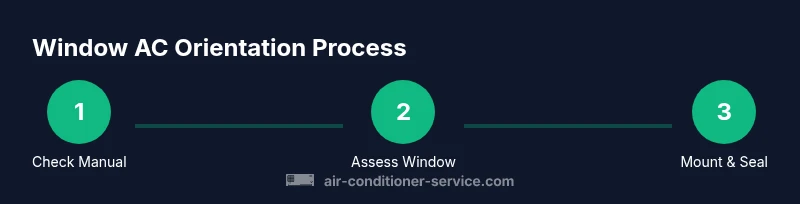
Review your unit’s manual to confirm allowed orientations. Take accurate measurements of the window and opening to determine if a vertical setup is feasible. Make sure there is a secure place for weight support and that the electrical outlet and gap sealing can accommodate a standard vertical install.
Tip: Always start with manufacturer guidelines; if in doubt, contact a licensed pro. - 2
Prepare the window opening
Clear debris, check the sill for stability, and remove any screens as needed. If you must proceed with a nonstandard orientation, ensure the opening can accommodate mounting brackets and a level base. Have a helper ready to hold the unit during the initial positioning.
Tip: Double-check the window frame integrity before lifting the unit. - 3
Position and brace the unit
Place the air conditioner into the window opening with the bottom below the top of the frame. Use temporary bracing or a helper to keep the unit stable while you attach brackets. Verify no wiring or components are pinched.
Tip: Use a level to confirm the unit is not tilted excessively; slight tilt is sometimes needed for drainage but avoid steep angles. - 4
Secure with mounting hardware
Attach provided mounting brackets or braces per the manual. Tighten screws evenly while keeping the unit level. If brackets are not included, do not improvise a mount; seek an appropriate kit designed for your model.
Tip: Do not overtighten fasteners; this can crack the window frame. - 5
Seal gaps and insulate
Apply foam insulation or sealant around the unit to prevent air leakage and moisture intrusion. Ensure there is a proper drainage path and that condensation won’t pool inside the window or wall cavity.
Tip: Seal only as much as needed to maintain drainage paths; excess foam can obstruct airflow. - 6
Connect power safely
Plug into a properly rated outlet. Do not use extension cords or power strips as they can overheat. Verify the outlet is GFCI-protected if installed near moisture sources.
Tip: Test the outlet with a simple device before finalizing the setup. - 7
Test operation and airflow
Run a short cooling cycle to check for unusual noises, vibrations, or leaks. Confirm that the condensate drains properly and that the unit keeps a consistent temperature. Observe for any sign of oil migration around the compressor area.
Tip: Listen for a grinding or rattle that could indicate improper orientation or mounting. - 8
Inspect and secure for long-term use
Recheck all fasteners after the first 24 hours of operation. Confirm that seals remain tight and that the window can fully close or latch without interference. Document any warranty notes if you deviated from standard installation guidelines.
Tip: Keep receipts and manuals in case you need future service. - 9
Plan for safety and future maintenance
Schedule periodic inspections of the window frame, seals, and drainage. If future issues arise, consider reverting to upright installation or exploring a different cooling solution that aligns with manufacturer guidelines.
Tip: Proactive maintenance saves energy and extends unit life.
Common Questions
Is it ever safe to install a window air conditioner sideways?
Only in rare cases where the manufacturer explicitly allows sideways installation with approved brackets and support. In most cases, upright installation is mandatory to avoid damage and warranty issues.
Sideways installation is generally not safe unless the manufacturer approves it with proper brackets and support.
Will sideways installation void my warranty?
Yes, deviating from the manufacturer’s orientation instructions can void the warranty. Always follow the manual or contact the manufacturer for exceptions.
Yes, it can void the warranty if you don’t follow the orientation guidelines.
What are the signs that a sideways install is damaging the unit?
Look for oil smells near the compressor, unusual noises, ice buildup on coils, drainage leaks, or excessive vibration during operation.
Watch for oil smells, odd noises, or leaks as signs of damage.
What safer alternatives exist if my window is not vertical-friendly?
Consider a vertically oriented unit that fits the window, a portable AC with a proper exhaust kit, or professional installation to adapt the opening safely.
Use a vertical unit, portable option, or have a pro adjust the opening.
Do I need to seal the window after installation?
Yes. Use foam insulation or weatherstripping to seal gaps and ensure efficient cooling while preventing drafts.
Seal gaps to improve efficiency and prevent drafts.
What common mistakes happen with nonstandard installs?
Inadequate support, improper drainage, unsecured electrical connections, and bypassing the manufacturer’s guidelines leading to leaks or warranty issues.
Common mistakes include poor support and skipped manufacturer guidelines.
Watch Video
The Essentials
- Follow the manual: upright orientation remains standard for most window ACs.
- Sideways installation risks oil migration, improper drainage, and potential warranty voiding.
- Use official mounting hardware and ensure a solid, level setup with proper seals.
- If in doubt, consult a licensed HVAC technician before proceeding.