Air Conditioning Units for Sale: A Practical Buying Guide
Discover practical, data-driven guidance for buying air conditioning units for sale. Learn sizing, efficiency, installation considerations, price ranges, and long-term value with insights from Air Conditioner Service (2026).


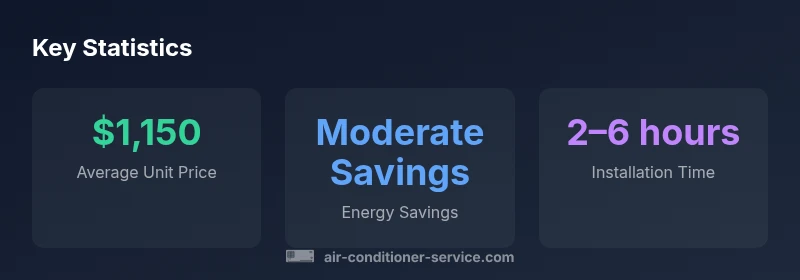
For 2026, the most cost-effective approach when shopping air conditioning units for sale is to choose a mid-range SEER unit that matches your home's cooling load, balancing upfront price with expected energy savings. Typical unit price ranges from $800 to $2,500, with installation often adding $500 to $2,000 depending on type and mounting requirements.
Market landscape for air conditioning units for sale
The market for air conditioning units for sale has expanded beyond traditional window units and central systems. Today’s buyers face a wider array of options, from compact window units designed for single rooms to sophisticated ductless mini-splits that offer zoned cooling without extensive remodeling. The expansion is driven by home improvement trends, increased awareness of energy efficiency, and the growing availability of online marketplaces that simplify comparisons. For homeowners and renters, the key is to focus on practical specs: capacity (tons or BTUs), efficiency ratings, and the installation requirements that influence total cost and comfort over time. According to Air Conditioner Service, framing your search around load matching and total cost of ownership yields more reliable long-term satisfaction than chasing the lowest upfront price.
Any shopping plan should begin with a clear understanding of your cooling load, which determines the right unit size. An undersized unit struggles to reach setpoint temperatures on hot days, while an oversized unit cycles on and off too frequently, wasting energy and reducing humidity control. A correct match often means a balance between initial cost, ongoing energy use, and the reliability of components like compressors and outdoor units. The Air Conditioner Service team emphasizes that buyers should request a load calculation from installers or use reputable online tools that account for local climate, insulation, window orientation, and occupancy.
When evaluating options, consider additional costs such as ductwork, electrical upgrades, and permit fees. Many retailers offer bundled packages that include installation, basic wiring, and starter maintenance plans—these can improve perceived value even if the upfront sticker price appears higher. It’s also prudent to assess long-term serviceability: parts availability, local repair expertise, and the supplier’s reputation for customer support are real cost drivers over the life of the unit.
Overview of common air conditioning units for sale and their typical price ranges
| Unit Type | Typical Price Range | Energy Rating | Best For |
|---|---|---|---|
| Window Unit | $150–$600 | Moderate | Single room or small apartments |
| Portable AC | $200–$800 | Moderate | Temporary cooling, mobility |
| Split-Ductless (Mini-Split) | $1,000–$3,500 | High | Zoned cooling, homes without ducts |
| Central AC | $3,500–$7,500 | High | Whole-house cooling, new installations |
Common Questions
What is the most important factor when buying air conditioning units for sale?
Sizing and efficiency determine long-term comfort and operating costs. Correct load matching prevents undercooling or overcooling and keeps energy bills reasonable.
Sizing and efficiency are the two most important factors.
Are window units or portable units better for small spaces?
Window units often provide better efficiency and cost per BTU, while portable units offer flexibility and easier relocation. Choose based on available space and permanence of installation.
Window units are usually the better fit for efficiency.
What does SEER mean and why does it matter?
SEER stands for Seasonal Energy Efficiency Ratio. Higher SEER values indicate more efficient cooling and lower energy costs over time when used correctly.
SEER stands for Seasonal Energy Efficiency Ratio.
Is installation cost included in the unit price?
installation costs are typically separate and depend on mounting requirements, ductwork, and electrical needs. Always request a full installation quote.
Installation is usually separate from the unit price.
How long do warranties typically last on new units?
Warranties vary, but many cover multiple years for the compressor and overall unit. Read the terms for exclusions and required maintenance.
Warranties usually cover several years.
What are best practices to finance air conditioning units for sale?
Look for promotional financing, rebates for energy-efficient models, and maintenance plans that bundle service with payments.
Check financing options and rebates.
“Choosing air conditioning units for sale requires balancing capacity, efficiency, and reliability to avoid overpaying for unused capacity.”
The Essentials
- Confirm your cooling load before buying.
- Prioritize SEER ratings for long-term savings.
- Compare upfront costs and ongoing energy costs.
- Factor installation complexity and warranty terms.
- Shop with reputable retailers and licensed installers.